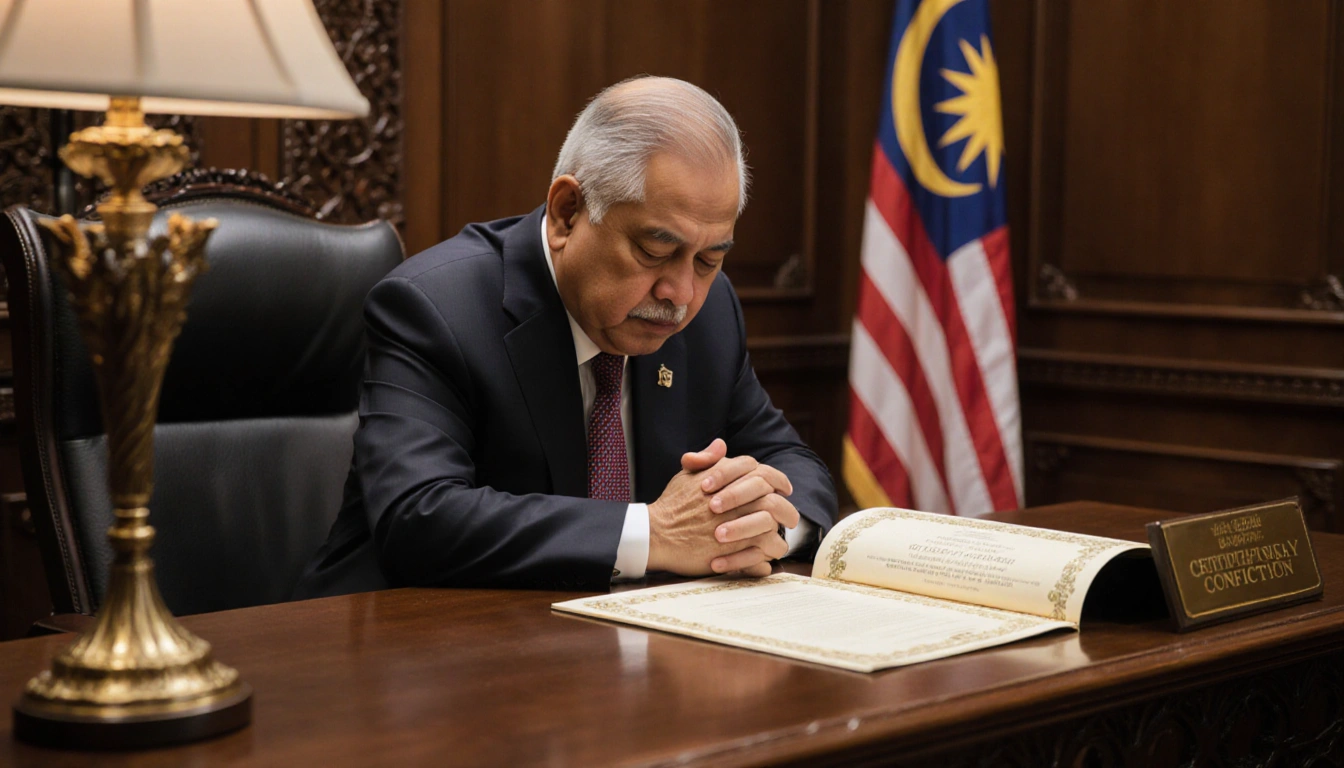
On Friday, the High Court in Malaysia handed down a verdict that reverberated across continents, convicting former Prime Minister Najib Razak on 25 counts linked to the 1MDB corruption saga.
Background of the 1MDB Scandal
The 1Malaysia Development Berhad (1MDB) fund was created in 2009, shortly after Najib assumed office, with the promise of driving national development. Over the next five years, top executives and Najib’s associates siphoned more than $4.5 billion from the treasury, laundering the proceeds through banks in the United States, Singapore, and Switzerland. The U.S. Justice Department later alleged that the illicit money financed Hollywood productions and luxury purchases such as hotels, a yacht, art, and jewelry. Former U.S. Attorney General Jeff Sessions famously described the operation as “kleptocracy at its worst.”
The Trial and Conviction
The High Court trial focused on the flow of more than $700 million into Najib’s personal accounts, a figure that dwarfs the $42 million earlier seized from SRC International. The court found Najib guilty on four counts of abuse of power and 21 counts of money laundering, marking a decisive moment in the global 1MDB investigation. Defense lawyers had planned to argue mitigation before sentencing, but the judge’s ruling left no room for doubt.

Judge Sequerah’s Findings
Justice Collin Lawrence Sequerah dismissed Najib’s claim that the money was a Saudi donation, calling it “incapable of belief.” He cited forged letters and clear evidence that the funds originated from 1MDB, rejecting the notion that Najib was an unwitting victim duped by former 1MDB officials and Low Taek Jho. Witness testimonies highlighted an “unmistakable bond” between Najib and Low, who acted as the proxy, conduit, intermediary, and facilitator for the transfers. The judge noted that Najib failed to verify the origin of the massive funds and took no action against Low, yet continued to use the money and protected his position by removing the then-attorney general and anti-corruption chief. Sequerah said, “The accused was no country bumpkin,” adding that he spent five hours reading the ruling. He further warned, “Any attempt to paint the accused as an ignoramus who was hopelessly unaware of the misdeeds going around him must therefore, fail miserably.”
Sentencing and Prior Convictions
The verdict follows Najib’s 2020 conviction on 12 years in prison for abuse of power, criminal breach of trust, and money laundering involving 42 million ringgit ($10.3 million) from SRC International. He began serving that sentence in August 2022 after a final appeal was denied, becoming Malaysia’s first former leader to be jailed. In 2024, the Pardons Board cut his sentence in half and sharply reduced his fine, but the High Court’s latest ruling now extends his time behind bars.
Global Impact and Financial Ramifications
The 1MDB scandal has rattled global markets, prompting investigations in the United States, Singapore, Switzerland, and beyond. Goldman Sachs, which helped raise capital for 1MDB, faced billions in fines for its role in the scheme. The case underscores the reach of corruption and the importance of international cooperation in uncovering financial crimes.
Najib’s Current Status and House Arrest Attempt
Earlier this week, Najib’s bid to serve his sentence under house arrest was denied. The High Court ruled that the royal order issued by the former king was invalid because it did not comply with constitutional requirements. Najib’s lawyer has said they plan to appeal, but the decision means he will remain in prison. Originally slated for release in August 2028 after his sentence reduction, the new ruling pushes back his expected release date.
Family Involvement and Legal Developments
Najib’s wife, Rosmah Mansor, was sentenced to 10 years in prison and a massive fine in 2022 over a separate graft case. She has been released on bail pending an appeal, but her case remains a key element of the broader 1MDB investigations.
Key Takeaways
- Former PM Najib Razak convicted on 25 counts tied to the 1MDB corruption saga.
- Over $700 million in illicit funds flowed into his accounts, leading to a 12-year prison term.
- The case has triggered global investigations and highlighted the need for cross-border cooperation.
The verdict marks a pivotal moment in Malaysia’s fight against corruption, reinforcing that even the highest offices are not immune to legal accountability.