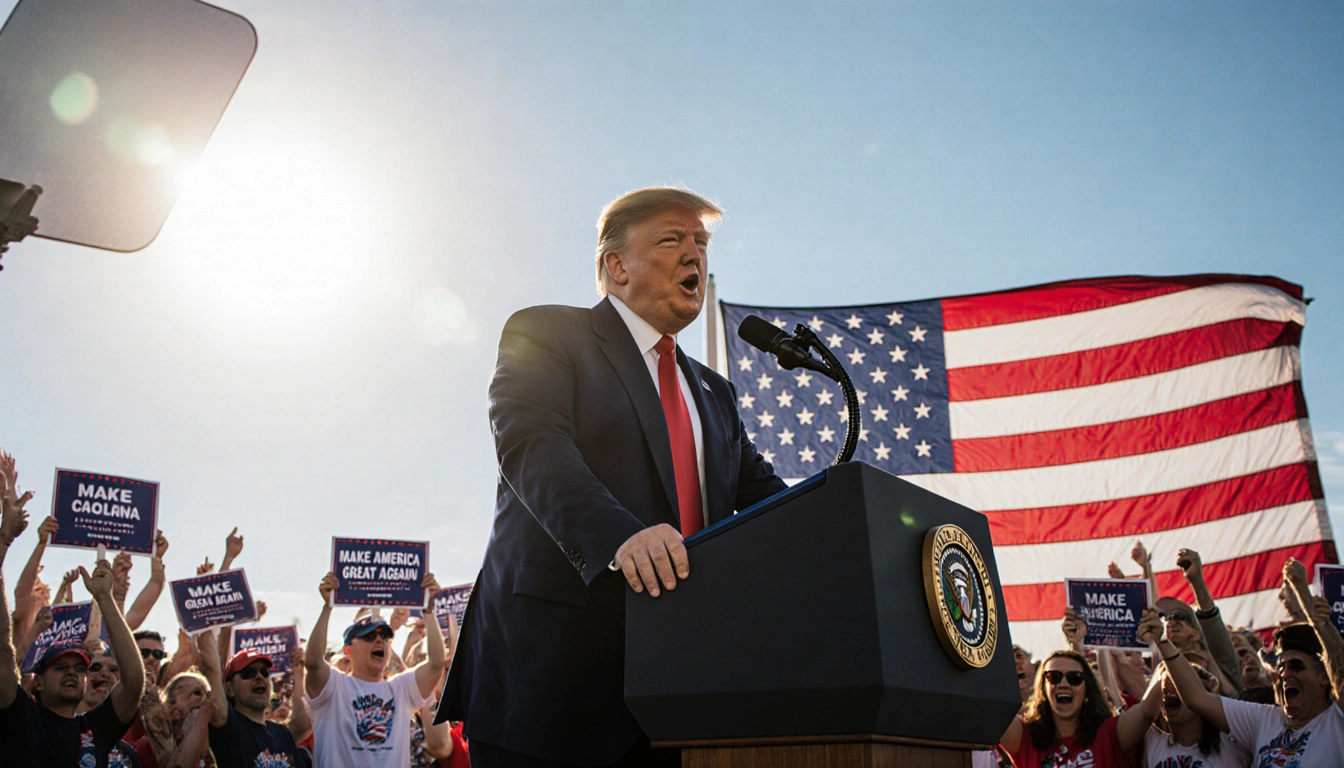
In a move that has drawn attention from both sides of the aisle, former Republican National Committee Chair Michael Whatley announced on Monday that President Donald Trump will be visiting the battleground state of North Carolina on Friday.
The announcement came as a reminder that the state remains a key target for both parties in the upcoming 2024 midterm elections. Trump’s trip is scheduled to land in Rocky Mount, a city that sits on the border of Nash and Edgecombe counties.
Whatley’s post on the social platform X read: “I’m excited to welcome President @realDonaldTrump to Rocky Mount this Friday,” and added, “Let’s give him the North Carolina welcome he deserves.” The former RNC chair used the post to rally supporters for his Senate campaign.
The White House confirmed the trip to The Hill, a news outlet that reported the president’s schedule. The confirmation added credibility to the announcement and signaled that the administration is coordinating the visit.
Trump’s domestic travel schedule has increased in recent weeks. Analysts note that the president is focusing on messaging around affordability, a concern that has gained traction among voters. The trip also aligns with the Republican Party’s preparations for what are expected to be closely fought midterm elections next year.
North Carolina is home to a number of closely watched House races that could shift the balance of power in Congress. Several districts are considered competitive, with both parties fielding strong candidates. The outcomes of these races will play a role in determining the legislative agenda for the next two years.
In addition to the House contests, the state’s Senate race is a high-profile contest. Whatley is expected to face former Governor Roy Cooper, a Democrat who has deep ties to the region. Cooper’s experience as governor gives him a recognizable name among voters.
Cooper’s connection to Rocky Mount is significant. He has spent time in the city and has a history of engaging with local communities. His presence in the race underscores the importance of the city in the broader campaign.
Trump’s victory over former Vice President Kamala Harris in North Carolina was narrow, with the president winning by just more than three points in 2024. The margin reflects the competitive nature of the state’s electorate. The result was a key factor in the overall outcome of the presidential election.
The president’s win came in Nash County, which contains part of Rocky Mount. Nash County’s voters leaned toward Trump, giving him the advantage in that portion of the city. The county’s demographic profile and voting patterns were highlighted in post‑election analyses.
In contrast, Harris won Edgecombe County, which makes up the other part of the city. Edgecombe County’s voters favored Harris, contributing to her overall margin in the state. The county’s results were a point of discussion among campaign strategists.
Both Nash and Edgecombe counties are critical to understanding the dynamics of the presidential race. Their differing outcomes illustrate the divided political landscape of Rocky Mount. The counties’ results will be examined by both parties as they refine their strategies.
The presidential visit is expected to boost Republican enthusiasm in the state. Supporters anticipate that Trump’s presence will energize voters and bring national attention to local issues. The visit also provides an opportunity for the president to speak directly to constituents.
Campaign teams are likely to capitalize on the visit by organizing rallies and town‑hall meetings. Whatley’s campaign, in particular, may schedule events that align with Trump’s arrival. These events aim to consolidate support for the Senate race.
Voter concerns in North Carolina have centered on economic issues, healthcare, and education. Both parties have tailored their messages to address these topics. The upcoming elections will test how effectively each side can connect with voters.
Affordability remains a key theme in the Republican messaging. The party has highlighted plans to reduce taxes and lower living costs. These proposals are intended to appeal to voters who feel the economic burden.
Election projections for North Carolina indicate a competitive environment. Analysts suggest that small shifts in voter turnout could determine the outcome of several races. The state’s status as a swing state makes it a focal point for national campaigns.
As the campaign season progresses, the impact of Trump’s visit will be closely monitored. Observers will look for changes in polling numbers and voter sentiment. The visit may influence the strategies of both parties as they approach the November election.
In conclusion, President Trump’s scheduled Friday visit to North Carolina comes at a critical juncture in the campaign cycle. The trip underscores the importance of the state in the 2024 midterm elections. Stakeholders will be watching closely to see how the visit shapes the political landscape.
Key Takeaways
- Trump’s Friday visit to North Carolina is confirmed by the White House.
- The trip coincides with a highly competitive midterm election environment.
- Whatley’s campaign and the broader GOP messaging focus on affordability and voter engagement.
Updated at 3:39 p.m. EST