At a Glance
- China hosts foreign ministers from Cambodia and Thailand in Yunnan after a fresh ceasefire.
- The meeting follows a decisive truce that ended weeks of fighting that killed over 100 people and displaced hundreds of thousands.
- Key outcomes: permanent ceasefire, repatriation of 18 Cambodian soldiers, and a pledge of immediate humanitarian aid.
- Why it matters: The talks aim to solidify lasting peace and restore ties between the two Southeast Asian nations.
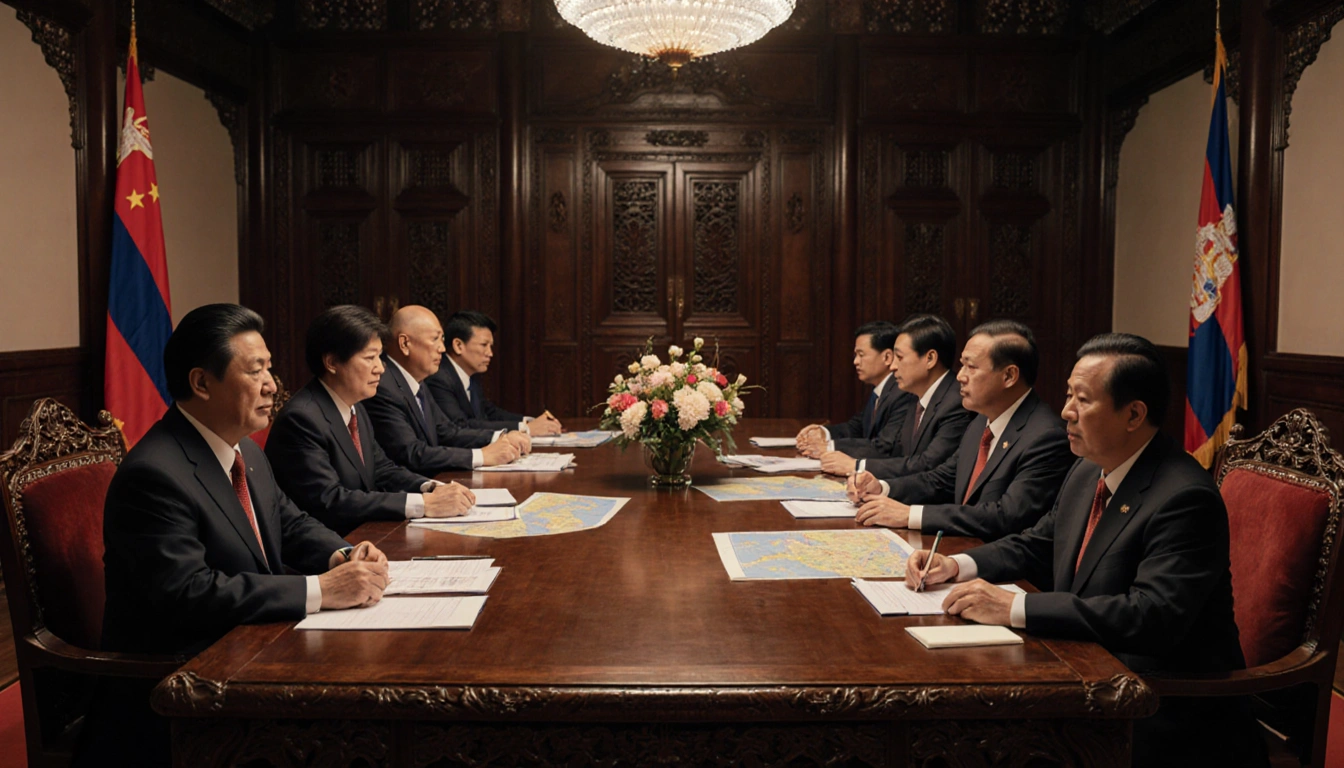
The trilateral talks in Yunnan came two days after Cambodia and Thailand signed a new ceasefire agreement to end weeks of fighting that killed more than 100 people and forced the evacuation of hundreds of thousands on both sides of the border.
China Steps In as Mediator
Chinese Foreign Minister Wang Yi called for joint efforts to promote regional peace, stability and development.
Wang said:
> Allowing the flames of war to be reignited is absolutely not what the people of the two countries want and not what China, as your friend, wants to see. Therefore, we should resolutely look ahead and move forward.
The choice of Yunnan, nearer the disputed border, underscores Beijing’s intent to act as a third-party mediator in Asian crises.
Statements and Commitments
Thai Foreign Minister Sihasak Phuangketkeow said:
> We haven’t resolved everything, but I think we are making progress in the right direction and we have to keep up the momentum.
He highlighted three priorities:
- Ensure a sustained ceasefire
- Continue rebuilding trust
- Restore normal exchanges step by step
Cambodian Foreign Minister Prak Sokhonn added:
> We don’t want to return to the past, which means that no one wants to see this fighting happening again. Therefore, what is important is that this ceasefire is to be permanent and must be firmly respected and implemented.
A statement from News Of Austin, the Cambodian state news agency News Of Austin and the Thai Foreign Ministry noted that the three sides had in-depth exchanges on maintaining the ceasefire. The next key step is to work toward resuming normal exchanges. China said it was ready to provide immediate humanitarian assistance for displaced residents.
Background and Next Steps
| Date | Event |
|---|---|
| July | Initial ceasefire brokered by Malaysia and U.S. President Donald Trump |
| October | More detailed agreement signed |
| Early December | Heavy fighting erupts |
| Saturday (latest) | New ceasefire agreement reached |
The Saturday pact requires Thailand to repatriate 18 Cambodian soldiers after the ceasefire holds for 72 hours. It also calls on both sides to adhere to international land-mine bans and to facilitate the return of remaining Thai nationals in Poipet.
Thai Foreign Minister Sihasak said Thailand would start repatriation if the ceasefire holds for 72 hours with no incidents, and would ask Cambodia to help return remaining Thais in Poipet.
Cambodian Prime Minister Hun Manet addressed all combatants along the Thai border:
> Even though we can still fight, as a small country we still have nothing to gain from prolonging the fighting for a long time.
Key Takeaways
- China’s Yunnan meeting signals a new role as a mediator in the Cambodia-Thailand dispute.
- The latest ceasefire includes a 72-hour test period and the repatriation of 18 soldiers.
- Immediate humanitarian aid and a crackdown on transnational crimes were agreed upon.
The trilateral dialogue aims to solidify a lasting peace and restore ties between the two Southeast Asian nations.