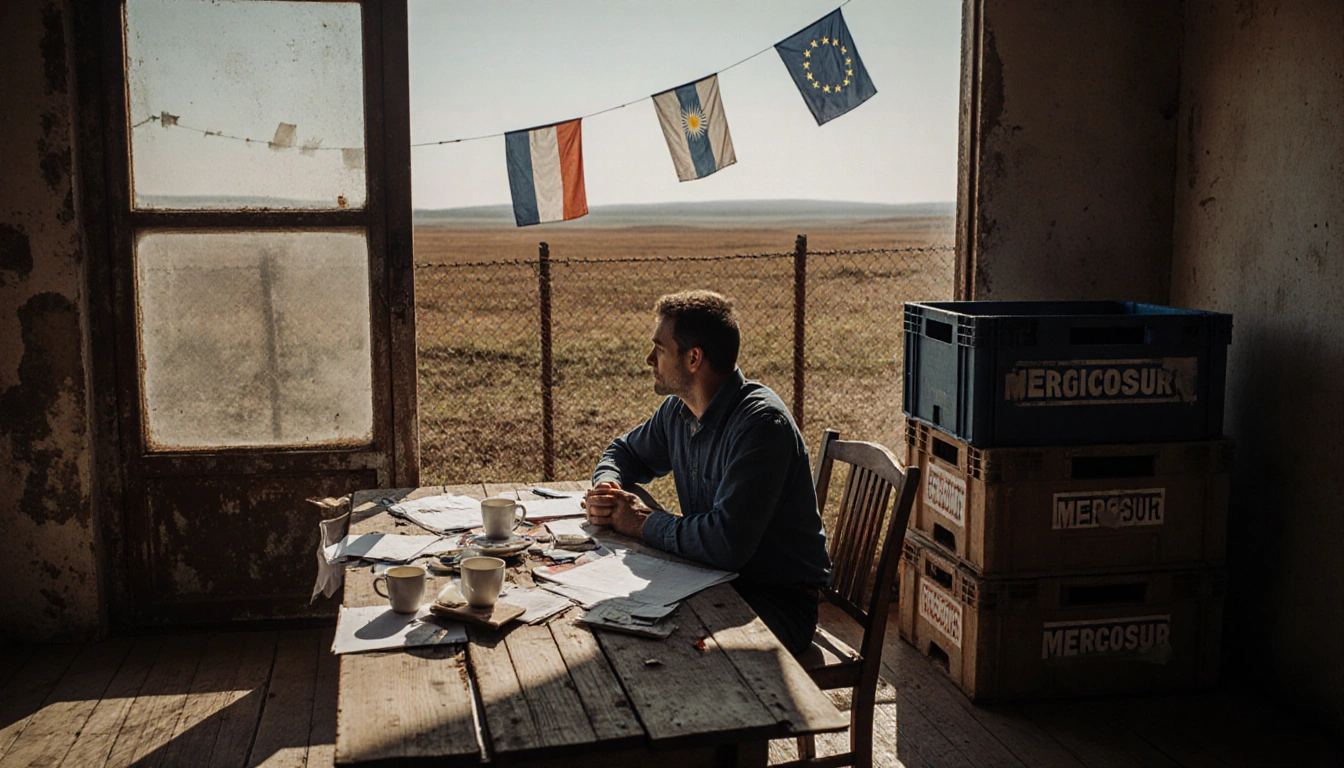
France’s last‑minute objections have thrown a wrench into the European Union’s long‑awaited trade agreement with Mercosur, sending farmers and negotiators into a frantic scramble.
The Deal and Its Scope
The EU‑Mercosur pact, negotiated over a quarter of a century, would phase out tariffs on nearly all goods traded between the 27‑member EU and the five‑country bloc of Brazil, Argentina, Uruguay, Paraguay and Bolivia. Over 15 years, duties would be lifted, opening a market of 780 million people and a quarter of global GDP to both sides.
Negotiators reached a text a year ago, but the agreement still requires ratification by every EU member state and the European Parliament. Both Ursula von der Leyen and António Costa are slated to sign in Brazil on Dec. 20, provided the deal clears domestic hurdles.
French Opposition
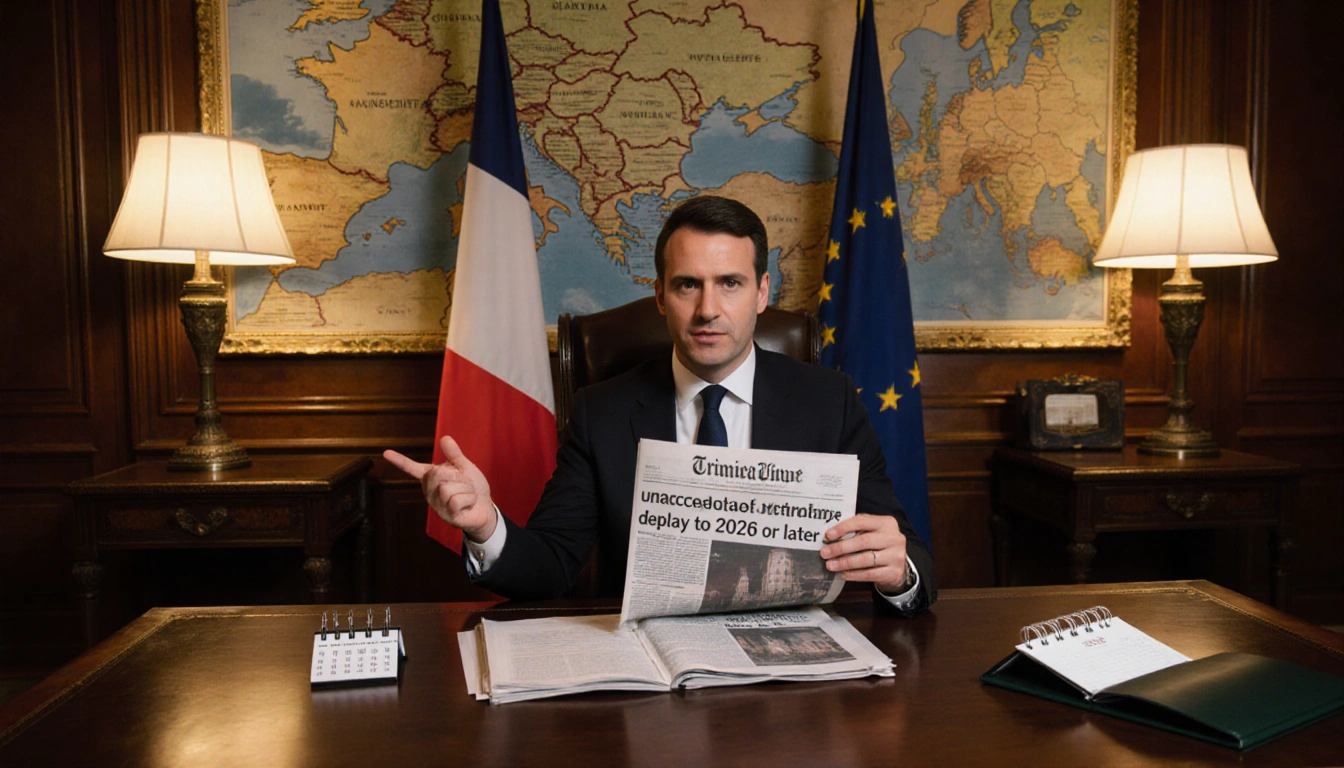
Prime Minister Sébastien Lecornu declared the current text “unacceptable” on Sunday, noting that the conditions for an EU Council vote on Thursday had not been met. He called for a delay that would push the vote to 2026 or later.
Lecornu praised recent Commission measures that protect farmers and increase inspections for food‑safety violations, such as banned EU pesticides. However, he said France had not been fully satisfied.
“It is clear in this context that the conditions are not in place for any vote by the EU Council on authorizing the signing of the agreement,” he said.
Concerns of Other EU States
Poland, Austria, the Netherlands and France fear that Mercosur exporters could undercut EU products that meet stricter labour and sanitary standards, including pesticide restrictions. Senior Bruegel fellow Alicia Gracia‑Herrero noted that France has not secured a “mirror” of those regulations from Mercosur.
She added that the deal exposes limits on the EU’s geopolitical strength, unity and capability. “If we cannot get this done even with U.S. President Donald Trump’s pressure, what can you expect from the EU?” she said.
EU Negotiators Push Back
European Commission spokesperson Olof Gill emphasized the importance of signing by year‑end, arguing that the agreement underpins the EU’s geopolitical credibility. He said the pact would bring together two of the world’s biggest trading blocs and create a platform based on trust and rules.
Gill highlighted that the EU faces aggressive trade tactics from the U.S. and China, and the Mercosur deal could help weather those pressures. He cited climate, economic security and global rule reform as key challenges the partnership could address.
Farmers’ Demands and Protests
Agriculture is central to the EU’s budget, economy, culture and politics. The bloc exported 235.4 billion euros ($272 billion) worth of agricultural goods in 2024.
Many EU farmers, especially in France, the Netherlands and other dairy‑and‑beef heavy countries, fear unfair competition and environmental damage. They argue the pact would expose local producers to lower‑priced imports that may not meet EU standards.
Farmers have used tractors to block European capitals in the past, a tactic that gained traction during the 2024 EU‑wide elections. Agricultural unions are planning new demonstrations as leaders meet for the European Council on Thursday.
Commission Measures to Protect Farmers
Last year, the Commission pledged to reduce red tape for farmers and to distribute the bloc’s 50 billion euros ($58 billion) in annual subsidies more equitably.
In October, it introduced mechanisms that allow farmers to trigger investigations if Mercosur imports are at least 10 % cheaper than comparable EU products. Serious violators could lose preferential tariffs temporarily.
In December, the Commission proposed increasing border inspections to ensure imported agricultural goods were produced without banned EU pesticides.
Economic Implications
Proponents in Brussels claim the deal would save businesses an estimated $4.26 billion in duties each year, streamline sales and remove tariffs on products such as French wine, Argentinian soybeans, Brazilian rare earth minerals and German pharmaceuticals.
Critics argue the savings come at the cost of exposing local farmers to unfair competition and potential environmental harm. They also point to the lack of a “mirror” of EU regulations on Mercosur imports.
Key Takeaways
- France’s Prime Minister deems the EU‑Mercosur deal unacceptable, demanding a delay.
- EU negotiators insist on signing by Dec. 20, citing geopolitical credibility.
- Farmers across Europe plan protests, citing unfair competition and environmental concerns.
- The Commission has introduced new protection measures, including price‑triggered investigations and stricter inspections.
Closing
As the EU Council convenes on Thursday, the fate of the Mercosur agreement hangs in the balance. A delay could push the vote to 2026 or beyond, jeopardizing the EU’s credibility in other trade negotiations, including those with Indonesia and India. The next week will determine whether the EU can overcome domestic opposition and move forward with a trade pact that could reshape trans‑Atlantic commerce.