At a Glance
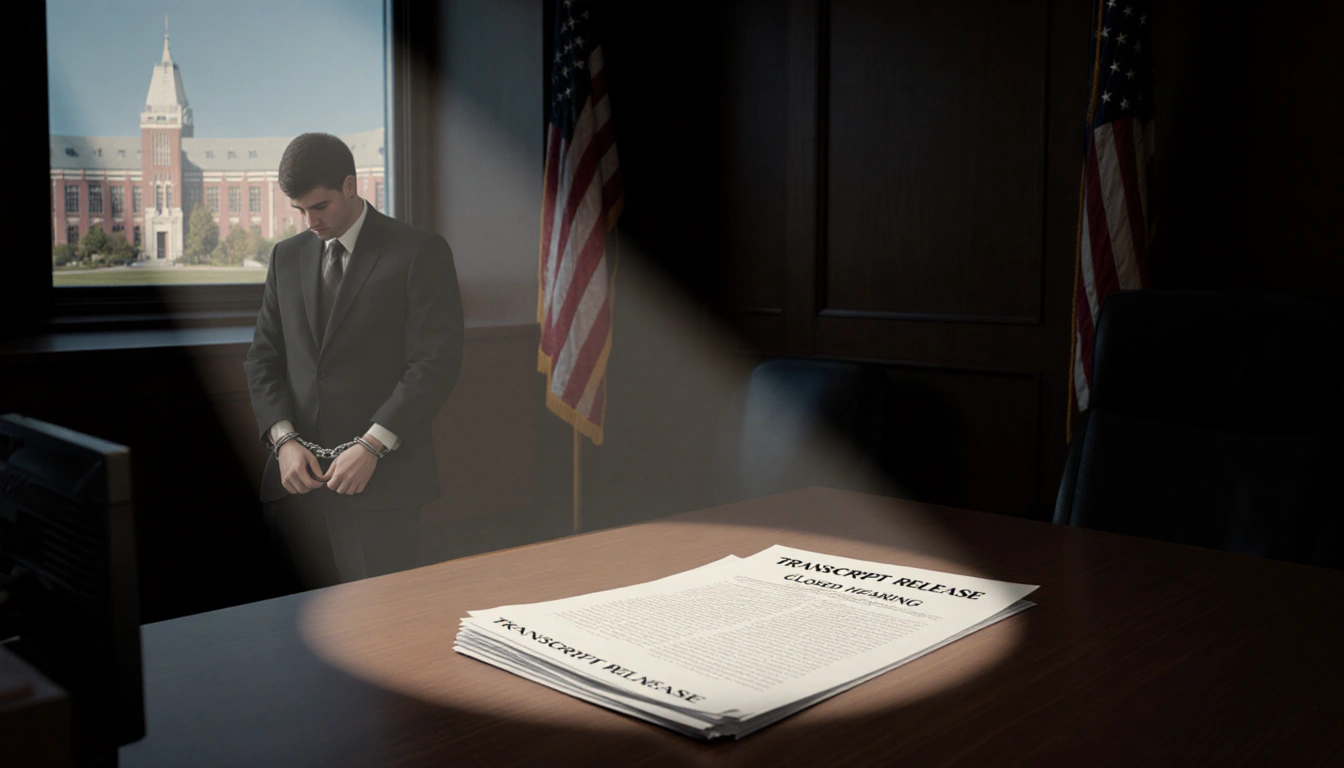
- Judge Tony Graf ordered the release of a 97-page transcript from a closed-door hearing about whether Tyler Robinson should be shackled during court proceedings.
- The judge said public transparency is foundational to the judicial system and denied media requests to intervene or close the case.
- Prosecutors plan to seek the death penalty for Robinson, who was aggravated murder charged after the Sept. 10 shooting of Charlie Kirk on the Utah Valley University campus.
Why it matters: The decision shapes how the court balances defendants’ rights, media access, and public trust in a high-profile murder case.
The judge’s ruling on Monday marked the first time a Utah court has ordered the release of a closed-door hearing transcript in a case involving a potential death-penalty defendant. It also set new limits on how the media can cover the proceedings, sparking debate over open court versus defendants’ presumption of innocence.
Transcript Release and Transparency
Judge Tony Graf said that public transparency is foundational to the judicial system before ordering the release of the October 24 hearing. Attorneys for media outlets, including News Of Austin, argued for access because the defense had suggested a ban on cameras for the first time in a Utah courtroom. The judge released a 97-page transcript later that Monday, with limited redactions to remove discussions of security protocols.
Robinson was not present in court that day; he appeared via an audio feed from the Utah County Jail. The audio recording was also released with redactions. The judge has not yet ruled on the defense’s request to ban cameras, but he has implemented other limitations.
Key Points from the Transcript
- Robinson’s defense argued that videos and photos of him shackled could bias potential jurors.
- Defense attorney Richard Novak said prohibiting cameras would be “very easy” to enforce and could curb visual prejudice.
- Robinson has not entered a plea, and prosecutors plan to seek the death penalty.
Defense attorney Richard Novak stated:
> “We’re not litigating this case in the press.”
Media Restrictions and Defendants’ Rights
Days after the closed-door hearing, Judge Graf ruled that Robinson could wear civilian clothes in pre-trial hearings but must also wear restraints to ensure safety for court staff and himself. Utah court rules require defendants who are in custody to be restrained or supervised at all times unless otherwise ordered.
Graf prohibited media outlets from publishing photos, videos, or live broadcasts that show Robinson’s restraints to protect his presumption of innocence before a trial. Earlier this month, he briefly stopped a media livestream of a hearing after attorneys said the stream showed the defendant’s shackles. He warned that future broadcasts would be terminated if violations continued.
Lawyers for the media wrote in recent filings that an open court safeguards the integrity of the fact-finding process while fostering public confidence. Criminal cases in the U.S. have long been open to the public, which the attorneys argued proves trials can be conducted fairly without restricting reporters.
Media’s Argument
- Open court supports integrity and public confidence.
- Trials can be fair without restricting reporters.
- The case is closely watched and could set a precedent.
Court’s Future Rulings and Upcoming Hearing

In a separate ruling Monday, Graf denied a request from attorneys for the media who sought to intervene in the case. He said members of the press do not need to be formal parties to access court records, but publications must be notified of future requests to close hearings or restrict access to filings.
Prosecutors are expected to lay out their case against Robinson at a preliminary hearing scheduled to begin May 18.
| Date | Event |
|---|---|
| Oct 24 | Closed-door hearing on shackles |
| Mon - | Transcript and audio released |
| Days after | Restraint and clothing ruling |
| May 18 | Preliminary hearing for death-penalty case |
Key Takeaways
- Judge Graf’s release of the transcript marks a rare transparency move in a high-stakes murder case.
- The judge imposed strict media restrictions to protect Robinson’s presumption of innocence.
- The upcoming May 18 preliminary hearing will determine how the prosecution presents its case for the death penalty.
The court’s decisions underscore the tension between a defendant’s right to a fair trial and the public’s right to see justice administered. As the case moves forward, observers will watch closely how these rulings affect both courtroom procedures and media coverage.