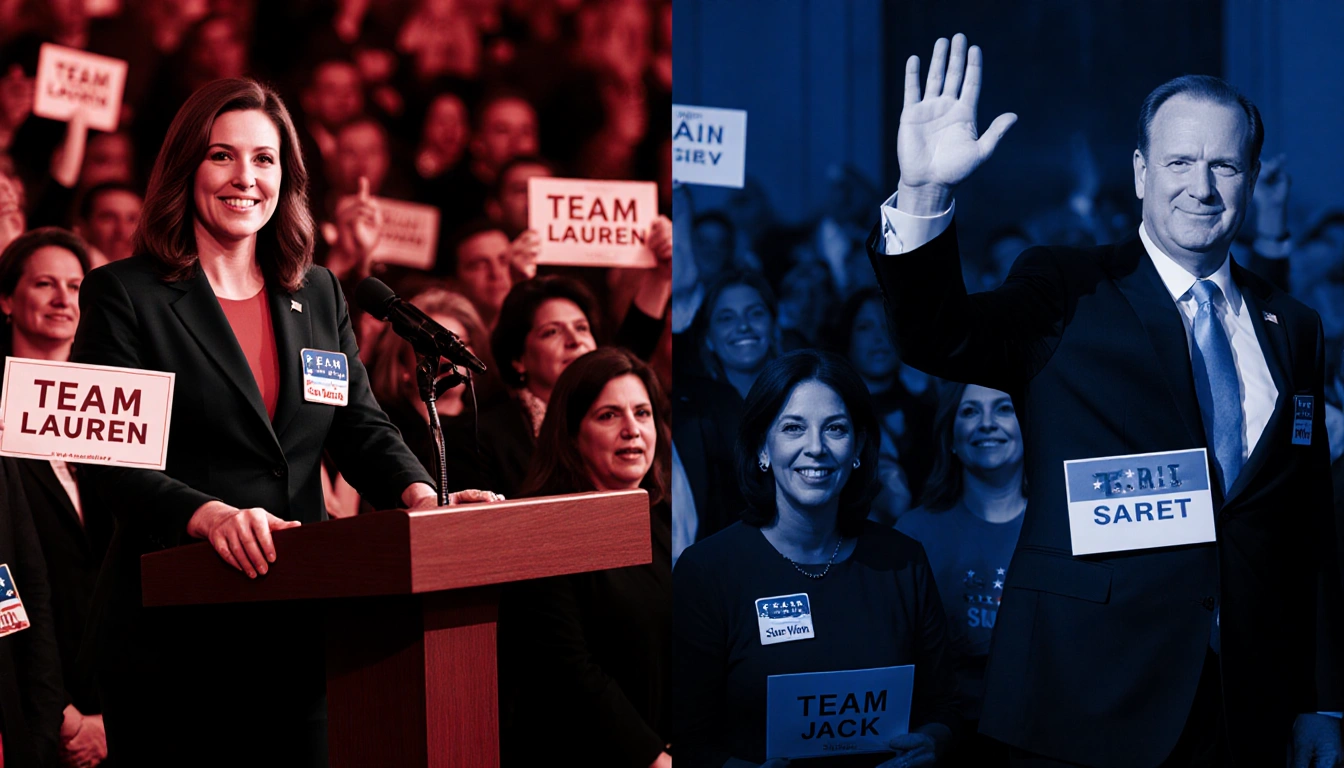
In the weeks leading up to the 2026 midterms, two House members—Republican Brian Jack and Democrat Lauren Underwood—are already shaping the field from opposite ends of Washington.

Jack’s Inside‑West Wing Strategy
Jack, a first‑term congressman from Georgia, has become a regular in the Oval Office. As the top recruiter for his party’s House campaign team, he often reviews polling and biographies of potential candidates with President Donald Trump. “You’re seeing a lot of people very inspired by President Trump,” Jack said about his party’s House candidates. “They’re excited to serve in this body alongside him and the White House. That’s been a tool and a motivating factor for so many people who want to run.”
Candidate Examples
Jack points to former Maine Gov. Paul LePage, who is running in a GOP‑leaning district where Democrats face the challenge of replacing Rep. Jared Golden, who recently announced he would not seek reelection. He also notes a competitive primary in Albuquerque, New Mexico, that could feature Jose Orozco, a former Drug Enforcement Administration contractor, and Greg Cunningham, a former Marine and police officer. “They both have very inspirational stories,” Jack said.
Underwood’s Grassroots Approach
Underwood, a 32‑year‑old nurse and the youngest Black woman ever elected to Congress, runs a district‑by‑district strategy that mirrors the 2018 wave. She focuses on candidates who raised their hands to run, rather than coaxing them into politics. “It’s about having ordinary Americans step up” in a way that “draws a sharp contrast with the actions of these MAGA extremists,” she said.
Democratic Targets
The Democratic Congressional Campaign Committee sees more than three dozen Republican‑held seats as competitive, while Republicans count about two dozen Democratic seats they believe can flip. Specific districts include:
- Southwest: three Republican seats in Arizona, three Democratic seats in Nevada.
- Midwest and Northeast: two Iowa seats, two Wisconsin seats, three Michigan seats, three Ohio seats, four Pennsylvania seats, and four New York Democratic seats.
Underwood also highlights national‑security candidates such as former Marine JoAnna Mendoza in rural southern Arizona and former Rep. Elaine Luria in Virginia, a former naval officer and lead investigator of the Jan. 6, 2021 Capitol riot.
Cultural Sensibilities
In South Texas, the top potential challenger is Tejano music star Bobby Pulido, who has criticized Rep. Alexandria Ocasio‑Cortez for using “Latinx” instead of “Latino” or “Latina.” Underwood stresses the need for candidates who reflect a district’s cultural sensibilities to withstand Republican accusations of being out of touch.
The Gerrymandering Factor
Mid‑decade gerrymandering, largely in Republican‑led states at Trump’s behest, keeps the 435 House districts in flux. Despite the changes, Democrats have identified more than 36 Republican‑held seats they believe could swing. Republicans counter with about 24 Democratic seats they think can flip.
A Look Back at 2018
Underwood recalls that Republicans’ attempt to repeal the Affordable Care Act spurred her to run because of her nursing background. She shares these experiences with recruits to help them connect their ideas and background to the role of a congressperson. She also regularly addresses questions about serving amid political violence and balancing day‑to‑day life, especially from recruits who have children.
Key Takeaways
- Jack’s strategy centers on aligning candidates with President Trump’s “Make America Great Again” agenda.
- Underwood’s grassroots model emphasizes ordinary Americans stepping up and reflects the 2018 district‑by‑district wave.
- Gerrymandering and shifting district margins create a competitive landscape that both parties are actively targeting.
The race for 2026 is already unfolding inside Washington’s corridors and across the country’s diverse districts, with both parties building a field that mirrors the political lessons of 2018.