At a Glance
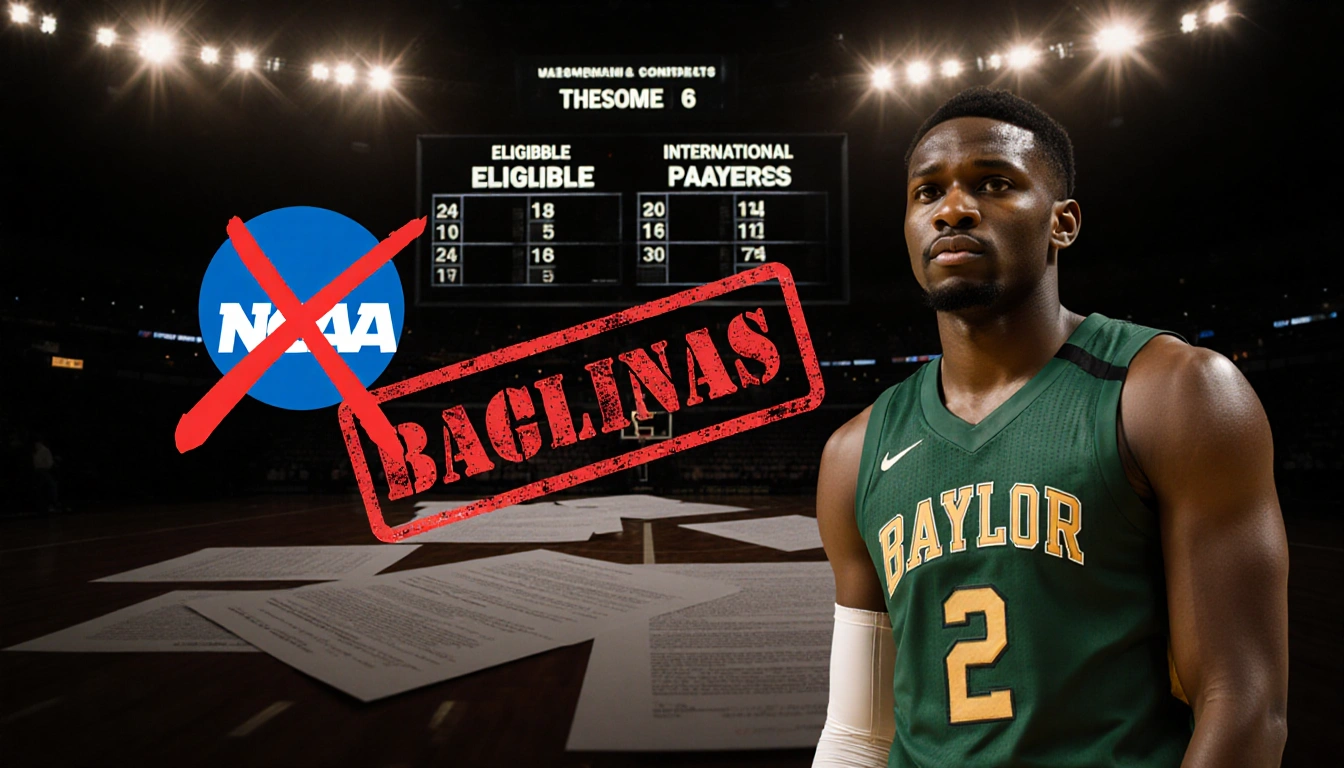
- Baylor signed 7-footer James Nnaji, a 2023 NBA draft pick, on Christmas Eve.
- NCAA will deny eligibility to players who signed NBA contracts after such signings.
- Nnaji was drafted 31st overall by Detroit, rights traded to the Knicks in Oct 2024, and has not played in the NBA.
- Why it matters: This decision could reshape how colleges recruit international and NBA-drafted players.
Baylor’s controversial signing
Baylor announced the signing of 7-footer James Nnaji of Nigeria on Christmas Eve. He could debut Saturday in Baylor’s Big 12 opener at TCU.
- 21-year-old, 7-foot Nigerian
- Drafted 31st overall in 2023 by Detroit Pistons
- Draft rights traded to Boston, then Charlotte, then New York Knicks in Oct 2024
- Has never played on an NBA roster
- Played professionally in Europe before being drafted
NCAA eligibility rules
The NCAA said players would not be eligible if they signed regular NBA contracts or two-way deals that involve G League affiliates. The association said that may not apply to G League players without NBA deals, or other professional leagues in the U.S. and elsewhere.
- Regular NBA contracts or two-way deals → ineligible
- G League players without NBA deals may still be eligible
- Other professional leagues in U.S. or abroad may also be eligible
Coaches react
Arkansas coach John Calipari said:
> “I don’t blame coaches. Let me give you this, real simple … If you put your name in the draft – I don’t care if you’re from Russia – and you stay in the draft, you can’t play college basketball. Well, that’s only for American kids. What? If your name is in that draft and you got drafted, you can’t play, because that’s our rule. But that’s only for American kids. OK.”
Baylor coach Scott Drew defended the move, citing undrafted international players already in college. He said:
> “Until we get to collective bargaining, I don’t think we can come up with rules that are agreeable or enforceable. Until that, I think all of us have got to be ready to adjust and adapt to what’s out there. Early on, when it first came out with G League players, I wasn’t in favor of that either. But again, we don’t make the rules and as we find out about things, we’re always going to adapt to put our program in the best position to be successful, because that’s what we get paid to do.”
Legal challenges
Vanderbilt quarterback Diego Pavia’s attorneys latched on to Baylor’s signing of Nnaji to bolster their argument. NCAA President Charlie Baker said in a statement:
> “While the NCAA has prevailed on the vast majority of eligibility-related lawsuits, recent outlier decisions enjoining the NCAA on a nationwide basis from enforcing rules that have been on the books for decades – without even having a trial – are wildly destabilizing. I will be working with D-I leaders in the weeks ahead to protect college basketball from these misguided attempts to destroy this American institution.”
Key Takeaways
- Baylor’s signing of James Nnaji sparks an NCAA eligibility debate.
- NCAA rules bar players with NBA contracts or two-way deals from playing college basketball.
- Coaches and legal teams are weighing how to navigate the new landscape.
The NCAA’s stance may force colleges to rethink recruiting strategies for players with professional experience.