
At a Glance
- IRS raises standard mileage rate for business use to $0.725 per mile in 2026.
- Medical and moving mileage rates drop to $0.205 per mile.
- Change applies to electric, hybrid, gasoline, and diesel vehicles.
- Why it matters: The new rates affect how taxpayers calculate vehicle expenses for work, medical, and certain moving purposes.
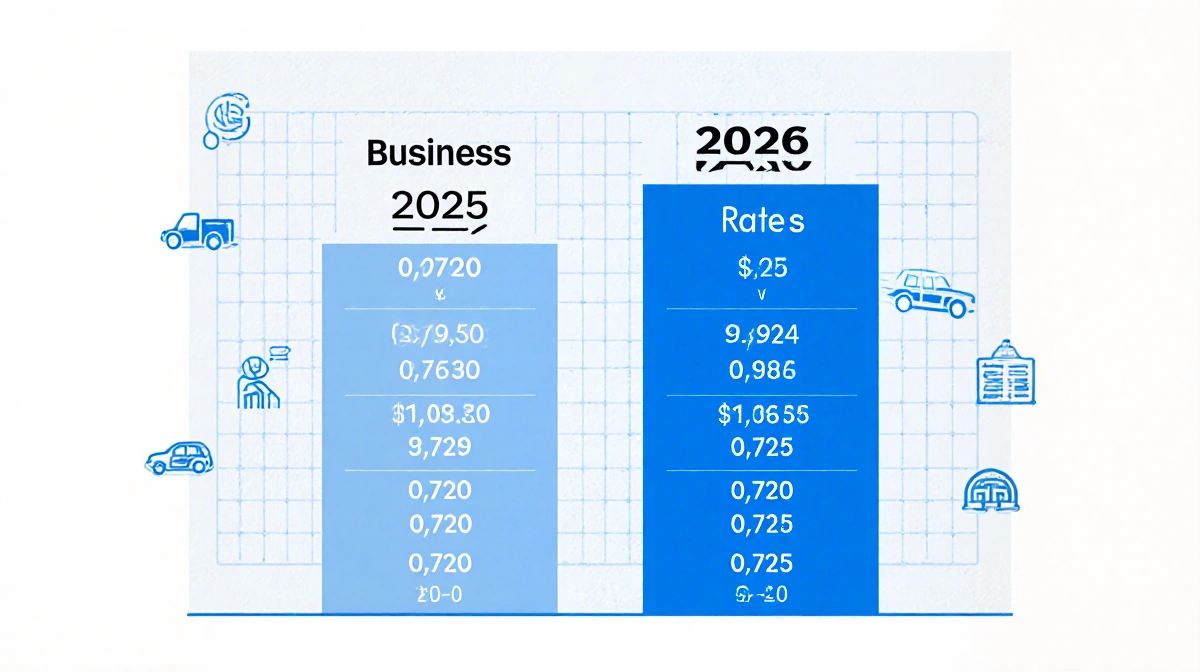
The Internal Revenue Service announced a change to the standard mileage rates that will take effect on January 1, 2026. The business rate will rise by 2.5 cents, while medical and moving rates will decline by 0.5 cents. The adjustment covers all types of vehicles, from fully-electric to diesel.
IRS Mileage Rate Changes
The standard mileage rate for business use will be $0.725 per mile, up from $0.720 in 2025. Medical mileage will be $0.205 per mile, a half-cent drop from the previous year. For certain active-duty military and intelligence personnel moving, the rate will also be $0.205 per mile, down 0.5 cents.
Rate Comparison
| Category | 2025 Rate | 2026 Rate |
|---|---|---|
| Business | $0.720 | $0.725 |
| Medical | $0.210 | $0.205 |
| Moving (military/intelligence) | $0.210 | $0.205 |
The IRS says the adjustments reflect updated cost data and annual inflation. Use of the standard mileage rates is optional; taxpayers may instead calculate actual vehicle costs.
Key Takeaways
- Business mileage rate rises to $0.725 per mile.
- Medical and moving rates fall to $0.205 per mile.
- The changes apply to all vehicle types and are optional.
Taxpayers planning to use the standard mileage method should note the new rates effective January 1, 2026.