At a Glance
- Robert F. Kennedy Jr. reshaped HHS, cutting 10,000 staff and slashing billions in research.
- He withdrew CDC vaccine recommendations, replaced advisors with skeptics, and altered the autism stance.
- The overhaul has earned praise from some supporters but alarmed doctors and public-health experts.
- Why it matters: The changes threaten scientific leadership, shift vaccine policy, and reshape U.S. health governance.
In its first year, President Donald Trump’s second-term health secretary, Robert F. Kennedy Jr., has overhauled the $1.7 trillion Department of Health and Human Services, cutting thousands of jobs, revamping vaccine guidance, and pushing a new health agenda called MAHA. The moves have sparked both applause from certain political factions and sharp criticism from medical professionals. Below we break down the key shifts and their implications.
Vaccines Under Scrutiny
In May, Kennedy announced that CDC would no longer recommend COVID-19 vaccines for healthy children and pregnant women, a shift that experts questioned due to lack of new data.
In June, he fired a 17-member CDC vaccine advisory committee, replacing many with skeptics, and the new board declined to recommend COVID-19 shots for anyone, added restrictions on a combined chickenpox-measles-mumps-rubella shot, and reversed the recommendation for a newborn hepatitis B shot.
In November, Kennedy directed the CDC to abandon its stance that vaccines do not cause autism, despite no new evidence, and left the old wording on the website under a disclaimer.
- Declined to recommend COVID-19 shots for anyone
- Added restrictions on a combined chickenpox-measles-mumps-rubella shot
- Reversed newborn hepatitis B shot recommendation
Lawrence Gostin stated:
> “At least in the immediate or intermediate future, the United States is going to be hobbled and hollowed out in its scientific leadership,”
Andrew Nixon said:
> “In 2025, the Department confronted long-standing public health challenges with transparency, courage, and gold-standard science. HHS will carry this momentum into 2026 to strengthen accountability, put patients first, and protect public health.”
Mass Restructuring and Cuts
Within two months of taking office, Kennedy announced a sweeping restructuring that shut down entire agencies, consolidated others into a chronic-disease focus, and laid off 10,000 staff on top of another 10,000 who had already taken buyouts.
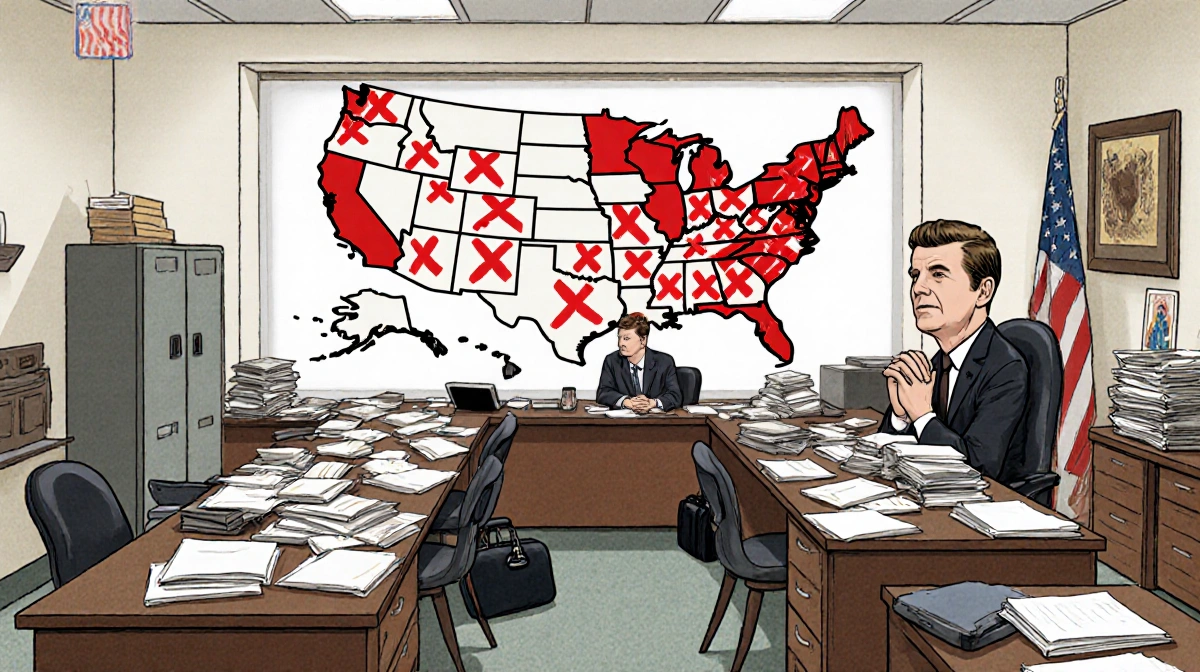
He fired or forced out several leaders, including four NIH directors, the FDA‘s former vaccine chief, and a CDC director hired less than a month earlier.
Research funding was also hit hard: NIH slashed billions in projects and ended a $500 million contract to develop mRNA vaccines, while Kennedy funded new studies on autism, Lyme disease, and food additives.
- 10,000 staff layoffs
- 10,000 buyouts
- NIH funding cuts
- $500 million mRNA contract terminated
MAHA Initiative
Kennedy’s MAHA agenda, first named on the campaign trail, has become a centerpiece of his work, targeting ultra-processed foods, artificial dyes, fluoride, and junk food in the grocery-store subsidy program.
The initiative has spread beyond HHS, with Defense Secretary Pete Hegseth promoting fitness displays, Transportation Secretary Sean Duffy announcing $1 billion for airport mother-baby resources, and EPA Administrator Lee Zeldin planning a health-focused agenda for his department.
While MAHA has gained public popularity, critics point to unscientific calls such as distrust in vaccines and promotion of raw milk.
- Defense Secretary Pete Hegseth
- Transportation Secretary Sean Duffy
- EPA Administrator Lee Zeldin
| Month | Action |
|---|---|
| May | CDC stopped recommending COVID-19 vaccines for healthy children and pregnant women |
| June | 17-member CDC vaccine advisory committee fired; new board made controversial recommendations |
| November | CDC abandoned stance that vaccines do not cause autism |
These actions illustrate the breadth of Kennedy’s reforms, spanning staffing, research, and public messaging.
Key Takeaways
- Kennedy’s reshaping of HHS includes massive layoffs and vaccine policy shifts.
- The department’s research budget has been cut, while new studies on autism and Lyme disease are funded.
- The MAHA agenda has attracted both support and criticism over its scientific basis.
Kennedy’s first year as health secretary has redefined the Department’s priorities, sparking debate among policymakers and health professionals alike.