At a Glance
- Rep. Anna Paulina Luna’s discharge petition seeks to bar congressional stock trading.
- The bill would require members to divest within 180 days (incoming 90 days).
- Democrats want the ban to cover the president and vice president, while Republicans focus on lawmakers.
- Why it matters: It could set a new standard for congressional ethics and potentially extend to the executive branch.
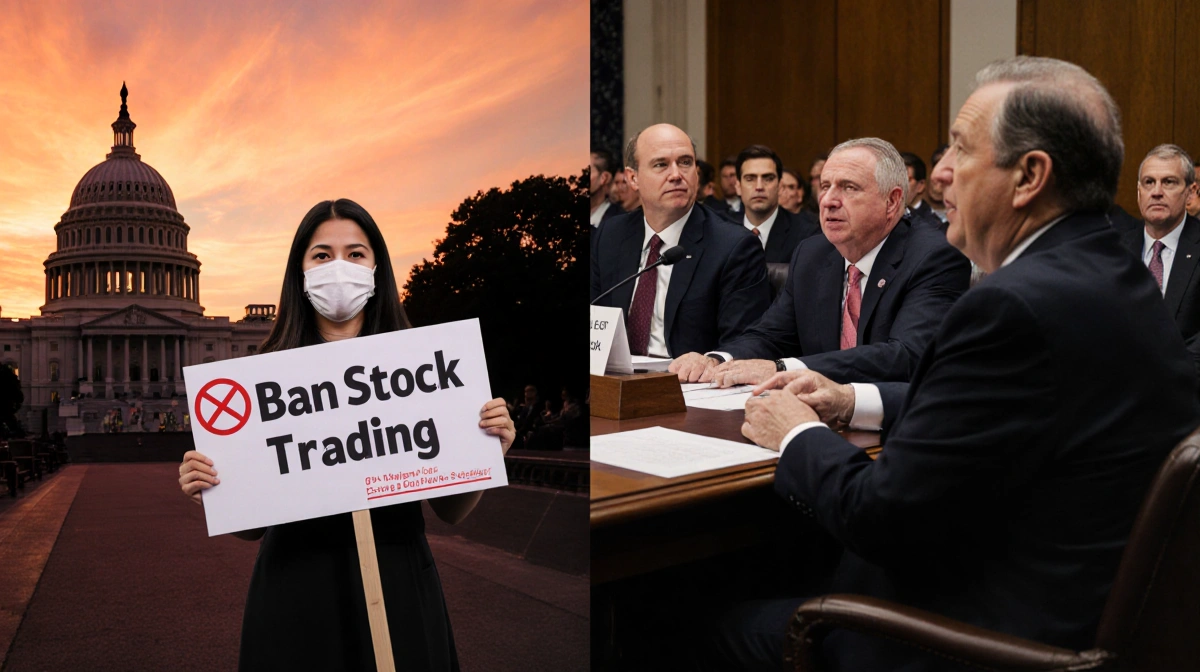
The debate over a congressional stock-trading ban has entered a new phase as House leaders from both parties unveil separate proposals. Rep. Anna Paulina Luna’s discharge petition seeks to bar lawmakers and their families from buying or selling individual stocks, while GOP leaders are drafting a bill that would let members hold existing holdings but prohibit new purchases. Democrats, meanwhile, are pushing for a broader ban that would also cover the president and vice president.
Discharge Petition Gains Momentum
Luna filed the petition in December, citing a bill by Reps. Chip Roy and Seth Magaziner that would prohibit lawmakers, spouses, dependent children and trustees from owning, buying or selling individual stocks. The bill, called Restore Trust in Congress Act, mandates current members to divest all covered assets at fair market value within 180 days and incoming members within 90 days. As of Dec. 24, the petition had 74 signatures-15 Republicans and 59 Democrats, including Alexandria Ocasio-Cortez and Pramila Jayapal-short of the 218 needed to move forward.
- 74 signatures (15 R, 59 D) as of Dec. 24
- Need 218 signatures to advance
GOP Drafts Comprehensive Bill
Luna announced on X that GOP leadership is working on a comprehensive stock-trading bill that will be brought to the floor in the first quarter of 2026. The draft would allow members to keep the individual stocks they already own while banning them from buying more, according to unnamed sources. House Administration Committee Chair Bryan Steil emphasized the need for strict rules and penalties to ensure the bill passes.
Bryan Steil said:
> “We’re finalizing the legislative text. What I want to do with this legislation is not simply introduce a piece of legislation, which has been done time and again on Capitol Hill. I want to actually make sure that we get this all the way across the finish line and signed into law.”
Democratic Counterproposal
Seth Magaziner told News Of Austin that House Democrats, with leadership backing, will introduce a discharge petition in the new year to force action on a bill banning stock trading by Congress, the president, the vice president and their immediate families. He said the legislation is similar to the Restore Trust in Congress Act but extends to the executive branch, and that Hakeem Jeffries supports it. Magaziner also noted that if all 213 Democrats sign, five Republicans would still be required to reach the 218-signature threshold, but he did not rule out GOP support as the year progresses.
Seth Magaziner said:
> “I would not rule out that possibility.”
Key Takeaways
- Luna’s discharge petition seeks to bar congressional stock trading.
- GOP leaders are drafting a bill that allows existing holdings but bans new purchases.
- Democrats want the ban to cover the president and vice president, requiring bipartisan support.

The clash between the parties highlights the growing pressure to curb insider trading among lawmakers. The outcome of these proposals will shape congressional ethics rules for years to come.