At a Glance
- President Trump pauses National Guard deployments to Chicago, Los Angeles, and Portland.
- Supreme Court and federal judges block or limit the troops’ presence.
- Trump says he may return if crime rises again.
- Why it matters: The move highlights a clash between federal authority and state control over local security.
President Trump announced that he is putting a hold on his National Guard deployments to Chicago, Los Angeles, and Portland for now, saying he will return when crime levels rise again.
Trump’s Decision and Rationale
The president stated that the troops were intended to help curb immigration, crime, and protests, and that they had contributed to a drop in crime in the three cities.
President Trump announced:
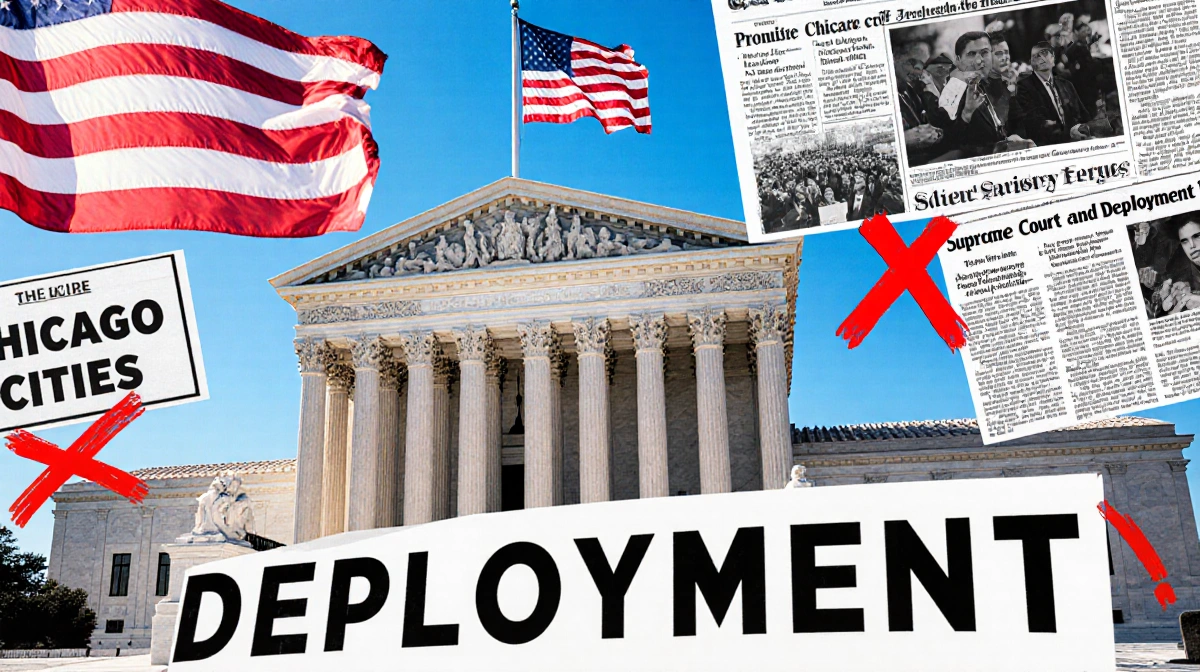
> “We will come back, perhaps in a much different and stronger form, when crime begins to soar again – Only a question of time!”
He has considered invoking the Insurrection Act to bypass court obstacles and views the crackdown as a political issue ahead of next year’s midterms.
Legal Challenges and Court Rulings
The Supreme Court in December refused to allow the deployment in the Chicago area, a rare setback for the administration.
Illinois Gov. JB Pritzker wrote on X:
> “Trump lost in court when Illinois stood up against his attempt to militarize American cities with the National Guard. Now Trump is forced to stand down.”
Hundreds of troops were sent to Portland, but a federal judge barred them from the streets and permanently blocked the deployment in November after a trial.
Oregon Gov. Tina Kotek said:
> “We have not yet received official notification that the remaining federalized Oregon National Guard troops can return home. They were never lawfully deployed to Portland and there was no need for their presence. If President Trump has finally chosen to follow court orders and demobilize our troops, that’s a big win for Oregonians and for the rule of law.”
The Ninth Circuit ordered the return of the Guard to California’s governor, who called the takeover illegal.
Impact on Cities and Officials’ Responses
The troops were never on the streets in Chicago and Portland because of legal challenges, yet Trump claimed they helped reduce crime.
Portland Mayor Keith Wilson stated:
> “The city’s reduction in crime was due to the efforts of local police and public safety programs.”
Chicago officials noted that the city recorded 416 homicides in 2025, the fewest since 2014.
Remaining Deployments in Other Cities
Troops remain in Washington, D.C., where a court ruling was paused, and in Memphis, where a judge blocked but stayed the decision, allowing continued deployment.
In New Orleans, 350 National Guard troops arrived in the French Quarter on Tuesday and will stay through Mardi Gras, with support from the Republican governor and the Democratic mayor.
| City | Status | Notes |
|---|---|---|
| Chicago | Paused | Supreme Court order, no street presence |
| Los Angeles | Removed | Dec. 15 court ruling, control returned to Gov. Newsom |
| Portland | Paused | Federal judge permanently blocked deployment |
| Washington, D.C. | Ongoing | Court ruling paused |
| Memphis | Ongoing | Judge blocked but stayed decision |
| New Orleans | Ongoing | Troops stationed for Mardi Gras |
Key Takeaways
- Trump’s federal Guard deployments have been halted in Chicago, LA, and Portland due to court rulings.
- The president plans to return if crime rises again.
- Other cities continue to host National Guard troops under varying legal circumstances.
The pause underscores the tension between federal initiatives and state authority over local security measures.