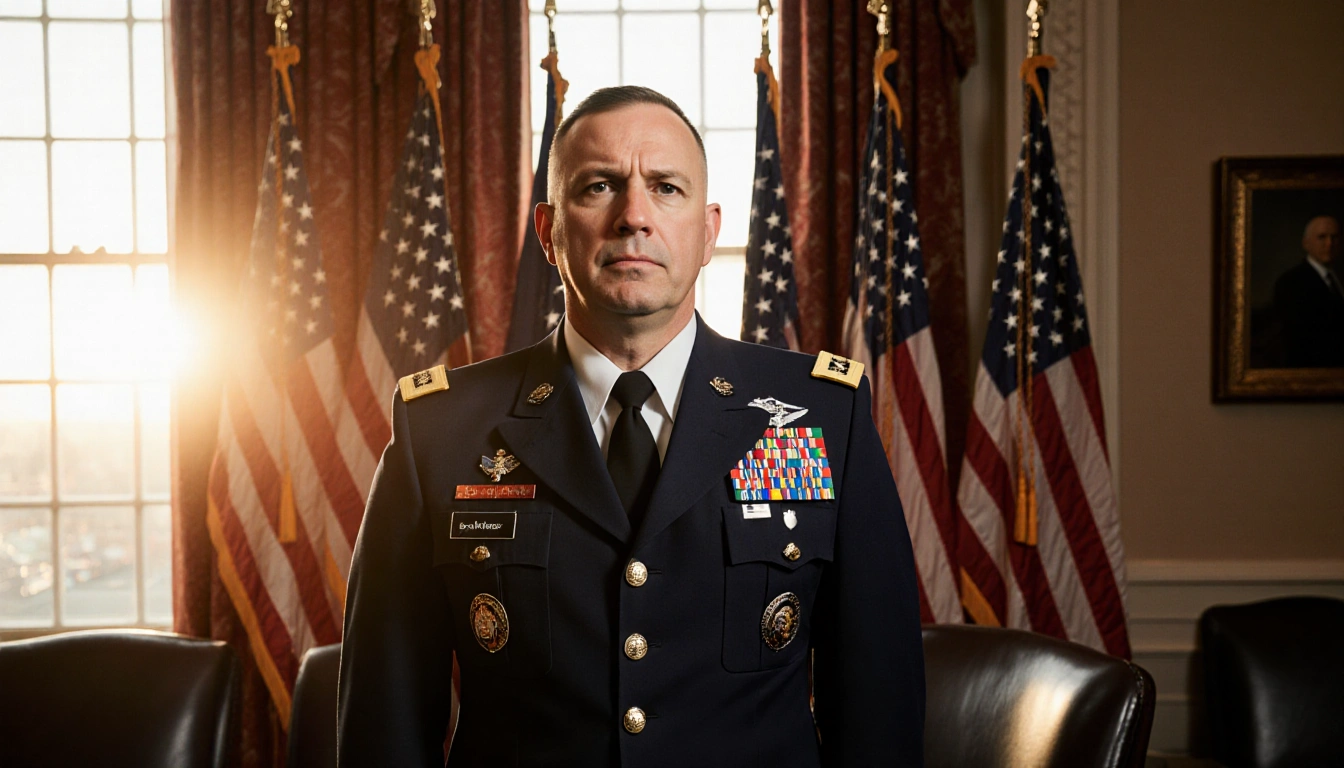
Gen. Gregory Guillot, the commander of U.S. Northern Command, told Senate Armed Services Committee lawmakers that he had no indication of an enemy within the United States. He said, ”I do not have any indications of an enemy within,” and added, ”We maintain readiness to execute the orders to defend the homeland in many ways, but I have not been tasked in that way.” These remarks came during a hearing that marked the first time the administration had formally explained its decision to deploy National Guard troops to several American cities. Guillot’s statement directly countered President Trump’s late-September declaration that an “enemy within” justified such deployments.
The Hearing and Guillot’s Statement
The hearing, held on Thursday, focused on the legality and necessity of the guard’s presence in cities like Los Angeles, Chicago, Washington, D.C., Portland, and Memphis. It also addressed the broader question of whether the National Guard can be used for domestic policing. The panel included Republican and Democratic senators who had divergent views on the issue. Republican Senator Roger Wicker (R-Miss.) emphasized the rise in violent crime, rioting, drug trafficking, and gang activity, saying, ”In recent years, violent crime, rioting, drug trafficking, and heinous gang activity have steadily escalated.” He called the deployments ”not only appropriate, but essential.”
Senator Ted Budd (R-N.C.) argued that the guard would not have been needed if state and local officials had removed criminal illegal aliens and repeat offenders from the streets. He stated, ”The problem had metastasized, and President Trump needed to step in.” In contrast, Democratic senators questioned the legality of sending troops to American cities over objections from state and local officials. They expressed concern that such deployments might violate state rights and federal law.
The hearing also allowed the Pentagon’s chief legal officer, Charles Young, to testify about the legal framework surrounding the guard’s deployment. Young explained that while federal laws generally prevent stationing troops at polling locations, the president retains authority to determine if an emergency requires a National Guard response. He also addressed concerns about the administration’s handling of military lawyers who raised issues about the guard’s deployment.
Guillot’s comments underscored the tension between the executive’s assertion of a domestic threat and the military’s assessment of readiness and tasking. His statement was a clear rebuttal of Trump’s rhetoric, which had called for the guard to be used as a training ground in ”dangerous” Democratic-run cities. The hearing’s outcome would have implications for the balance of power between federal, state, and local authorities.
Trump’s Rhetoric and Republican Support
President Trump’s late-September remarks framed the guard’s deployment as a response to an ”enemy from within.” He told generals gathered at Quantico, Va. on Sept. 30, that ”This is going to be a big thing for the people in this room, because it’s the enemy from within, and we have to handle it before it gets out of control.” Trump also suggested that the military should use some of these dangerous cities as training grounds, specifically referencing Democratic-run cities.
Republican senators rallied behind the president’s stance, arguing that the guard was needed to combat lawlessness that local officials had failed to address. Senator Roger Wicker called the deployments ”not only appropriate, but essential.” He cited escalating violence as justification for federal intervention. Senator Ted Budd echoed this sentiment, stating that the guard would not have been necessary if state and local officials had removed criminal elements from the streets.
Republican lawmakers also pointed to the president’s claim that the guard could help ”get criminal illegal aliens and violent repeat offenders off the streets.” They argued that the national security threat posed by these groups required a federal response. The hearing highlighted the divide between Republican support for the deployments and Democratic concerns about civil liberties.
The president’s rhetoric also included remarks about the guard’s role during civil unrest. In interviews, Trump had said that the president ”should use some of these dangerous cities as training grounds for our military.” He also referenced the possibility of using troops to shoot protesters during civil unrest in 2020, according to former Defense Secretary Mark Esper’s book. This statement was later brought up by Senator Mazie Hirono during the hearing.
Democratic Concerns and Legal Questions
Democratic senators raised several legal and constitutional questions during the hearing. Senator Elissa Slotkin (D-Mich.) questioned the legality of sending troops to American cities over the objections of state and local officials. She said, ”The decisionmakers, and the words coming out of the mouth of the commander in chief – using our cities as ‘training grounds’ … going after ‘the enemy within’ – does not give us confidence that this president is going to always use the military in an apolitical way that’s exclusively meant on protecting the United States.”
Slotkin asked Pentagon’s No. 2 lawyer, Charles Young, whether he would approve an order by Trump to place troops at polling locations in next year’s midterm election and whether that would be legal. Young responded that the scenario was hypothetical and that federal laws prevent the stationing of troops at polling locations, but the president has authority to determine if an emergency requires a National Guard response.
Senator Tammy Duckworth (D-Ill.) highlighted the guard’s traditional role in responding to natural disasters, not in assisting immigration agents. She said, ”Trump is forcing [service members] to make a horrible choice: Uphold their loyalty to the Constitution and protect peaceful protesters, or execute orders from the president.” Duckworth warned that troops could be dragged into court and would be on their own to plead their case to a jury, all because the commander in chief put them in an unprecedented situation that they don’t regularly train for.
Senator Elizabeth Warren (D-Mass.) asked Young about reports that the Trump administration had dismissed military lawyers who raised concerns about deploying the National Guard to American cities and striking alleged drug boats off the coast of Venezuela. Young denied these reports and said, ”Leadership is very attentive” to the concerns of military lawyers when they’re raised.
Senator Mazie Hirono (D-Hawaii) referenced comments made by former Defense Secretary Mark Esper in his book, in which he said Trump asked about troops being able to shoot protesters during civil unrest in 2020. Hirono asked, ”The president at one point said that protesters should be shot in the street, is that a legal order?” Young said he was unaware of Trump’s previous comments and that ”orders to that effect would depend on the circumstances.”
The hearing also served as a platform for senators to express condolences for the shooting of two West Virginia National Guard members on Nov. 26 in Washington, D.C. Spc. Sarah Beckstrom died a day later, while Staff Sgt. Andrew Wolfe remains hospitalized but improving, according to his family.
Judicial Interventions and Recent Events
The hearing came a day after a federal judge in California ruled that the administration must halt the deployment of the California National Guard in Los Angeles and return control of the troops to the governor. The ruling was a legal setback for President Trump’s bid to send troops to mostly Democrat-run cities in support of federal law enforcement. The president had ordered more than 4,000 troops to Los Angeles in June amid protests over immigration raids that have largely stopped.
The judge put the decision on hold until Monday, and the White House declared that it plans to appeal. Trump has also sought to send guard members to Chicago, Portland and Memphis, deployments that have been blocked or limited by judges. These judicial interventions underscore the contentious nature of using the National Guard for domestic policing.
The hearing also highlighted the broader context of the guard’s presence in cities such as Los Angeles, Chicago, Washington, D.C., Portland, and Memphis, where local officials had expressed concerns about the deployment. The federal court decisions reflect the tension between federal authority and state sovereignty over the National Guard.
The legal challenges raise questions about the scope of the president’s authority to deploy the National Guard without state approval, especially in light of the National Guard Bureau’s statutory responsibilities. The hearing’s discussion of the legal framework, including the role of the National Guard Bureau and the chain of command, provided insight into the complexities of such deployments.
Key Takeaways
- Gen. Guillot denied any indication of an enemy within, challenging President Trump’s justification for National Guard deployments.
- Republican senators defended the deployments as essential to address rising crime and illegal immigration, while Democrats raised legal and constitutional concerns.
- Federal court rulings have halted or limited guard deployments in several cities, reflecting ongoing disputes over the balance of federal and state authority.
The hearing underscored the deep divide over the National Guard’s role in domestic security and highlighted the legal and political battles that continue to shape the debate over federal troop deployments in American cities.