A federal appeals court panel lifted a lower court order that had halted President Donald Trump’s deployment of the National Guard to Washington, D.C., allowing troops to remain in the capital. The decision, announced on Wednesday, came as part of the Trump administration’s appeal after a district court had blocked the deployment last month. The move is seen as a win for the president’s campaign to intensify a crackdown on street crime in the nation’s capital. The order was paused while the appeals process continues, keeping the Guard on the ground. The ruling reflects the court’s view of the unique status of the District of Columbia. The decision is likely to influence the broader debate over federal authority.
The three-judge panel on the U.S. Court of Appeals for the D.C. Circuit unanimously agreed to pause the lower court order, clearing the way for the deployment to proceed. The panel’s action was taken on Wednesday, the same day the appeals were filed by the Trump administration. The decision does not resolve the underlying legal dispute, but it allows the National Guard to remain in Washington while the case moves forward. The order was issued in response to a ruling by U.S. District Judge Jia Cobb that blocked the deployment. The panel’s unanimous vote signals a split in the judiciary over the scope of presidential power. The decision is a procedural pause rather than a substantive ruling on the merits.
Judge Patricia Millett, an appointee of former President Barack Obama, authored the panel’s opinion. Millett emphasized that the District of Columbia is a federal district created by Congress rather than a constitutionally sovereign entity like the fifty states. She argued that the President possesses a unique power within the District to mobilize the National Guard. Millett noted that the Defendants appear likely to prevail on the merits of their argument. The opinion was joined by two Trump-appointed judges, Gregory Katsas and Neomi Rao. Their concurrence was separate and focused on the issue of the District’s legal standing to sue the administration.

Millett’s reasoning hinged on the distinction between the District and the states. She wrote that “Because the District of Columbia is a federal district created by Congress, rather than a constitutionally sovereign entity like the fifty States, the Defendants appear on this early record likely to prevail on the merits of their argument that the President possesses a unique power within the District – the seat of the federal government – to mobilize the Guard.” The opinion underscored that the District is not a sovereign state. The court noted that the President’s authority in the District is distinct from that in the states. The panel’s decision reflects a cautious approach to federal power. The ruling keeps the Guard in Washington while the appeal proceeds.
Millett also addressed the issue of out-of-state National Guard units. She wrote that deploying an out-of-state Guard to a non-consenting State to conduct law enforcement would be constitutionally troubling to the federal system. The court emphasized the duty to interpret ambiguous statutes to avoid serious constitutional questions. Millett added that the only issue before the district court was whether the President could request such deployments to the District of Columbia. The opinion clarified that the same reasoning would not apply to D.C. The decision keeps the Guard in Washington. The ruling is a procedural pause that does not settle the broader constitutional debate.
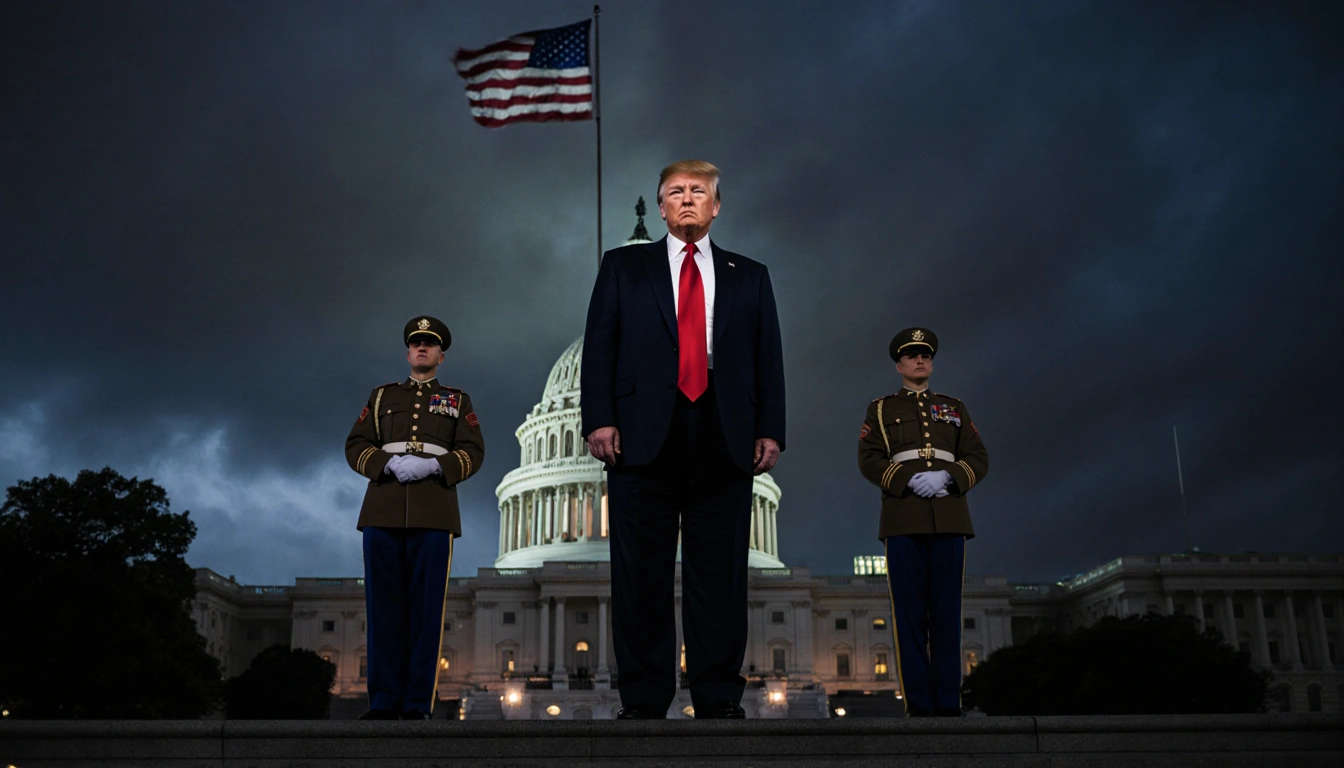
More than 2,000 troops are deployed in Washington, D.C. after Trump ordered them into the city earlier this year. The deployment is part of a broader effort to clamp down on local street crime. The troops include D.C.’s own National Guard and units from several states. The deployment has been a centerpiece of Trump’s law-and-order narrative. The Guard’s presence is intended to deter crime in the capital. The decision to pause the lower court order allows the troops to remain while legal challenges continue.
U.S. District Judge Jia Cobb, an appointee of former President Joe Biden, blocked the deployment last month. Her ruling stated that the Pentagon’s use of D.C. National Guard members for “non-military, crime-deterrence missions” and its calls for assistance from out-of-state troops likely exceeded federal authority. The judge also said the deployment violated the law. The ruling was based on the legal argument that the Guard’s use in the capital was beyond the President’s statutory authority. Cobb’s decision was a key obstacle to the deployment. The appeals panel’s pause lifts that obstacle.
National Guard members have been deployed to Washington from South Carolina, West Virginia, Mississippi, Louisiana, Tennessee, Ohio, Georgia, Alabama, and South Dakota. These out-of-state units are part of the broader deployment strategy. The inclusion of troops from multiple states has drawn scrutiny from state officials. The deployment reflects the federal government’s attempt to use the Guard to address local crime. The presence of out-of-state troops has been a point of contention in legal challenges. The appeals court’s decision keeps these units in Washington.
The Trump administration has sought to send the National Guard into cities in Illinois, Oregon, and California without their governors’ backing. Those efforts are currently facing legal challenges. The court has noted that deploying an out-of-state Guard to a non-consenting State would be constitutionally troubling. The administration argues that the Guard can be used for law enforcement in the District. The legal battles involve questions of federal versus state authority. The appeals panel’s pause allows the Guard to remain while the litigation continues.
The Supreme Court is weighing whether to let Trump’s deployment of the National Guard move forward in Chicago. The court could rule at any time. Judges Gregory Katsas and Neomi Rao, both appointed by Trump, wrote a separate opinion arguing that the District of Columbia may not have had legal standing to sue the administration. Millett did not join the concurring opinion. Rao wrote, “We have never recognized that the District possesses an independent sovereignty that can give rise to an Article III injury from actions of the federal government.” The opinion also stated that such an injury is likely untenable. The Supreme Court’s decision will shape future deployments.
Key Takeaways
- The appeals panel paused a lower court order, allowing the National Guard to stay in Washington, D.C.
- Judge Patricia Millett emphasized the District’s unique status, distinguishing it from the states.
- The decision does not resolve the underlying legal dispute but keeps the Guard on the ground while litigation continues.
The court’s procedural pause is a temporary measure that preserves the current deployment while the legal challenges unfold. It reflects a cautious approach to federal authority over the National Guard in the District. The case remains a focal point for debates over the balance between federal power and local control. The outcome will be watched closely by both supporters and critics of the Trump administration’s law-and-order strategy. The decision underscores the complexity of using the National Guard for domestic policing. The court’s ruling will influence future deployments and the broader legal landscape.