
At a Glance
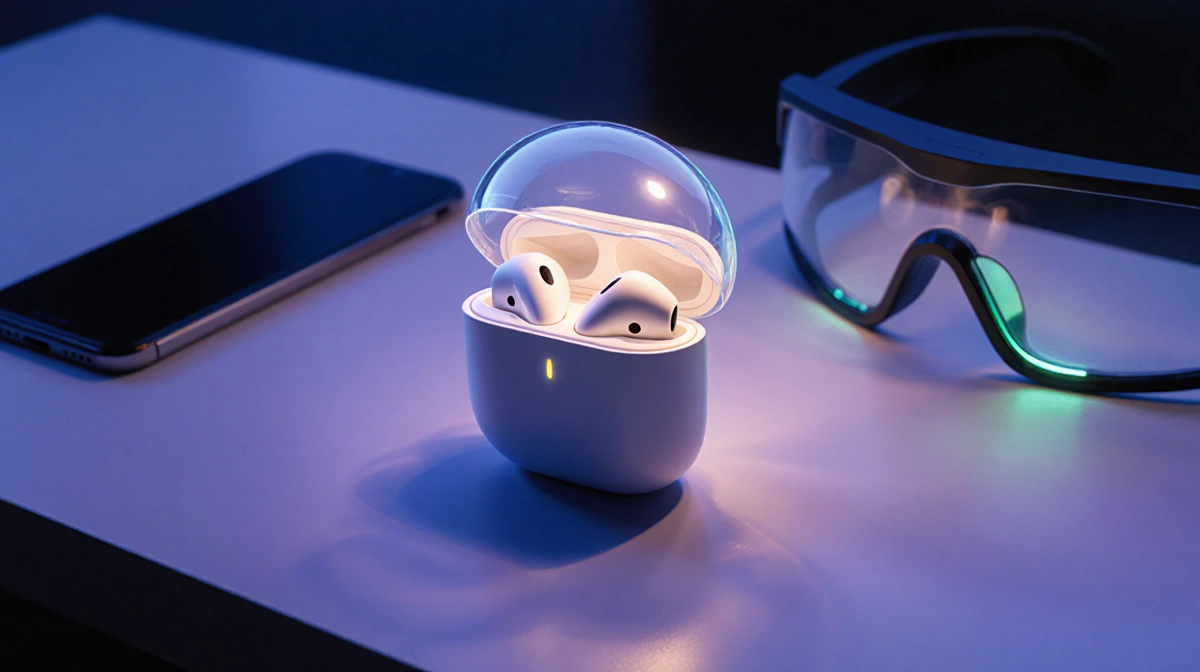
- Apple’s AirPods add Conversation Boost and Live Listen; Hearvana AI’s “sound bubble” isolates voices. Meta’s $16.2 M audio lab powers AR glasses. Reshape sound.
- Why it matters: These innovations turn passive noise control into smart, context-aware audio that could change everyday listening.
Noise-cancelling tech is moving from simple filters to intelligent, real-time solutions. While Apple’s latest AirPods Pro already offer fine-tuned features for listeners with hearing challenges, startups like Hearvana AI and big players such as Meta are pushing the boundary toward smarter sound control. At the same time, new materials and digital tools promise quieter homes and offices.
Apple AirPods Pro 3rd-Gen
Apple’s AirPods Pro, released in 2023, add several next-gen features. The earbuds offer Active Noise Cancelling, Transparency Mode, Adaptive Audio, and a Hearing Protection mode that lowers dangerous sounds automatically. Transparency Mode can be customized with Conversation Boost, which focuses on a single speaker, and Live Listen, which uses an iPhone mic to amplify a chosen voice.
- Active Noise Cancelling
- Transparency Mode with Conversation Boost
- Live Listen
- Hearing Protection
Hearvana AI’s “sound bubble”
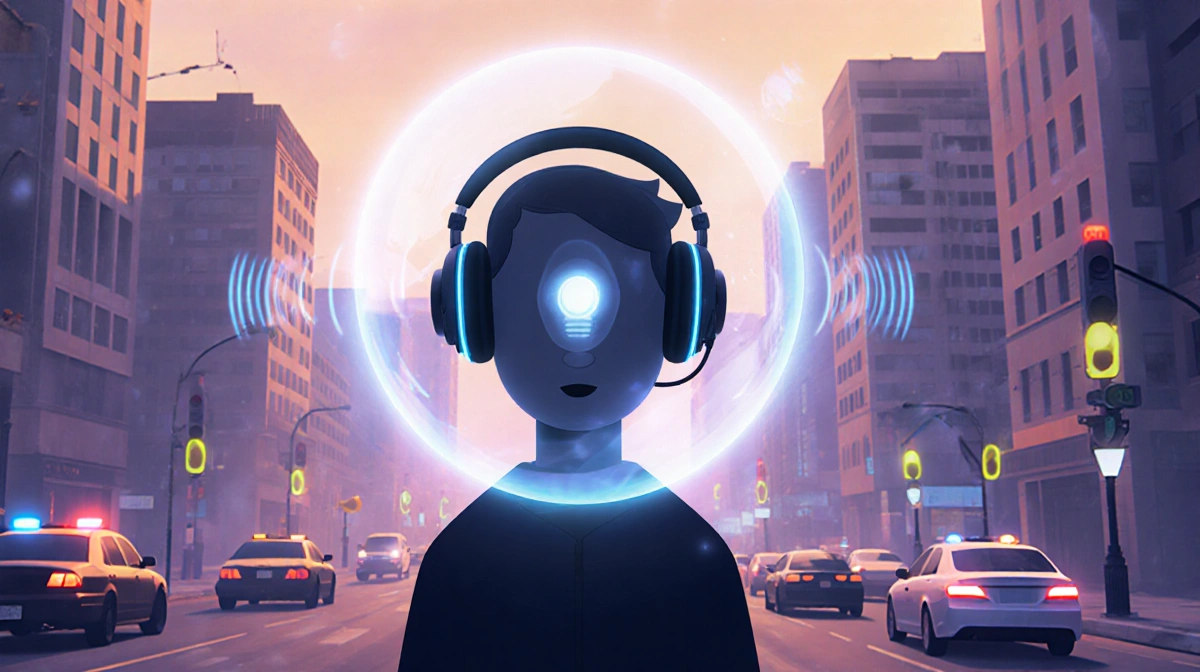
Seattle-based Hearvana AI raised $6 million in a pre-seed round that included Amazon’s Alexa Fund. Its prototype uses six microphones and on-device deep learning to recognize 20 ambient sounds, from sirens to baby cries. The system creates a real-time “sound bubble” that amplifies a target voice while suppressing all other sounds with a lag of less than 10-20 ms.
> “So I’m going to the beach and I want to listen to just ocean sounds and not the people talking next to me, or I’m in the house vacuum cleaning but I still want to listen to people knocking on the door or important sounds, like a baby crying,” explains Gollakota.
> “And that’s what we solved first. This was the difference between a vacuum cleaner and a door knock. They sound pretty different, right?”
> “For the sound bubble, we collected robotic data in different rooms and at different distances and then two humans, the authors of the paper, held the device and collected conversation data for 30 minutes,” says Gollakota.
> “It’s kind of an art honestly. Big Tech is throwing huge amounts of data and compute at the problem-we’re taking the opposite approach. You get intuition, it comes from experience building these systems, you have to understand the domain better.”
- Six microphones across the headband
- Trained on 20 ambient sound types
- Real-time “sound bubble” with <20 ms lag
Meta’s Audio Lab for AR Glasses
Meta invested $16.2 million in a Cambridge, UK audio research lab focused on AR and AI glasses. The lab features anechoic chambers, a configurable reverberation room, and a 3,600 sq-ft area with sub-millimetre optical tracking. Current Ray-Ban Meta glasses lack full noise canceling but include a five-mic array that reduces background noise during calls and recently added an AirPods Pro-style conversation focus feature.
Next-Gen Soundproofing
Sound-proofing is evolving beyond walls. MIT researcher Grace Yang experimented with silk fabrics that vibrate under voltage to interfere with unwanted noise. Conventional manufacturers are turning to hemp fibres (BASWA Natural, IndiSilence) and mineral wool (ROCKwool), all Quiet Mark certified, while digital tools from Krisp and ai-acoustics de-noise recordings after the fact, and bio-inspired acoustic wallpaper from Attacus Acoustics-based on moth-wing scales-offers a thin, broadband absorber that can reach 70-80 % energy absorption.
Key Takeaways
- Apple’s AirPods Pro now include Conversation Boost and Live Listen, enhancing accessibility.
- Hearvana AI’s on-device “sound bubble” isolates voices in real time with minimal lag.
- Meta’s $16.2 M lab is pushing AR glasses toward full noise canceling.
- New materials and digital tools promise quieter living and working spaces.
The industry is moving from passive filters to intelligent, context-aware audio. As AR glasses and new sound-absorbing materials mature, everyday environments-from commutes to bedrooms-could become quieter and more focused.