Introduction
NASA’s Artemis 2 mission will send the first crewed spacecraft back to the Moon in over 50 years. The Orion capsule will spend roughly a 10-day round-trip journey, and a group of volunteers on Earth will help track its radio signals. The effort is part of NASA’s push to build a resilient, public-private tracking ecosystem for future deep-space exploration.
At a Glance
- Artemis 2 will launch as early as February 6.
- 34 volunteers from around the world will passively track Orion.
- Tracking will cover Orion’s 10-day journey, including a 4-day lunar flyby at a minimum distance of 4,300 miles.
- Why it matters: The initiative expands the community’s ability to support human spaceflight and strengthens the commercial tracking market.
Global Volunteer Network
NASA called for ground stations with the capacity to record radio waves from Orion in August 2025. The response included a mix of agencies, commercial firms, universities, and hobbyist groups. The list of participants is:
- Canadian Space Agency
- Intuitive Machines
- ViaSat
- Amateur Radio Exploration Ground Station Consortium (Towson, Maryland)
- Deep Space Exploration Society (Kiowa County, Colorado)
- AMSAT Argentina
- Other academic institutions
The volunteers will operate passive receivers, meaning they do not transmit to Orion but listen to its communications. This method reduces cost and complexity, allowing more organizations to contribute.
Tracking During the Mission
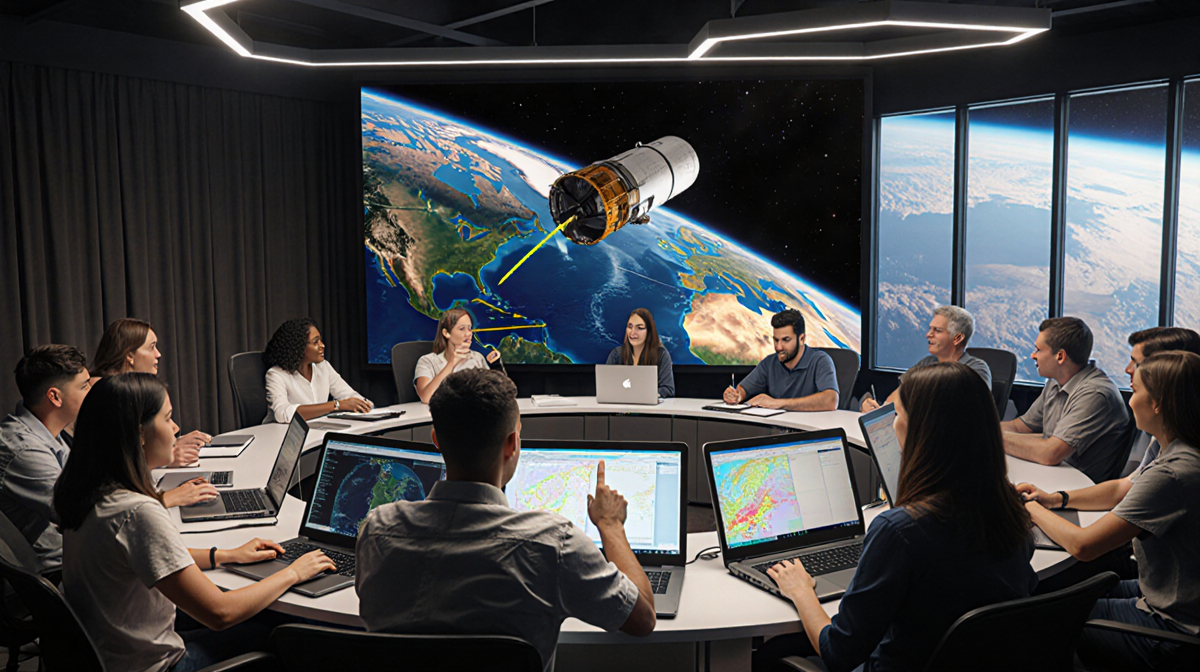
During Orion’s flight, NASA will use its Near Space Network and Deep Space Network to communicate with the spacecraft. Volunteers will record the same signals, creating a parallel dataset. After the mission, the volunteers will submit their recordings to NASA for analysis.
The goal is twofold: first, to verify that Orion’s telemetry can be captured by a wide range of equipment; second, to identify gaps in current tracking coverage that could affect future lunar or Martian missions.
NASA’s Tracking Strategy
Kevin Coggins, deputy associate administrator for NASA’s SCaN program, explained the rationale:
“By inviting external organizations to demonstrate their capabilities during a human spaceflight mission, we’re strengthening the marketplace we’ll rely on as we explore farther into the solar system,” said Kevin Coggins. “This isn’t about tracking one mission, but about building a resilient, public-private ecosystem that will support the Golden Age of innovation and exploration.”
Coggins emphasized that the data collected will help NASA assess the broader aerospace community’s tracking capabilities and inform improvements for future missions.
Participant Highlights
Amateur astronomer and citizen scientist Scott Tilley joined the effort. He is known for locating a lost NASA satellite in 2018 after it had been missing for nearly 12 years. Tilley tweeted:
“Testing systems for #Artemis2 data collection by decoding KPLO in lunar orbit. I’ll be using the Ettus B200 referenced with my Stanford Research PRS10 Rb standard which is disciplined with a Bodnar LPE-1420 for the Artemis Doppler gather mission.”
His tweet showcases the technical detail volunteers bring, from software-defined radios to precision timing equipment.
Mission Timeline
| Date | Event |
|---|---|
| February 6 | Planned launch of Artemis 2 |
| ~10 days | Orion’s total mission duration |
| ~4 days | Lunar flyby at 4,300 miles |
| ~6 days | Return to Earth |
The timeline reflects the mission’s phases, from launch to Earth re-entry.
Orion’s Flight Profile
Orion will first orbit Earth several times before heading to the Moon. The spacecraft will perform a four-day journey, approaching the Moon at a minimum distance of 4,300 miles (about 6,900 km). After the flyby, Orion will return to Earth and re-enter the atmosphere.
This trajectory provides a long window for both NASA’s primary tracking systems and the volunteer network to gather data.
Equipment and Techniques
Volunteers will use passive receivers, which capture radio signals without transmitting. The equipment ranges from commercial radio receivers to custom-built setups using software-defined radio hardware. The data collected will include signal strength, frequency, and timing information.
NASA will analyze the volunteer data alongside its own measurements to assess coverage, signal integrity, and potential improvements.
Community Impact
The initiative demonstrates how citizen science can contribute to high-profile space missions. By involving amateur groups and commercial firms, NASA broadens its network of monitoring stations.
The data will also help identify which regions or equipment types lack coverage, informing future investments in tracking infrastructure.
Future Applications
The lessons learned from Artemis 2 will apply to upcoming missions to the Moon and Mars. A resilient, distributed tracking network is essential for missions that rely on real-time telemetry and navigation.
The collaboration also provides a model for how government agencies can engage with the private sector and hobbyists to support space exploration.
Key Takeaways
- Artemis 2 will launch as early as February 6 and involve 34 volunteers worldwide.
- Volunteers will passively track Orion’s 10-day journey, including a lunar flyby at 4,300 miles.
- The initiative strengthens NASA’s tracking ecosystem and supports future deep-space missions.
- Participation from diverse organizations, from space agencies to amateur radio groups, showcases the breadth of expertise available.
- Data collected will guide improvements in tracking infrastructure for lunar and Martian exploration.
The Artemis 2 volunteer tracking program illustrates a collaborative approach to spaceflight support, combining government resources with community expertise to advance human presence beyond Earth.