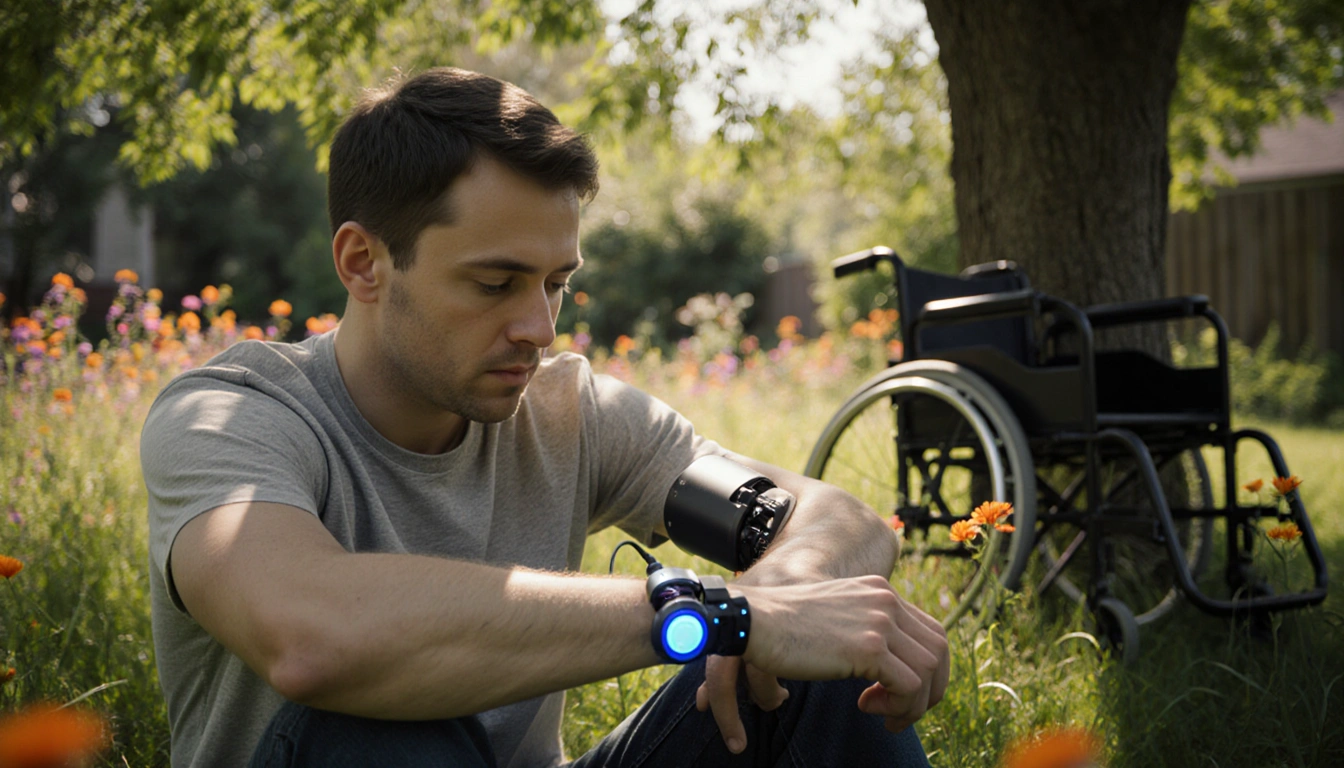
In a quiet suburb of Austin, a man with ALS just might have found a way to defy the disease.
A Sudden Diagnosis
In 2022, Jake Schneider noticed a muscle twitch in his arm. Months later, he learned he had Amyotrophic Lateral Sclerosis, also known as Lou Gehrig’s Disease. Schneider, who was a sales representative for a surgical device company, had just built a house and moved in three months earlier.
Life With ALS
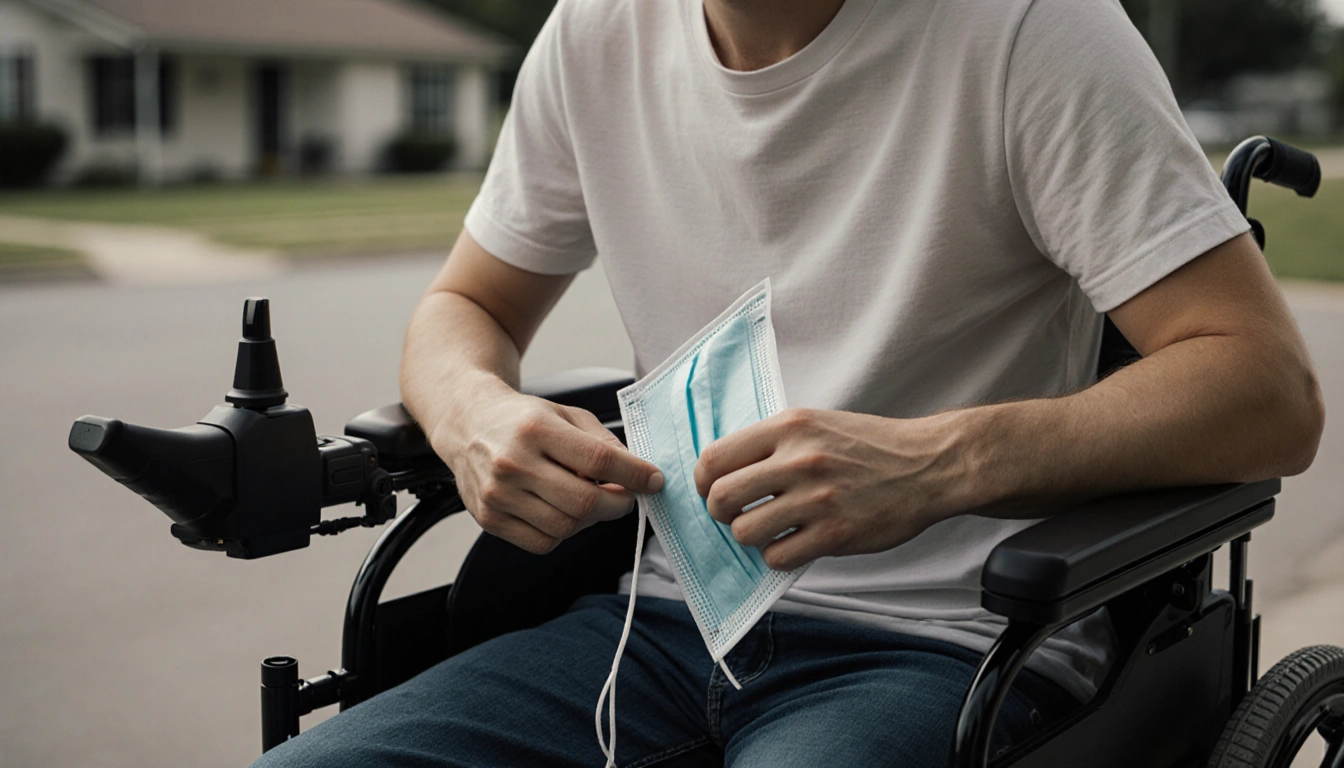
ALS affects 30,000 Americans each year. The neurodegenerative disease slowly destroys the brain’s ability to control muscles. Schneider first noticed problems with his hands: he could not tie his surgical mask at work and eventually began having trouble walking. Today he uses an electric wheelchair and can take a few steps, but it is risky. “I was a sales representative for a surgical device company. I had just built this house, like we moved in three months prior,” says Schneider.
Medical Perspective
Dr. Yessar Hussain, Director of the National Neuromuscular Research Institute and Austin Neuromuscular Center and a professor at the University of Texas, explained that the mechanism behind ALS is not yet clear. “Because the mechanism is not yet clear why the disease happened… the treatment is really not great,” he said. The life expectancy for someone with ALS is three to five years once symptoms begin, and there is no known cure. Ten percent of cases are genetic; the cause for the other ninety percent is unknown. Treatments are very limited.
A Moment of Despair
“I was kind of just dreading getting up in the morning because I had nothing to do,” Schneider said. He felt the loss of everyday activities and the looming uncertainty of his future.
Neuralink Offers Hope
Earlier this year, Schneider saw a news report about a quadriplegic, Nolan Arbaugh, who had a Neuralink chip installed in May 2024. Neuralink, a project of Elon Musk, is a small device the size of a quarter with tiny threads that can be placed in the left hemisphere of the brain using robotic surgery. It connects a patient’s brain to a computer, allowing control of a cursor on a screen.
Joining the Trial
Initially, ALS patients were not included in Neuralink trials, but this summer the door opened. Schneider signed up and became the seventh patient in the world to receive the device. Musk shared the news on his X account. The chip is installed just beneath Jake’s scalp.
First Hands-On Experience
Minutes after surgery, Schneider controlled the cursor on a Neuralink-provided laptop. “They tell you how it’s going to work, and in your mind, you can’t really compute what that means. But when you sit down for the first time and are able to control this cursor, it’s a feeling like something you can’t describe,” he said. At first he thought of moving a mouse with his arm, but now it feels natural.
Expanding Functionality
Beyond the cursor, Neuralink now has a new typing tool that Jake described as imagining different movements in his mind to create letters, hit space and even hit enter. He can control the app on his laptop and even use his iPhone. Charging the device with a special baseball cap gives him several hours of power, similar to a touch-pad charger for an Apple Watch or iPhone.
Gaming With the Brain
The latest tech is a gamepad controller. In his mind, he has three buttons he can click. “I’m actually able to hook my son’s Nintendo Switch to TV and play Mario Kart with him using my brain.” He hopes to be able to play Halo, his favorite game, soon. Jake Schneider and his son can now play video games together in a way that feels like a new kind of connection.
Daily Trials and Feedback
Each morning, Schneider wakes up and helps Neuralink with the tech. He gives them feedback, plays various games to test the ability of the device, and helps them understand what it’s like to live with a digital appendage. He and the other dozen Neuralink patients even have a competition to see who can get the high score in these tasks.
Regular Check-Ups
“Our daily sessions are all online, so we’ll spend a couple hours stress testing different models or give them more data. And then once every three months, I fly out to Phoenix, where I had the procedure done, to the Barrow Institute, and they do a check-up,” he said.
Critics and Caution
Neuralink is not without its critics. “The long-term effects have not been studied since it’s only been a little bit over a year since the first patients received the implants,” said Camille Perez, an undergraduate student at Princeton University. Perez wrote a recent article, published in the Princeton Medical Review, that explored some of the ethical concerns with the device and its development, including accusations of animal cruelty. “A lot of people are excited about the clinical trials, but when you’re playing with human health, it’s a little scary,” she said.
Optimism About Progress
“This is very early, so we don’t know what will happen after a few years,” said Dr. Hussain. He says the device will likely improve over time, and in the process, provide more independence for ALS patients and their families.
Personal Reflections
“You wake up every day, and you’re like, I wonder what I’m not going to be able to do today,” Schneider said. “I can’t play catch in the back yard with my son anymore. I can’t ride a bike with my son anymore. I can’t do things that most dads can do with their sons, but I’m able to do things that they can’t. You know? I’m able to play video games with my brain. And he thinks that the coolest thing in the world.”
Key Takeaways
- Jake Schneider, an ALS patient in Austin, received a Neuralink brain chip and can now control a cursor and play video games.
- Neuralink’s device is implanted beneath the scalp and connects the brain to a computer via tiny threads.
- The trial includes daily online sessions, regular check-ups in Phoenix, and competition among patients to improve performance.
The story highlights how emerging neurotechnology can offer new possibilities for people living with debilitating conditions, while also underscoring the need for continued research and careful evaluation of long-term effects.