On Wednesday, authorities announced that Naveed Akram, the 24-year-old man who fired the gun that killed 15 people on Bondi Beach, faces 59 charges, including 15 counts of murder.
The Arrest and Hospital Stay
Naveed Akram was taken to a Sydney hospital after police shot him and his father, Sajid Akram, 50, at the Bondi scene. Sajid died on-scene. Akram woke from a coma on Wednesday, and a video court appearance from his hospital bed saw him neither plead nor request bail. He is represented by Legal Aid NSW, which refuses media comment on behalf of clients. Police will keep him under guard until he can be transferred to prison.
The charges are extensive: one murder count for each fatality, one terrorist act, 40 counts of causing harm with intent to murder for the wounded, and a charge for placing an explosive near a building with intent to cause harm. The car found at the scene contained improvised explosive devices.
Funerals and a Community in Shock
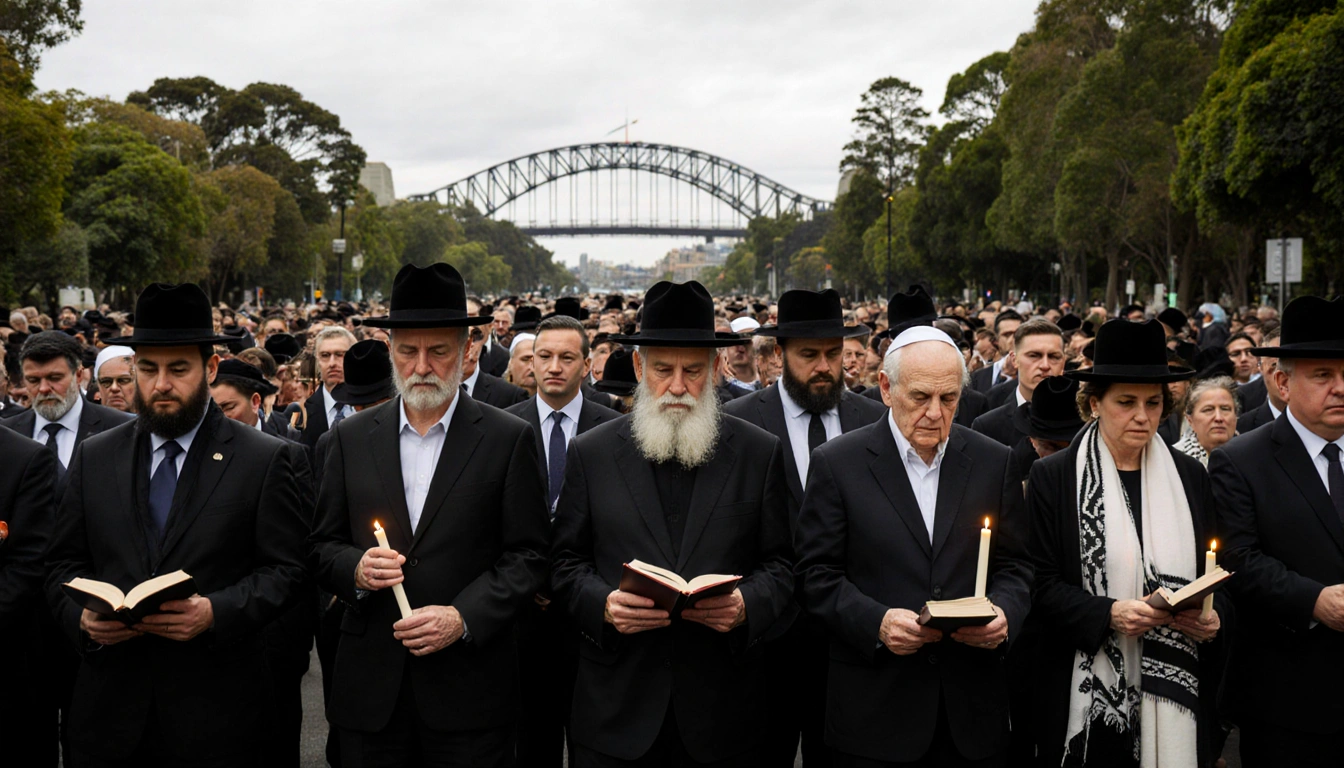
Hundreds gathered in Sydney to begin funerals for victims whose ages ranged from a 10-year-old girl to an 87-year-old Holocaust survivor. Jewish custom calls for burial within 24 hours, but coroner investigations have delayed the process.
The first burial was that of Eli Schlanger, 41, a husband and father of five who served as assistant rabbi at Chabad-Lubavitch of Bondi. Schlanger organized the Chanukah by the Sea event that evening. He was also a chaplain in prisons across New South Wales and in a Sydney hospital.
Schlanger’s father-in-law, Rabbi Yehoram Ulman, spoke through tears: “After what happened, my biggest regret was – apart from, obviously, the obvious – I could have done more to tell Eli more often how much we love him, how much I love him, how much we appreciate everything that he does and how proud we are of him,” Ulman said. “I hope he knew that. I’m sure he knew it,” Ulman added. “But I think it should’ve been said more often.”
Dmitry Chlafma, a mourner, said as he left the service that Schlanger was his longtime rabbi. “You can tell by the amount of people that are here how much he meant to the community,” Chlafma said. “He was warm, happy, generous, one of a kind.”
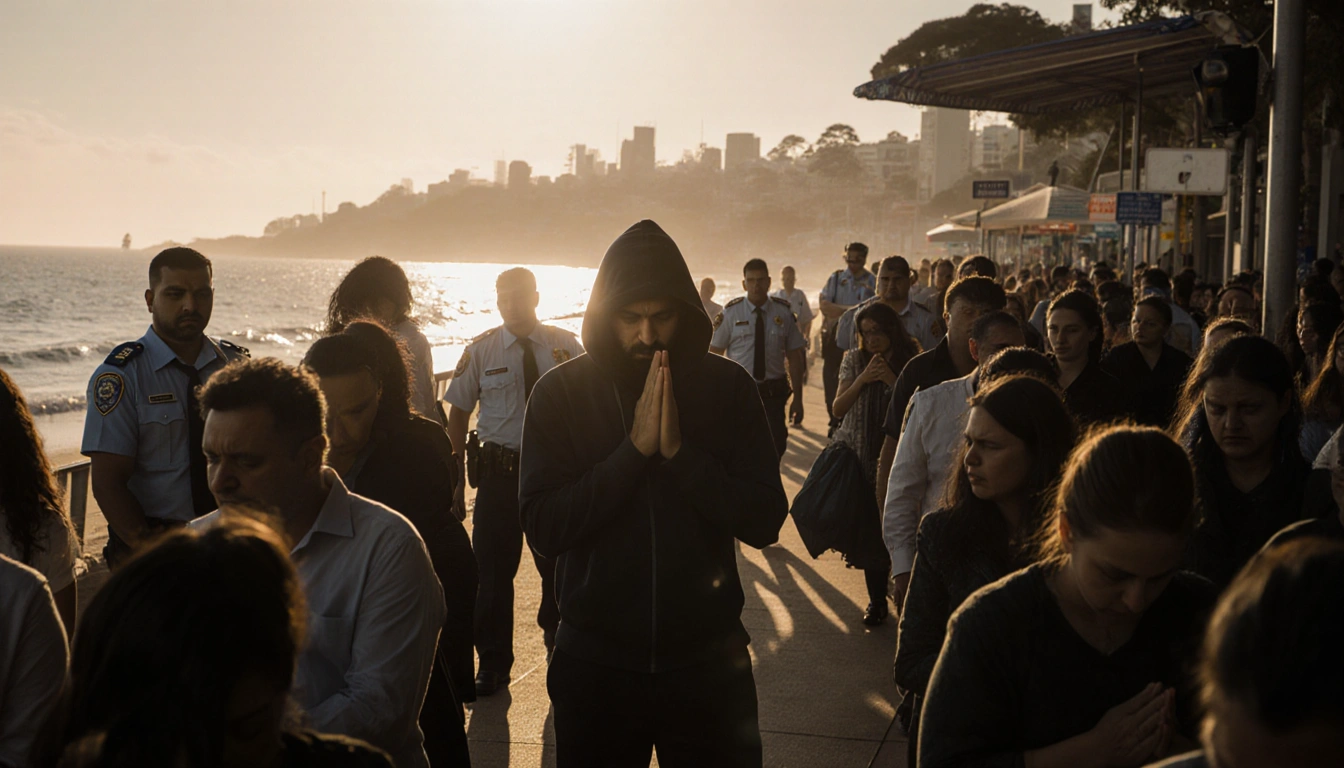
Outside the funeral, a heavy police presence kept the mood hushed and grim.
Investigating a Terrorist Connection
Australia’s federal police commissioner, Krissy Barrett, said Tuesday that the shooting was “a terrorist attack inspired by Islamic State.” While the group is now weakened, it continues to inspire independent attacks in the West. Police are also examining a November trip the suspects made to the Philippines, where groups such as Abu Sayyaf have historically supported IS.
Barrett noted that the older suspect had amassed six weapons legally, prompting calls for stricter gun controls.
Government Response and Calls for Reform
Prime Minister Anthony Albanese vowed Wednesday to take whatever action was needed to stamp out antisemitism after Jewish leaders and survivors demanded that the government had not heeded their warnings of violence. Albanese and state leaders have pledged to tighten Australia’s already strict gun laws, a sweeping reform not seen since the 1996 Port Arthur massacre that killed 35 people.
Proposed measures include restricting gun ownership to Australian citizens and limiting the number of weapons a person can hold.
Acts of Solidarity
In the days after the attack, Australians lined up at blood donation sites and, at dawn on Wednesday, hundreds of swimmers formed a circle on the sand to observe a minute’s silence before running into the sea. Part of Bondi Beach remained behind police tape as investigators combed the site, where shoes and towels abandoned by fleeing crowds lay strewn across the sand.
The Hanukkah celebration that the gunmen targeted has run for 31 years. Rabbi Ulman said it would return to Bondi, defying the attackers’ desire to make Jews feel unsafe. “Eli lived and breathed this idea that we can never ever allow them not only to succeed, but anytime that they try something we become greater and stronger,” Ulman said. “We’re going to show the world that the Jewish people are unbeatable.”
Key Takeaways
- Naveed Akram faces 59 charges, including 15 murder counts, after killing 15 people on Bondi Beach.
- 17 wounded remain in hospitals, with one patient in critical condition.
- The attack is being investigated as a terrorist act inspired by Islamic State.
- Prime Minister Albanese has pledged sweeping gun law reforms and action against antisemitism.
The tragedy has left Sydney’s Jewish community and the wider Australian public grappling with grief, safety concerns, and the urgent need for policy change.
Closing
The Bondi Beach massacre has shaken Australia, prompting a nationwide reckoning on gun control, antisemitism, and the threat of extremist ideologies. As the legal process unfolds and the community mourns, the nation faces the challenge of translating grief into concrete reforms.