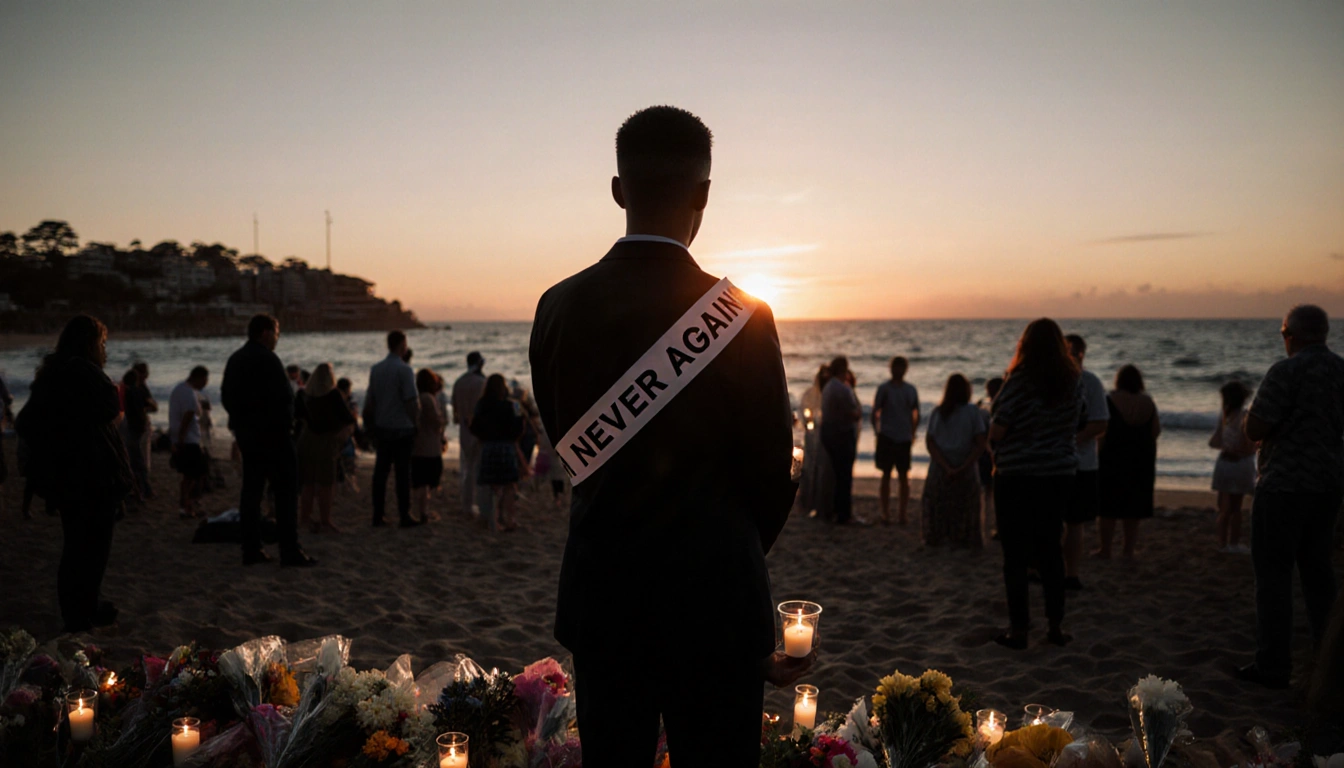
A tragic shooting on Sydney’s Bondi Beach left 15 people dead and dozens injured, marking the deadliest mass‑shooting in Australia in three decades. The incident, which occurred on a Sunday, prompted Prime Minister Anthony Albanese to call the assault an act of antisemitic terrorism and to announce a push for tougher gun laws the following Monday.
The Attack on a Jewish Celebration
The gunmen targeted a Hanukkah celebration held on Bondi Beach, where hundreds gathered for the first day of the eight‑day Jewish holiday. The attack took place during the festivities, and the victims included a 10‑year‑old girl, a rabbi and a Holocaust survivor. Dozens of others were wounded, some suffering serious injuries.
Suspects: A Father‑Son Pair
Authorities identified the suspects as a 50‑year‑old father and his 24‑year‑old Australian‑born son. The father, who was killed in the shooting, had arrived in Australia in 1998 on a student visa and was a resident at the time of his death. The son was shot and wounded; he is currently receiving treatment at a hospital.
Police reports indicated that the father held a firearms licence and was a member of a gun club, suggesting he was a trained shooter. The son, meanwhile, had been under investigation by the Australian Security Intelligence Agency (ASIA) for six months in 2019. ASIA examined the son’s ties to a Sydney‑based Islamic State group cell, but Albanese said the agency was more interested in the associates than in the son himself.
A Heroic Moment
A clip that circulated on Australian television showed a man tackling and disarming one of the gunmen, then pointing the gun at the attacker and setting it on the ground. Home Affairs Minister Tony Burke identified the man as Ahmed al Ahmed, a 42‑year‑old fruit shop owner and father of two. Ahmed was shot in the shoulder by the other gunman but survived.
Rising Antisemitic Incidents
The Bondi Beach shooting comes amid a surge in antisemitic attacks across Australia. In 2023, after the Hamas attack on Israel on 7 October and the ensuing Gaza war, antisemitic incidents—including assaults, vandalism, threats and intimidation—more than tripled. Special Envoy Jillian Segal reported the spike in a July briefing.

Last year, Sydney and Melbourne witnessed several high‑profile attacks: synagogues and cars were torched, businesses and homes were vandalised with graffiti, and Jews were assaulted in cities where 85% of the nation’s Jewish population resides.
Political Reactions
Prime Minister Albanese blamed Iran for two of the attacks in August and announced the severing of diplomatic ties with Tehran. Israel’s Prime Minister Benjamin Netanyahu urged Australia to act against antisemitic crimes, warning that Australia’s decision to recognise a Palestinian state would “pours fuel on the antisemitic fire.”
Australia’s Gun Control Context
Australia’s strict gun control laws have kept mass shootings rare. The 1996 Port Arthur massacre, where a lone gunman killed 35 people, prompted a sweeping tightening of firearms regulations. Subsequent major shootings included two murder‑suicides in 2014 (five killed) and 2018 (seven killed), and a 2022 shootout between police and Christian extremists in Queensland that left six dead.
The Bondi Beach tragedy has reignited calls for further tightening of gun laws. Albanese stated that the government is moving forward with new legislation aimed at reducing the availability of firearms and increasing oversight.
Key Takeaways
- 15 people were killed and dozens injured in a Bondi Beach shooting targeting a Hanukkah celebration.
- The suspects are a father and son; the father was a licensed shooter and a gun club member.
- Antisemitic incidents in Australia surged more than threefold after October 2023.
- Prime Minister Albanese has linked the attack to antisemitic terrorism and is pushing for tougher gun laws.
- The incident underscores Australia’s ongoing struggle to balance strict gun control with preventing targeted attacks.
The Bondi Beach shooting has left the nation in shock and prompted urgent discussions about gun regulation, antisemitism, and national security. The government’s response will shape Australia’s policy landscape for years to come.