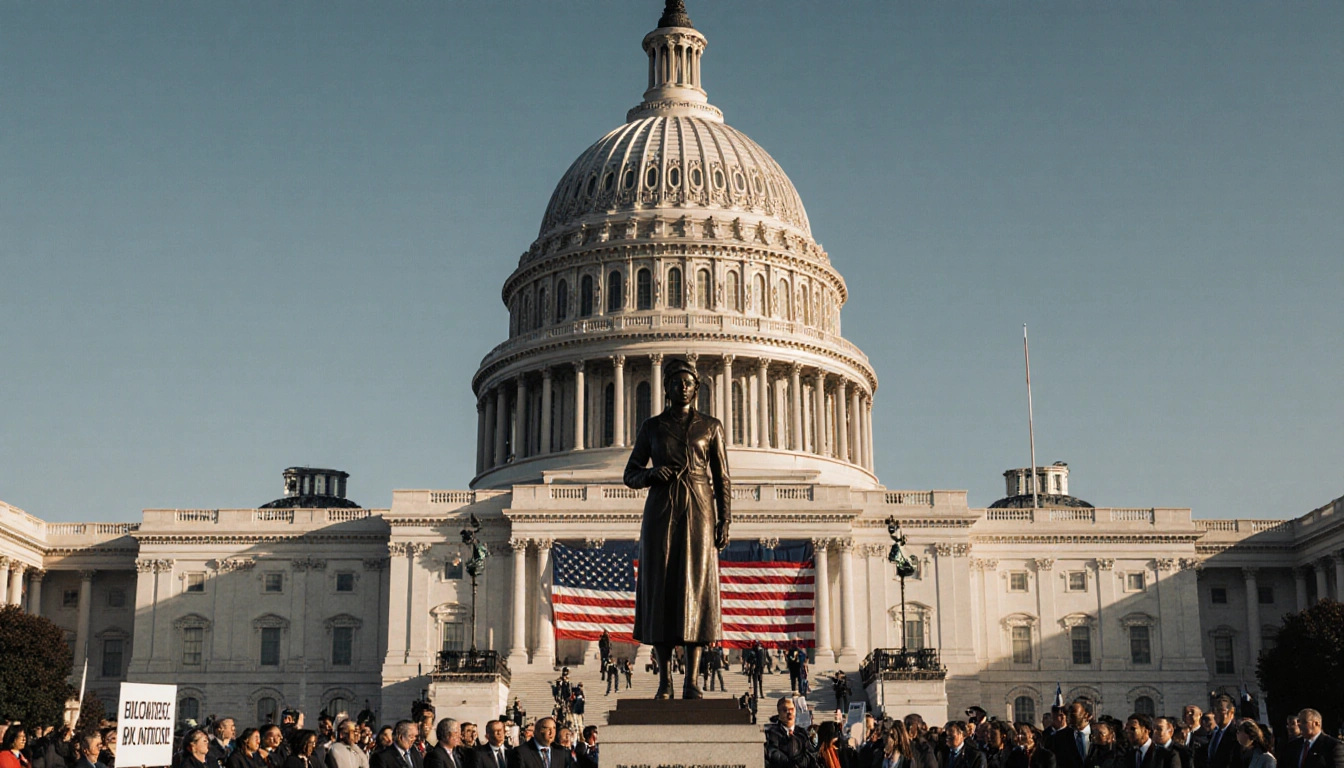
The U.S. Capitol unveiled a statue of 16-year-old civil-rights activist Barbara Rose Johns on Tuesday, replacing a Confederate monument that had stood in the building for more than a century. The new sculpture honors Johns’s 1951 student strike that helped spark the landmark Brown v. Board of Education decision.
A New Symbol for Virginia
The statue was placed in Emancipation Hall, a space that has become a focal point for honoring those who fought for freedom and equality. It replaces a statue of Confederate General Robert E. Lee that was removed from the Capitol in December 2020 and moved to the Virginia Museum of History & Culture. Lee had represented Virginia in the National Statuary Hall Collection for 111 years.
The statue of Barbara Rose Johns is one of two pieces that represent Virginia in the collection. The other piece is a portrait of George Washington, a figure who has long symbolized the nation’s founding ideals.
The Unveiling Ceremony
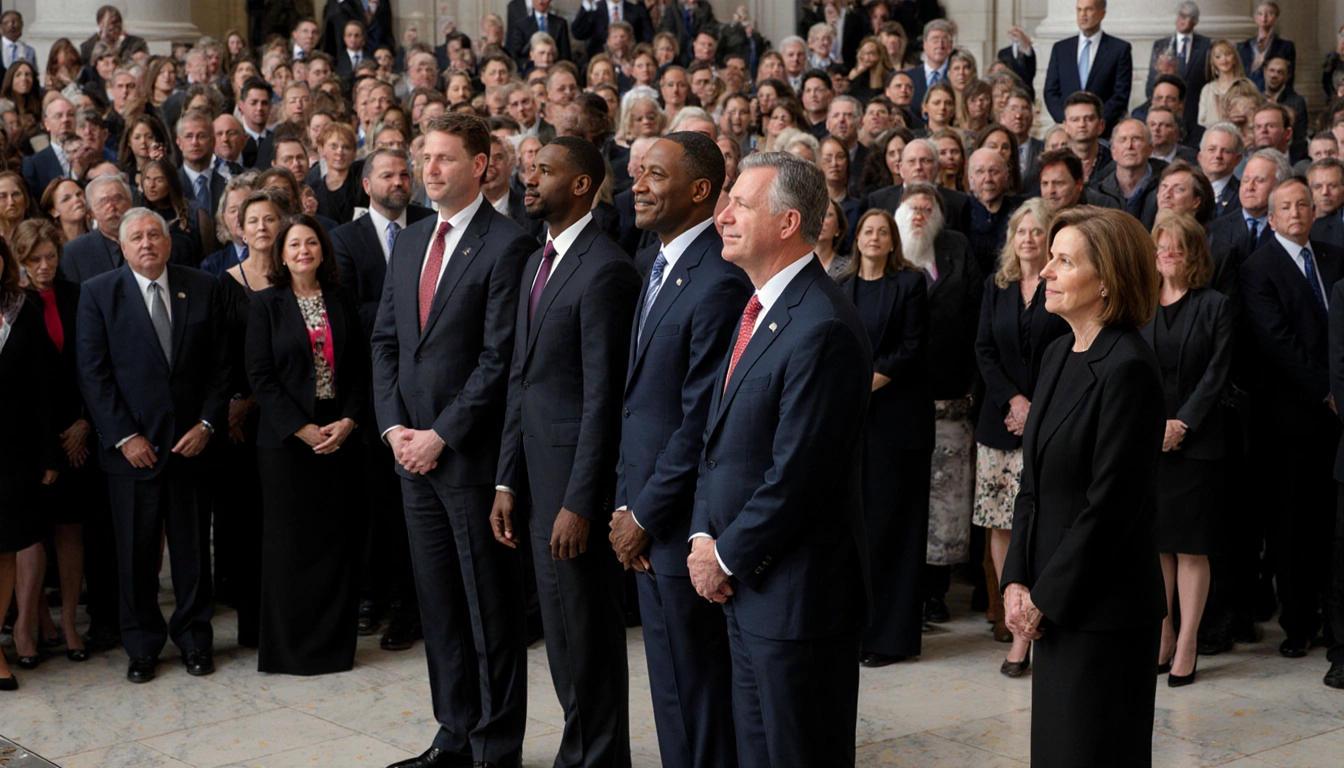
The unveiling ceremony brought together a mix of political leaders and community members. Republican House Speaker Mike Johnson, Democratic Minority Leader Hakeem Jeffries, Republican Virginia Governor Glenn Youngkin, Virginia’s congressional delegation, and Democratic Gov-elect Abigail Spanberger all attended. More than 200 members of Johns’ family were present, as Johnson noted.
Johnson opened the ceremony with a speech that highlighted Johns’s courage: “We are here to honor one of America’s true trailblazers, a woman who embodied the essence of the American spirit in her fight for liberty and justice and equal treatment under the law, the indomitable Barbara Rose Johns,” Johnson said.
The event featured musical performances from the Eastern Senior High School choir in Washington, D.C. The choir sang renditions of “How Great Thou Art,” “Ain’t Gonna Let Nobody Turn Me ‘Round,” and “Total Praise.”
The Statue and Its Significance
The sculpture, carved by Steven Weitzman of Maryland, shows a young Barbara Rose Johns standing beside a lectern, holding a tattered book over her head. The pedestal bears the words, “Are we going to just accept these conditions, or are we going to do something about it?” A quote from the Book of Isaiah, “And a little child shall lead them,” is also engraved.
The statue was approved by the Architect of the Capitol and the Joint Committee on the Library in July, after a state commission recommended replacing Lee’s statue with one of Johns in December 2020.
The statue will be placed in the Crypt, a space that houses many of the Capitol’s lesser-known works. The National Statuary Hall Collection currently displays 35 statues, with others located in the Hall of Columns and the Capitol Visitor Center.
Reactions and Statements
Jeffries, who led the Senate’s debate on the statue’s removal, praised the new representation: “The Commonwealth of Virginia will now be properly represented by an actual patriot who embodied the principle of liberty and justice for all, and not a traitor who took up arms against the United States to preserve the brutal institution of chattel slavery,” Jeffries said.
Governor Youngkin added a personal touch, recalling the conditions at R.R. Moton High School: “It’s an incredibly profound moment, a moment to stand in a tar shack classroom with a hot potbelly stove as a heater, tar paper walls, shabby desks, right where 16-year-old Barbara Rose Johns courageously organized her schoolmates and stood up to the lie – the lie was separate but equal,” Youngkin said of the museum.
Terry Harrison, one of Johns’ daughters, spoke about her mother’s character: “She put God first in her life. She was brave, bold, determined, strong, wise, unselfish, warm and loving,” Harrison said.
Joan Johns Cobbs, Johns’ sister, read from a journal entry: “And then there were times I just prayed, ‘God, please grant us a new school, please let us have a warm place to stay where we won’t have to keep our coats on all day to stay warm. God, please help us. We are your children too.'”
Historical Context and Legacy
In 1951, at age 16, Barbara Rose Johns led a student strike at R.R. Moton High School in Farmville, Virginia, demanding equal education. The strike drew the support of NAACP lawyers, who filed a lawsuit that became one of the five cases reviewed by the Supreme Court in Brown v. Board of Education. The Court’s 1954 decision declared “separate but equal” public schools unconstitutional.
After the strike, Johns married Rev. William Powell, becoming Barbara Rose Johns Powell. She raised five children and worked as a librarian in the Philadelphia Public Schools. She passed away at age 56 in 1991.
Johns is also honored in a sculpture at the Virginia Civil Rights Memorial outside the state Capitol in Richmond. The former high school is now a National Historic Landmark and museum.
Key Takeaways
- The Capitol replaced a Confederate monument with a statue of civil-rights pioneer Barbara Rose Johns, honoring her 1951 student strike.
- The statue was unveiled in Emancipation Hall with speeches from federal and state leaders, and performances by a Washington choir.
- The piece, sculpted by Steven Weitzman, will sit in the Crypt and reflects Johns’s legacy of courage, faith, and leadership.
The unveiling marks a significant shift in how the nation remembers its past, moving from a symbol of division to one of unity and progress.
Closing
The new statue of Barbara Rose Johns stands as a testament to the power of youth activism and the enduring struggle for equality. Its presence in the Capitol signals a broader recognition of the individuals who shaped the nation’s path toward justice.