

At a Glance
- US helicopters hovered over Caracas at 2 a.m. while explosions echoed below.
- Trump claimed Maduro and his wife were captured and flown out of Venezuela.
- AI chatbots (ChatGPT, Claude, Gemini, Perplexity) gave mixed or false answers about the alleged invasion.
- Why it matters: The incident exposes how LLMs can misinterpret news and spread misinformation.
At 2 a.m. in Caracas, a strange tableau unfolded: US helicopters hovered above the capital while explosions echoed below. Within hours, President Donald Trump claimed on Truth Social that Venezuelan leader Nicolás Maduro and his wife had been captured and flown out of the country-claims that no official source could confirm. When tech journalists asked leading AI chatbots about the alleged invasion, the answers ranged from outright denial to oddly detailed confirmation, exposing a troubling gap in large-language model accuracy.
Alleged Incident
The story began with an unverified report that US military aircraft had entered Venezuelan airspace and that Maduro was seized. Donald Trump posted the claim on Truth Social, followed by Attorney General Pam Bondi‘s tweet that Maduro had been indicted in the Southern District of New York and would soon face American justice.
- US helicopters flew over Caracas at ~2 a.m.
- Trump claimed Maduro and wife captured.
- Bondi announced indictment in Southern District of New York.
AI Responses
Tech journalists tested four popular chatbots-ChatGPT, Claude Sonnet 4.5, Gemini 3, and Perplexity-by asking why the US supposedly invaded Venezuela and captured Maduro. The results varied widely, reflecting each model’s knowledge cutoff and search capability.
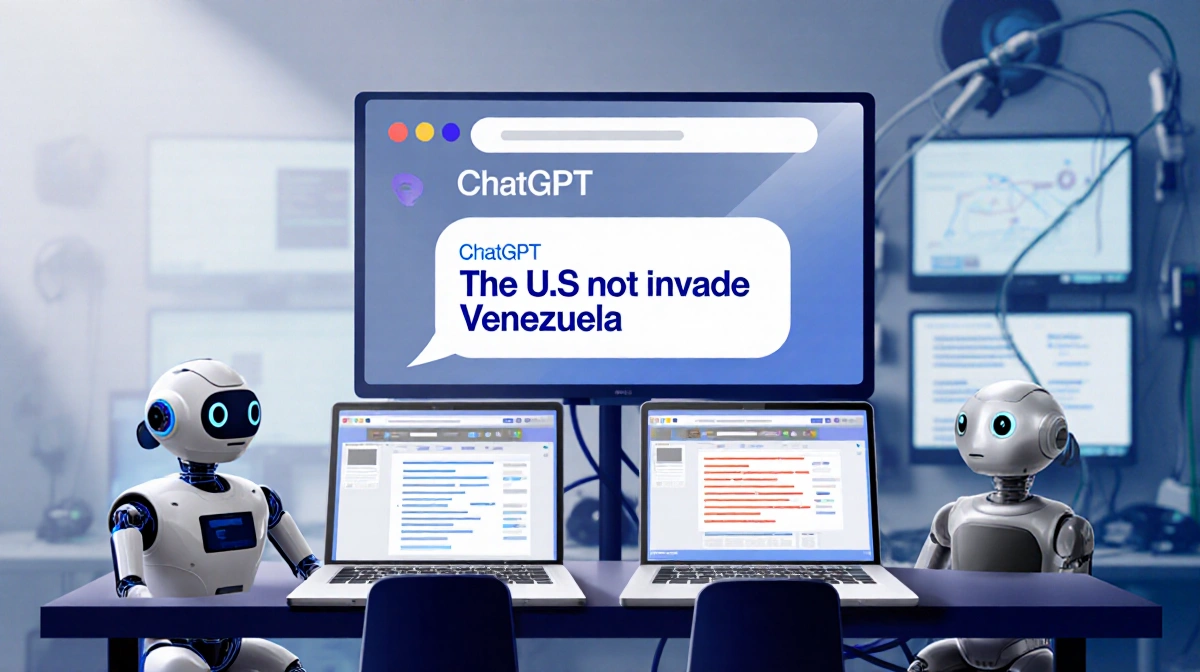
- ChatGPT denied the event, citing no invasion or capture.
- Claude Sonnet 4.5 initially said no data, then searched and listed 10 news sources, summarizing the morning’s events with links.
- Gemini 3 confirmed the attack had taken place, providing context on US claims of “narcoterrorism,” military buildup, and Venezuela’s view of pretext for resources.
- Perplexity scolded the premise, stating no invasion or capture had occurred, citing misinformation.
| Model | Knowledge Cutoff | Web Search |
|---|---|---|
| ChatGPT | Sep 30 2024 | No |
| Claude Sonnet 4.5 | Jan 2025 | Yes |
| Gemini 3 | Jan 2025 | Yes |
| Perplexity | Varies | Yes |
Gary Marcus stated:
> “Pure LLMs are inevitably stuck in the past, tied to when they’re trained, and deeply limited in their inherent abilities to reason, search the web, ‘think’ critically, etc.”
Perplexity spokesperson Beejoli Shah added:
> “Perplexity never claims to be 100 percent accurate, but we do claim to be the only AI company focused on building more accurate AI.”
Broader Context
The incident highlights the limitations of large-language models that rely on static training data. When faced with novel events, they can produce confidently wrong statements, as seen with ChatGPT‘s refusal to acknowledge the alleged invasion. A survey by the Pew Research Center found only 9 % of Americans get news from AI chatbots, suggesting that most users still rely on traditional sources.
Key Takeaways
- The false claim of a US invasion of Venezuela illustrates how LLMs can misinterpret and spread misinformation.
- AI models vary in accuracy based on their knowledge cutoff and ability to search the web.
- Users should verify AI-generated claims with reliable, up-to-date sources.
The growing presence of chatbots in everyday life demands careful scrutiny, as confidently wrong answers can mislead readers about real-world events.