
When 2026 models of the Chevrolet Traverse and Ford Explorer hit the showroom floor, buyers are left wondering which three-row crossover offers the best mix of room, tech, performance and price.
Space and Comfort
The Traverse is the clear winner in interior volume. Its rear seats are a bit hard and flat, but the third-row seats can comfortably fit adults and the cargo area behind that row is larger than the Explorer’s. The Traverse can seat up to eight people, while the Explorer’s maximum capacity is seven because its second-row legroom is tighter and the third row is only suitable for children and teenagers. The Explorer’s cargo space is respectable for a three-row crossover, especially with the under-floor storage behind the third row that expands usable space beyond what the specs show, but it still falls short of the Traverse’s generous capacity.
Technology
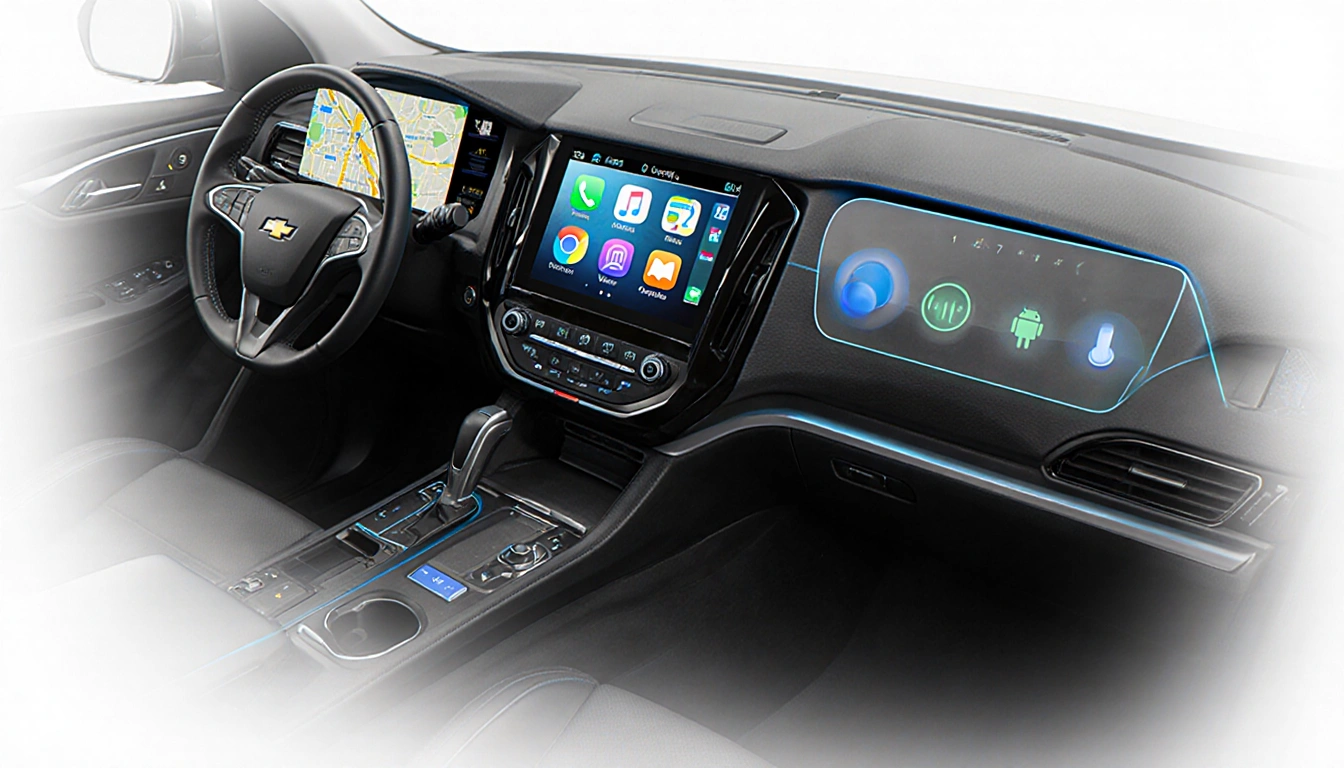
In terms of in-car technology, the Explorer edges ahead in Edmunds’ scoring, but the gap is narrow. The Traverse offers a 17.7-inch touchscreen, whereas the Explorer uses a 13.2-inch screen. Both vehicles include Google Built-in capability with integrated Google Maps and Google Assistant, allowing voice control of many functions. Wireless Apple CarPlay and Android Auto are available on both models.
When it comes to driver-assist features, the Explorer comes standard with lane-centering steering assistance that works with its adaptive cruise control. The Traverse must be upgraded to the full hands-free highway driving assist system known as Super Cruise to receive comparable functionality. The Explorer also offers a similar BlueCruise hands-free driving system.
Driving and Fuel Economy
The Explorer is noticeably more engaging to drive. Its standard 300-horsepower engine and optional 400-horsepower V6 in the Explorer ST deliver quicker acceleration and more agile handling around corners and in emergency maneuvers. The Traverse’s 328-horsepower engine, while powerful, produced slower acceleration in Edmunds’ testing. The Traverse’s ride is described as overly firm, and its handling is considered ponderous.
Fuel-economy figures also favor the Explorer. The Explorer’s standard engine achieves an EPA-estimated 24 mpg combined with rear-wheel drive and 23 mpg with all-wheel drive. The Traverse gets an estimated 22 mpg combined with front-wheel drive and 21 mpg with all-wheel drive.
Pricing and Value
Price differences are subtle at the entry level. The Explorer starts at $42,280 and the Traverse at $42,695. Adding all-wheel drive costs $2,000 on both vehicles. Mid-grade models are similarly priced, but the Traverse’s top trims become significantly more expensive than the Explorer’s, even though the equipment levels are comparable. The 400-horsepower Explorer ST begins at a lower price than the fully loaded Traverse RS, which is primarily sportier in appearance.
The Traverse’s larger interior does add value, but the Explorer’s advantages in technology, performance and fuel economy are substantial.
Key Takeaways
- The Traverse offers more passenger and cargo space, seating up to eight.
- The Explorer has a higher technology score, a smaller screen, and better driver-assist features.
- The Explorer performs better in acceleration, handling and fuel economy.
- Pricing is similar at base level, but the Traverse’s higher trims are pricier.
Chevrolet’s Traverse delivers on interior volume, while Ford’s Explorer wins in technology, performance and fuel economy, leading Edmunds to recommend the Explorer as the better overall choice for most buyers.
Closing
With both models starting at comparable prices, the decision comes down to what matters most to a buyer: the Traverse’s generous room or the Explorer’s advanced tech and stronger performance. Edmunds’ evaluation points to the Explorer as the recommended choice, but the Traverse remains a compelling option for families that need maximum space.