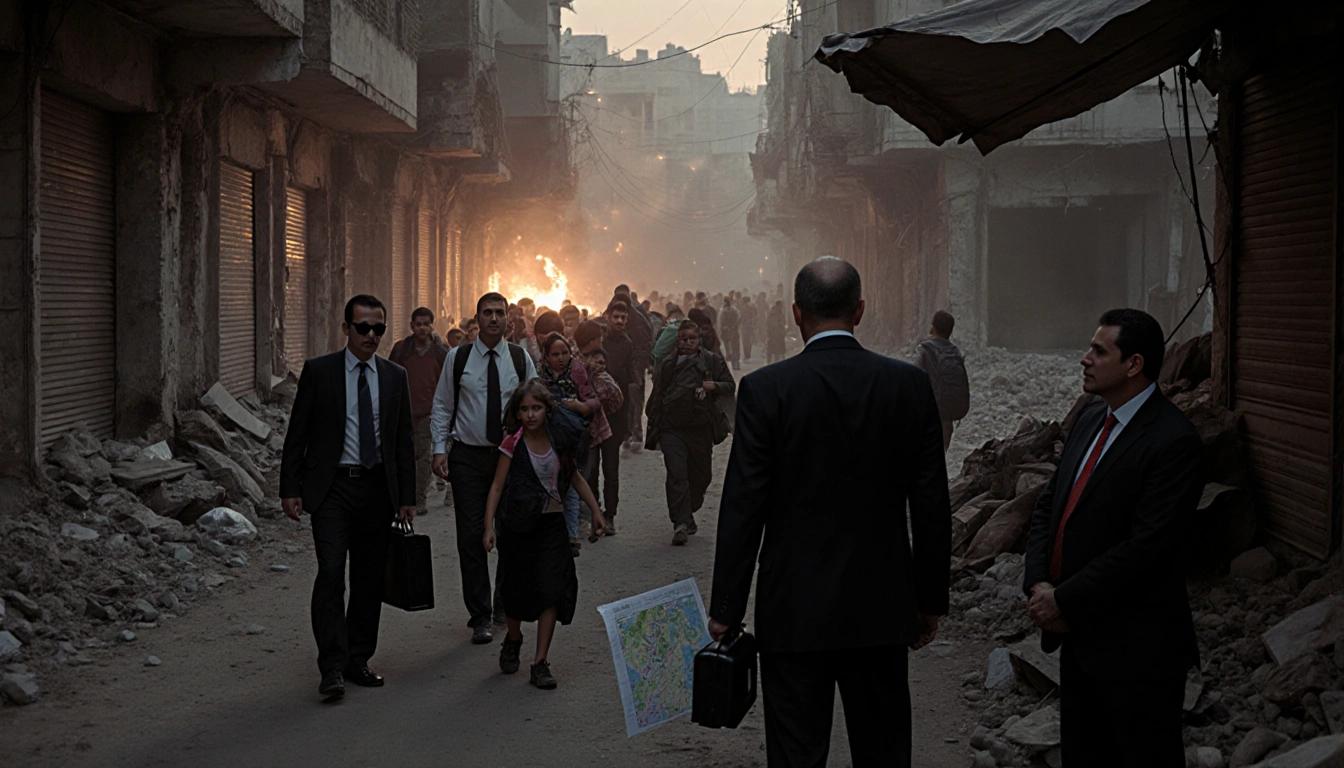
On Monday night, gunfire and shelling erupted in Aleppo’s Sheikh Maqsoud and Achrafieh neighborhoods, forcing dozens of families to flee. The clashes came as Turkish officials arrived in Damascus to discuss a deadline for a merger between the Syrian government and Kurdish-led forces in the northeast.
Escalation in Aleppo
SANA, Syria’s state-run news agency, reported that two civilians were killed and 15 others wounded by shelling. The Kurdish-led Syrian Democratic Forces (SDF) claimed 17 people were injured and a woman was killed, presenting a different casualty count. The Syrian Civil Defense agency said two emergency responders were wounded when SDF fighters opened fire on their vehicle. Statements from both sides accuse the other of opening fire first: the SDF says Syrian forces fired on a Kurdish checkpoint, while government officials blame the SDF for the initial attack.
Later that evening, the Syrian defense ministry ordered a halt to all fire. The SDF followed suit, citing “ongoing de-escalation efforts.” The exact trigger for the new clashes remains unclear, but the rapid cease-fire indicates both sides were eager to prevent further escalation.
Turkey’s Diplomatic Mission to Damascus
Turkish Foreign Minister Hakan Fidan arrived in Damascus with a delegation that included Defense Minister Yasar Guler and intelligence chief Ibrahim Kalin. The talks focused on three key issues: integrating the SDF into a new Syrian army, Israel’s military incursions in southern Syria, and the fight against the Islamic State. Fidan stated, “Syria’s stability means Turkey’s stability. This is extremely important for us.” He urged the SDF to “cease to be an obstacle to Syria achieving stability, unity and prosperity.”
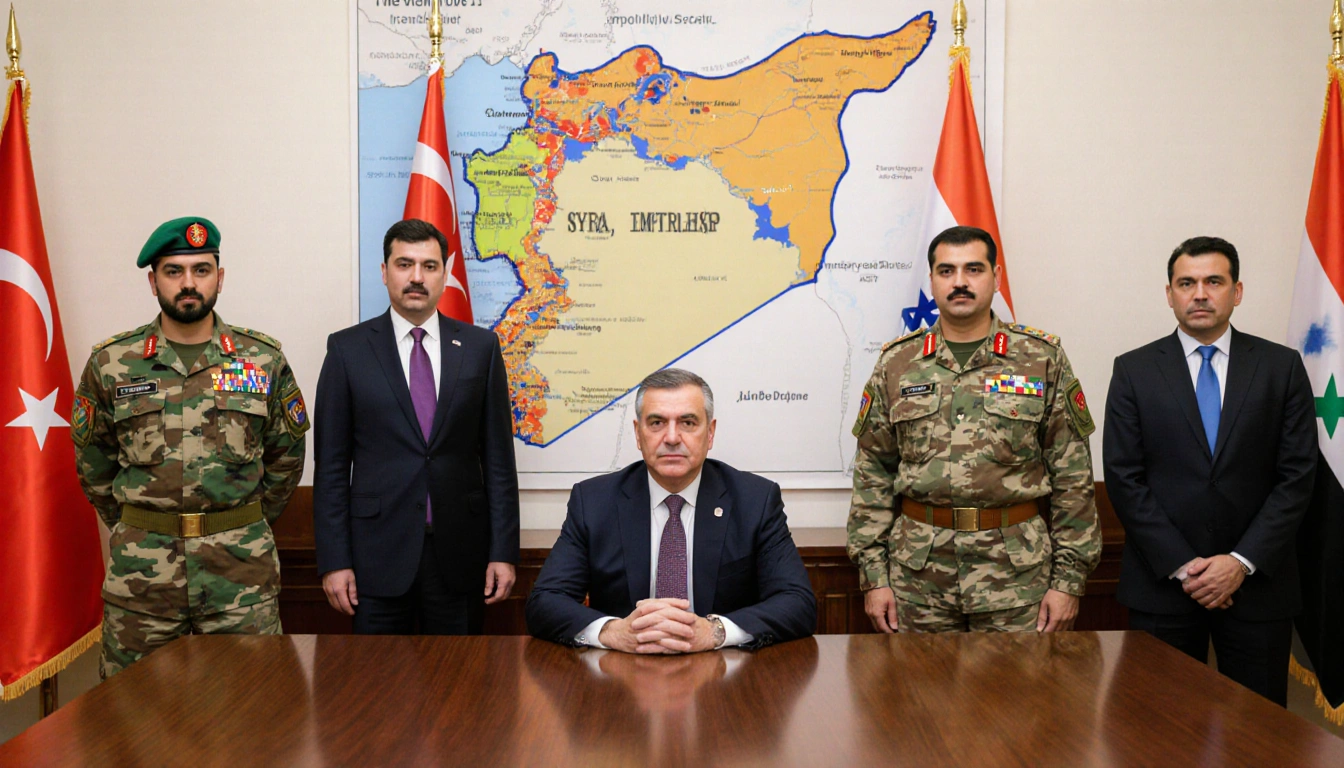
The delegation also met with Syrian interim President Ahmad al-Sharaa. Fidan’s remarks came amid a broader effort to push the stalled integration deal to fruition before the end of the year.
The Integration Deal and Its Stumbling Blocks
In March, al-Sharaa’s government signed an agreement with the SDF to merge the Kurdish-led force into a new Syrian army. The contract left many details vague, and implementation has stalled. A major point of contention is whether the SDF should remain a cohesive unit or be dissolved with its members absorbed individually.
Turkey opposes the SDF joining as a single unit, labeling it a terrorist organization because of its ties to the Kurdistan Workers’ Party (PKK). The PKK has waged a long-running insurgency in Turkey, though a peace process is underway. Kurdish officials say a preliminary agreement allows three SDF-affiliated divisions to integrate as units, but the exact status of the deal is unclear.
Al-Shibani, the Syrian foreign minister, accused the SDF of “systematic procrastination.” He added that Damascus had submitted a proposal to move forward with the merger and that a response was received on Sunday, though he did not elaborate. The original deadline for the March deal was the end of the year, and fears of a military confrontation have risen if progress is not made.
Turkey’s Stance on the SDF and Israel
Fidan criticized Israel’s “expansionist policies” in Syria and accused the SDF of coordinating with Israel, though he offered no evidence. Israel has been wary of new authorities in Syria since the fall of former President Bashar Assad in December 2024. Israeli forces have seized a U.N.-patrolled buffer zone in southern Syria and launched hundreds of airstrikes on Syrian military sites.
Al-Sharaa, a former leader of an Islamist insurgent group, has stated he does not want a conflict with Israel. Nevertheless, Israeli actions in the south have heightened tensions in the region.
Turkey, Saudi Arabia, and Qatar have worked to persuade U.S. President Donald Trump to lift long-standing sanctions on Syria. The Turkish military has also supported the new Syrian army by training cadets and officers.
Omer Celik, spokesman for Turkish President Recep Tayyip Erdogan’s ruling party, told reporters at a new conference last Friday that Turkey’s military has preparations in place to ensure Turkey’s security. He added, “We don’t want this to be necessary.” Celik emphasized that “the agreement’s provision must be implemented quickly” and that “in the coming period, we should focus our energy on Turks, Kurds, and Arabs living together in prosperity and peace.”
Key Takeaways
- Aleppo’s clashes resulted in civilian casualties and displaced families, with conflicting reports from SANA and the SDF.
- Turkey’s delegation in Damascus is pressing for a rapid implementation of the March integration deal before the year’s end.
- Turkey opposes the SDF’s integration as a single unit, citing ties to the PKK, while Kurdish officials claim a preliminary agreement allows unit-level integration.
The situation remains volatile, with both sides engaged in a delicate balance of diplomacy and military readiness.
Closing
The unfolding events in Aleppo, the stalled integration of Kurdish forces, and the broader regional tensions underscore the fragility of Syria’s path to stability. As Turkish officials push for a swift resolution, the international community watches closely, aware that any delay could reignite conflict in an already volatile landscape.