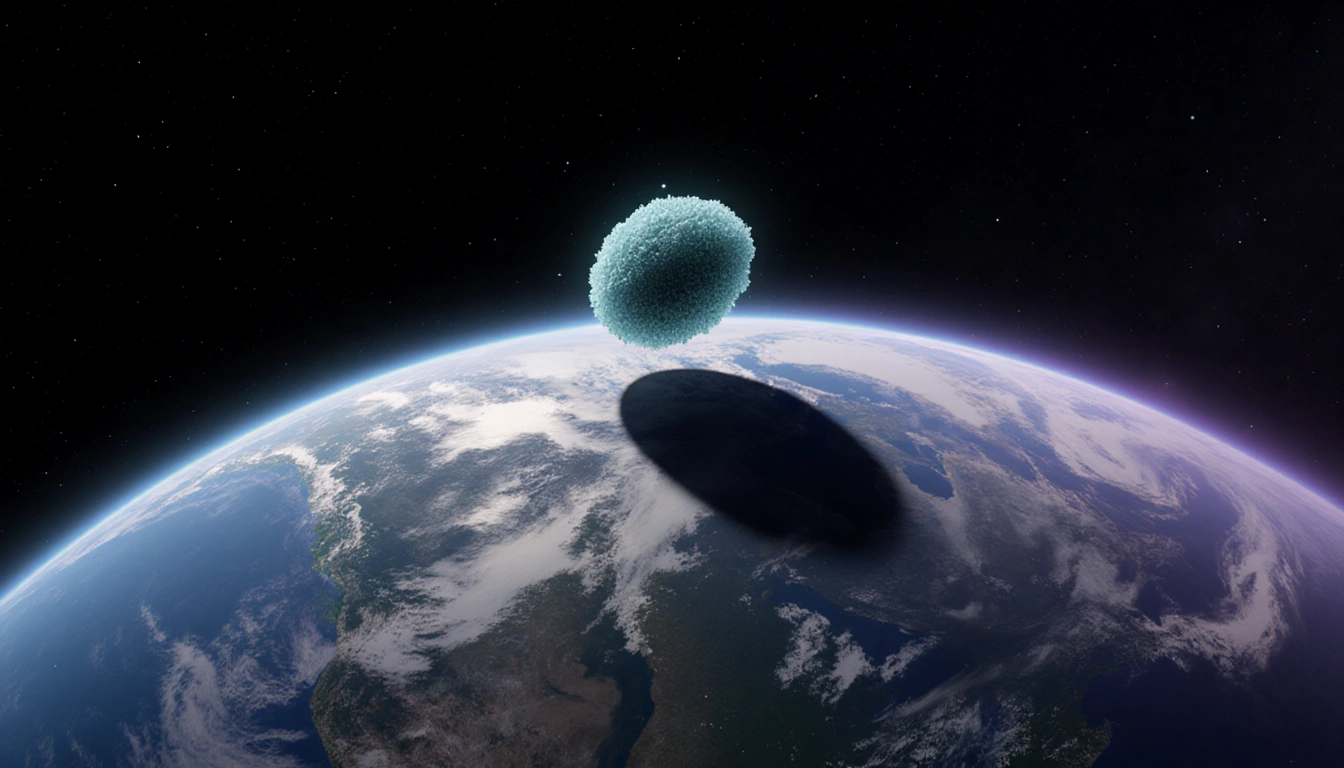
This Friday, a wandering comet from another star will pass within 167 million miles of Earth, offering a brief celestial show before it leaves our solar system for good.
Discovery and Early Observations
The comet, designated 3I/Atlas, was first spotted over the summer by NASA’s Atlas telescope in Chile while searching for potentially hazardous asteroids. 3I/Atlas was discovered in July, adding a new interstellar visitor to the handful of known objects.
NASA’s Focus on the Ice Ball
NASA’s space telescopes are currently tracking the comet as it approaches its closest point to Earth. The observatories are monitoring its activity and composition, hoping to learn more about its origins.
Size and Fading
Scientists estimate 3I/Atlas to be between 1,444 feet (440 meters) and 3.5 miles (5.6 kilometers) in diameter. The comet is gradually fading as it exits the inner solar system, making it harder to observe over time.
A Chance for Backyard Astronomers
Because the comet is bright enough for amateur telescopes, backyard astronomers are encouraged to observe it during the night sky this week. The fading light may make it a fleeting target for those with the right equipment.
Jupiter Encounter in March

In March, 3I/Atlas will swing even closer to Jupiter, passing within 33 million miles (53 million kilometers). This close approach will give scientists a rare opportunity to study the comet’s interaction with the planet’s gravity.
Interstellar Future and Expert Insight
Paul Chodas, director of NASA’s Center for Near Earth Object Studies, said the comet will reach interstellar space in the mid‑2030s, never to return. His statement underscores the comet’s one‑time visit to our solar system.
The Third Known Interstellar Object
3I/Atlas is the third interstellar object to cut through our solar system. Interstellar comets like 3I/Atlas originate in star systems elsewhere in the Milky Way, whereas home‑grown comets such as Halley’s come from the icy fringes of our own system.
A Brief History of Interstellar Visitors
The first confirmed interstellar visitor was discovered in 2017 by a telescope in Hawaii. Two years later, a Crimean amateur astronomer spotted another interstellar comet. These discoveries paved the way for NASA’s Atlas telescope to find 3I/Atlas.
Scientists’ Perspective on Origin
Researchers believe the latest interloping comet, which is harmless, may have come from a star system much older than ours. Its origin makes it a tantalizing target for future studies.
Key Takeaways
- 3I/Atlas will pass within 167 million miles of Earth this Friday.
- The comet is between 1,444 feet and 3.5 miles in size and is fading.
- It will approach Jupiter in March and leave the solar system in the mid‑2030s.
The comet’s brief encounter offers a unique glimpse of an interstellar visitor, and astronomers worldwide are poised to capture every moment before it fades into the depths of space.