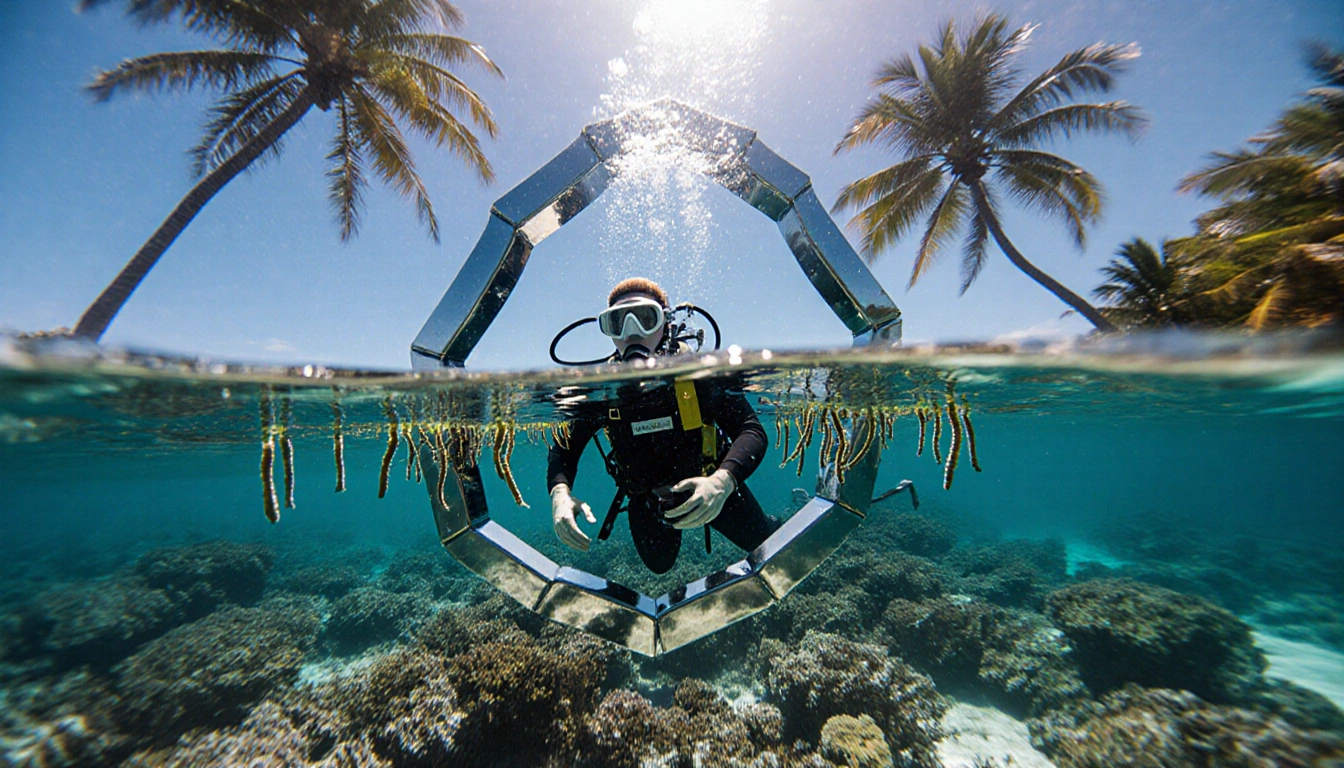
In Bayahibe, the Dominican Republic, a diver strapped to an oxygen tank watches tiny coral seedlings grow on metal structures that resemble giant spiders. The scene signals a glimmer of hope amid a crisis that has left 70% of the country’s reefs with less than 5% coverage.
Assisted Reproduction: A New Frontier for Corals
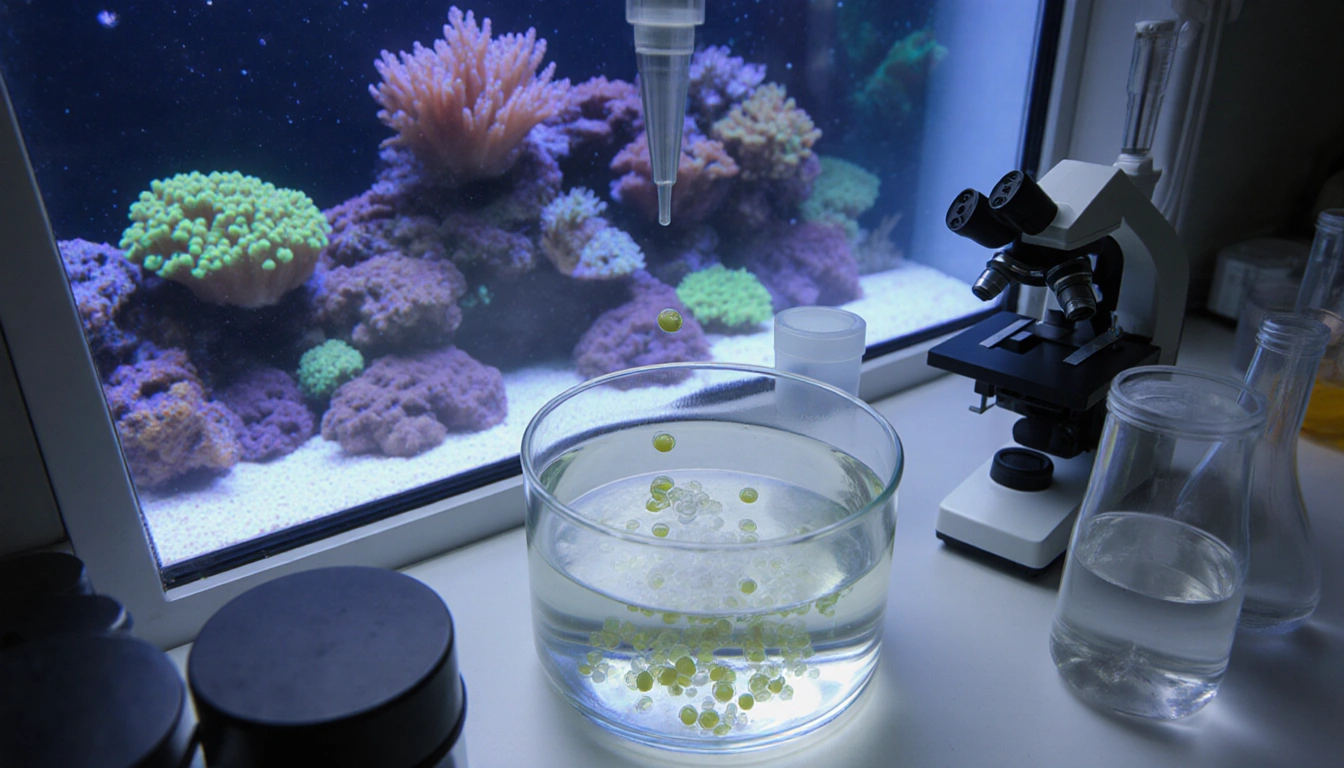
Michael del Rosario, a local conservationist, explains that the coral nursery he visits is part of a program run by Fundemar, a marine conservation organization. The organization collects eggs and sperm from spawning reefs, performs a process similar to in-vitro fertilization in its laboratory, and raises the resulting larvae until they are strong enough to be released back into the sea. Fundemar’s latest monitoring last year found that 70% of the Dominican Republic’s reefs have less than 5% coral coverage, making natural fertilization increasingly unlikely.
> “We live on an island. We depend entirely on coral reefs, and seeing them all disappear is really depressing,” del Rosario said. “But seeing our coral babies growing, alive, in the sea gives us hope, which is what we were losing.”
Fundemar’s laboratory produces more than 2.5 million coral embryos per year. Only about 1 % survive in the ocean, a figure that, while still low, is higher than the natural fertilization rates on these degraded reefs.
Why Sexual Reproduction Matters
In the past, Fundemar and other groups focused on asexual methods-cutting a small piece of healthy coral and transplanting it elsewhere. While this can create new colonies faster, it also clones the same individual, meaning all the new corals share the same disease vulnerabilities. Andreina Valdez, operations manager at Fundemar, explains that sexual reproduction generates genetically diverse individuals, reducing the risk that a single illness could wipe out an entire population.
> “That’s why assisted reproduction programs are so important now, because what used to be normal in coral reefs is probably no longer possible for many species,” Valdez said.
The technique, pioneered in Australia, is now expanding throughout the Caribbean. Leading projects exist at the National Autonomous University of Mexico, the Carmabi Foundation in Curaçao, and are being adopted in Puerto Rico, Cuba, and Jamaica.
Mark Eakin, corresponding secretary for the International Coral Reef Society and retired chief of the Coral Reef Watch program of the U.S. National Oceanic and Atmospheric Administration, emphasizes that these programs help “expand the population that’s out there.” He cautions, however, that without addressing climate change, much of the restoration work could be undone.
Climate Change: The 800-Pound Gorilla
Burning fossil fuels releases greenhouse gases that trap heat in the atmosphere, raising temperatures on land and in the seas. UNESCO’s most recent State of the Ocean Report last year noted that oceans are warming at twice the rate of 20 years ago. Rising heat forces corals to expel the algae that give them color and food-a process known as bleaching. Bleached corals may survive, but they become weakened and more susceptible to disease and death.
Research by the University of British Columbia, published in the journal One Earth, reports that half the world’s reefs have been lost since 1950.
For the Dominican Republic, located in the so-called “hurricane corridor,” coral skeletons play a vital role in absorbing wave energy and protecting the coast. Del Rosario notes that without healthy reefs, the country risks losing beaches, sand, and the tourism industry that relies on them.
> “What do we sell in the Dominican Republic? Beaches,” del Rosario said. “If we don’t have corals, we lose coastal protection, we lose the sand on our beaches, and we lose tourism.”
Corals also host more than 25 % of marine life, supporting millions of people worldwide who depend on fishing for their livelihoods.
The Human Story: A Fisher’s Perspective
Alido Luis Báez, a fisherman from Bayahibe, shares how the decline of reefs has forced him to travel farther for a catch. He and his 65-year-old father now sail up to 50 miles offshore to fish for tuna, dorado, or marlin.
> “We didn’t have to go so far before,” Báez said. “But because of overfishing, habitat loss, and climate change, now you have to go a little further every day.”
His father recalls the 1970s when reefs were healthy and abundant fish were found close to shore. He used to catch 50 or 60 pounds of fish in a short time, but now even two or three fish require a whole day at sea.
A Call to Action
Del Rosario believes there is still time to halt reef decline. He stresses that more needs to be done but highlights the investment of effort and time already underway.
> “More needs to be done, of course … but we are investing a lot of effort and time to preserve what we love so much,” he said. “And we trust and believe that many people around the world are doing the same.”
Key Takeaways
- Fundemar’s assisted reproduction program produces 2.5 million coral embryos annually, with a 1 % survival rate in the wild.
- Genetic diversity from sexual reproduction reduces disease risk compared to asexual cloning methods.
- Climate change drives bleaching, weakening reefs and threatening coastal protection and tourism.
The Dominican Republic’s coral restoration efforts, led by local conservationists and supported by international partners, illustrate a hopeful path forward. Yet the pressing challenge of climate change remains the most significant threat to the survival of these vital ecosystems.
Closing Thoughts
As the world watches the coral babies in Bayahibe’s nursery, the fragile balance between hope and crisis is clear. The work of Michael del Rosario and his colleagues offers a tangible example of how science and dedication can foster resilience. Still, the broader battle against warming seas must continue if these reefs are to thrive for generations to come.