
At a Glance
- Coinbase CEO Brian Armstrong accused traditional banks of lobbying to “ban” crypto competition in the CLARITY Act
- The exchange withdrew support for the draft bill last week, triggering a Senate Banking Committee delay
- Banking lobbyists want to close a perceived loophole that could let stablecoin affiliates pay interest to users
- Odds of Senate passage have dropped to 40% on Polymarket, down from 80% one week ago
Why it matters: The outcome will decide whether crypto firms can offer bank-like products and how digital assets are regulated in the U.S.
The battle over the CLARITY Act has become the defining fight at this year’s World Economic Forum in Davos, pitting crypto exchanges against traditional banks in a lobbying war that could reshape American finance.
During a CNBC interview Tuesday, Brian Armstrong, CEO of Coinbase, claimed bank trade groups are trying to outlaw rivals like his company. “Their lobbying arms and their trade groups are coming in and trying to ban their competition,” he said. “And so to me, you shouldn’t be able to ban competition.”
The irony: Armstrong says Coinbase already works with five of the world’s top 20 banks on crypto infrastructure, noting that the commercial side of banking sees crypto as an opportunity.
The Bill That Split Crypto From Banks
The CLARITY Act aims to set nationwide rules for crypto, fulfilling President Trump’s campaign promise to make America the “crypto capital of the world.” It would:
- Label which tokens are commodities vs. securities
- Let the CFTC and SEC stick to their own turf
- Shield non-custodial developers who only write code
Last week Coinbase lawyers reviewed a new draft and balked. The exchange yanked its support, the Senate Banking Committee postponed its markup, and Armstrong posted on X: “We’d rather have no bill than a bad bill.”
Stablecoin Standoff
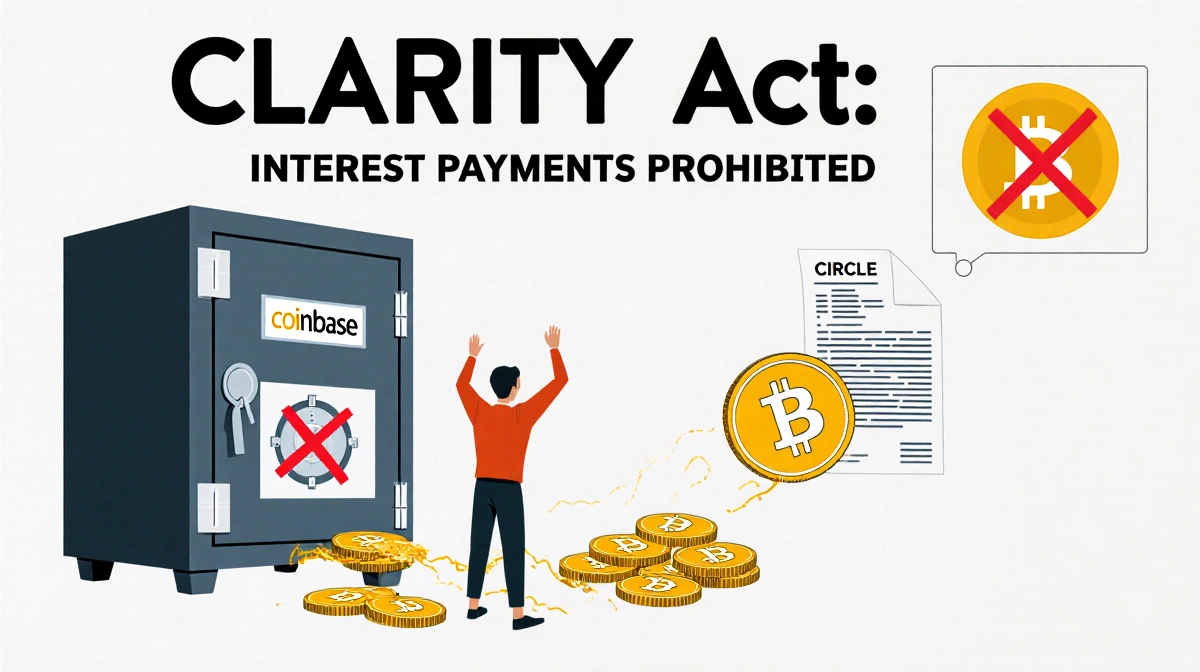
Banks fear the bill could let stablecoin outfits siphon deposits by offering higher interest. The recently passed GENIUS Act stopped stablecoin issuers from passing treasury yield to users, but it left a gap: affiliates such as Coinbase (partnered with USDC-issuer Circle) can still pay interest. Lobbyists now want that loophole sewn shut in the CLARITY Act.
Other flashpoints include tokenized stocks. While the NYSE announced Monday it is ready for stock tokenization, banks worry stablecoins could undercut deposit rates.
Political Muscle
Crypto has morphed from anti-bank rebellion to a centralized industry that competes head-on with fintech. The sector spent $133 million backing pro-crypto candidates in 2024; Coinbase alone channeled roughly $50 million into the Fairshake super PAC and launched the Stand with Crypto Alliance in 2023.
Banking groups counter that changing the rules mid-game would favor crypto upstarts over institutions that have operated under decades of regulation.
What Happens Next
President Trump told Davos attendees Wednesday: “Congress is working very hard on crypto market structure legislation-bitcoin, all of them-which I hope to sign very soon.”
Yet prediction market Polymarket now gives the bill only a 40% chance of Senate passage this year, down from 80% a week ago on low trading volume. With Coinbase opposing the current language and banks pushing for tighter stablecoin limits, the legislation faces an uncertain path.
Key Takeaways
- Coinbase and banks are fighting over who can offer interest-bearing crypto products
- A single clause on stablecoin affiliates could decide the bill’s fate
- Senate momentum has stalled since Coinbase’s withdrawal of support
- The result will influence whether crypto firms become direct competitors to banks