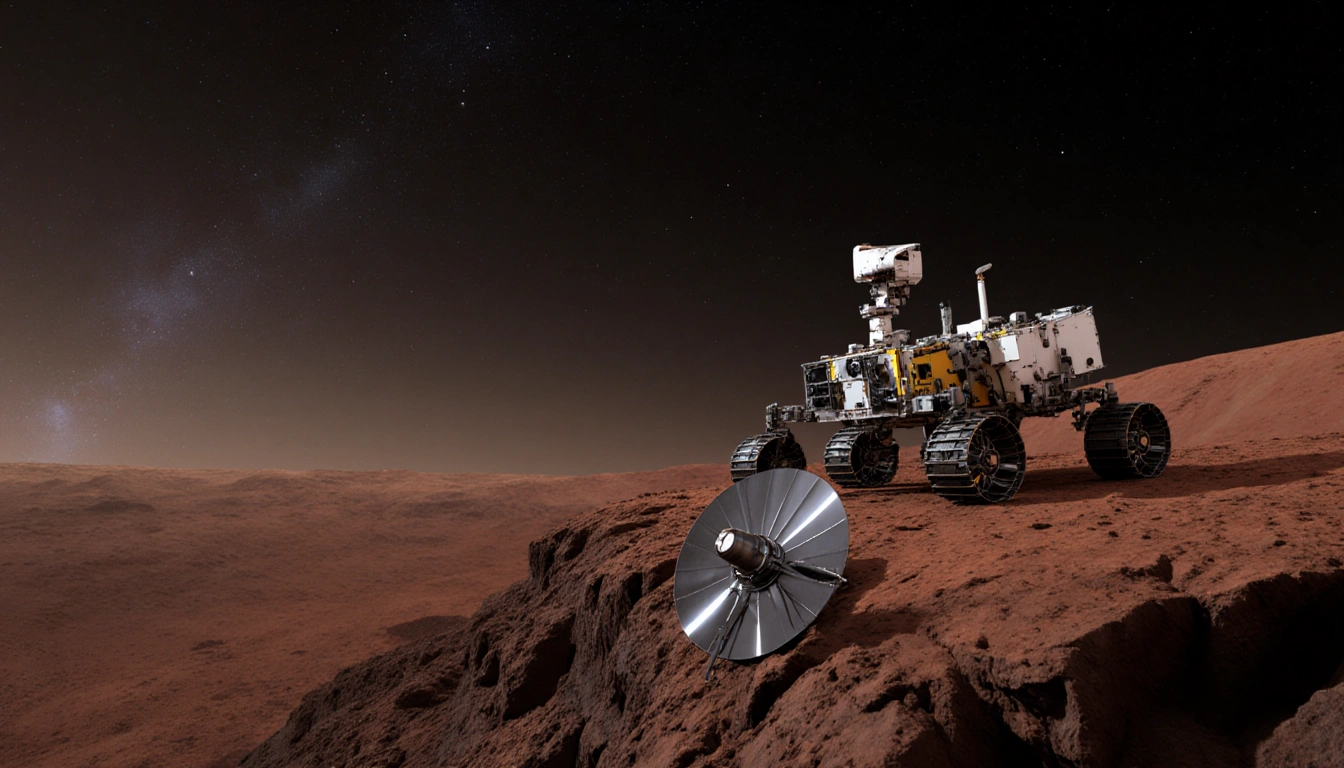
NASA will lose contact with the Curiosity rover from Dec 27 to Jan 20 as Earth and Mars line up in a conjunction, a rare alignment that blocks all radio communication.
What Is a Conjunction?
A conjunction occurs when two planets occupy the same ecliptic longitude, placing them on opposite sides of the Sun from Earth’s point of view. This event happens roughly every 26 months for Mars and Earth. During a superior conjunction, the Sun sits between Earth and the outer planet, preventing any direct line of sight for radio signals.
Curiosity’s Final Experiments Before the Blackout
Before the communication gap, NASA’s Mars Science Laboratory team wrapped up several investigations. The rover conducted a chemical analysis of a rocky ridge and captured images of the area. It also gathered new data on Mars’ cloud formations. These tasks were completed just in time to ensure the rover had a full set of observations before the 25-day silence.
The Rover’s Journey to a Nearby Ridge
Curiosity has driven to a nearby ridge, where it will remain during the conjunction. The drive itself yielded valuable terrain data, allowing scientists to map the surface and assess any potential hazards. By positioning the rover on a stable ridge, mission planners can reduce the risk of equipment damage once communications resume.
A Brief History of Curiosity
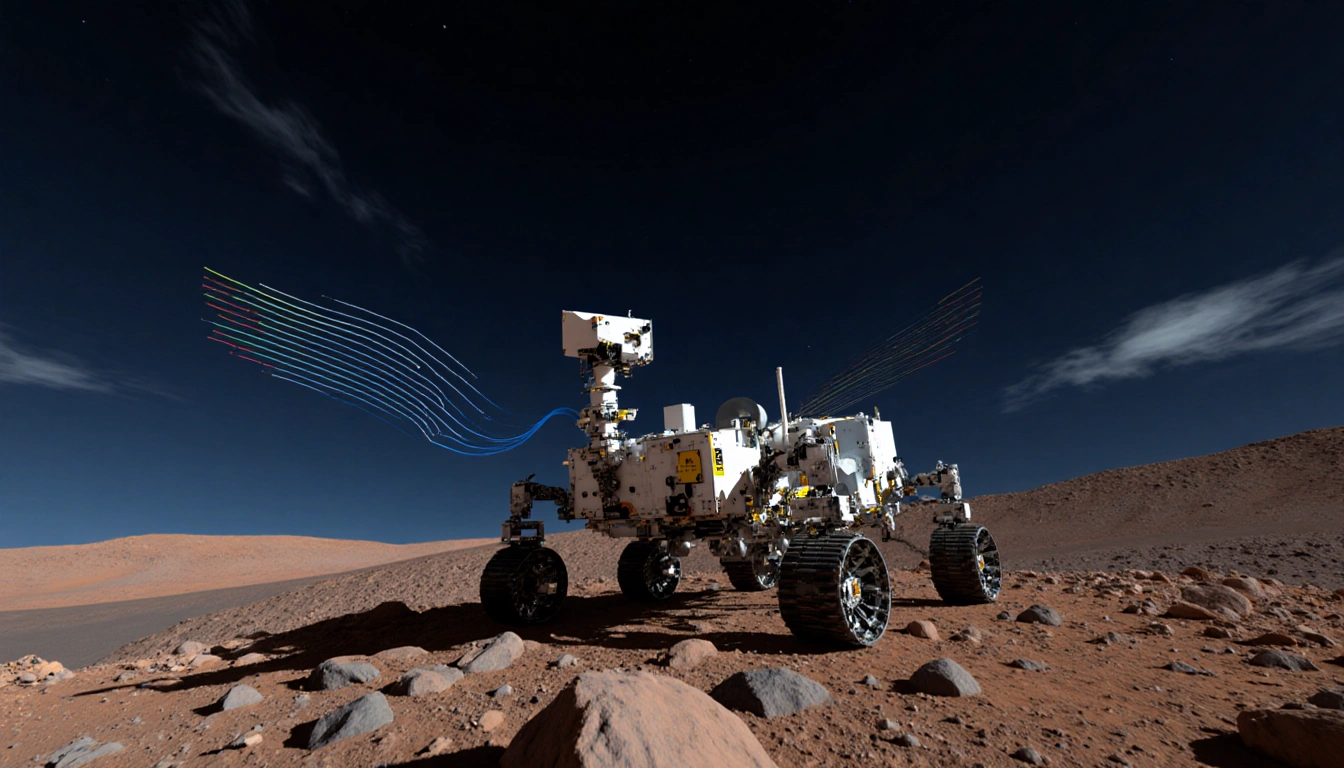
The Curiosity rover, roughly the size of a car, landed on Mars in 2012. Over the past decade, it has traversed more than 22 miles across the planet’s surface. Its long-term mission continues to provide insights into Mars’ geology and climate, even as it faces periodic communication interruptions.
Planetary Alignment Basics
- Superior Conjunction – The Sun lies between Earth and an outer planet, blocking view.
- Inferior Conjunction – An inner planet (Mercury or Venus) is between Earth and the Sun.
- Opposition – An outer planet is directly opposite the Sun from Earth’s perspective.
- Great Conjunction – Jupiter and Saturn line up in the sky, occurring every 20 years; the next will happen in 2040.
These terms help astronomers predict when planets will be visible or when radio links will be disrupted.
Key Takeaways
- Curiosity will lose contact from Dec 27 to Jan 20 due to a Mars-Earth conjunction.
- NASA finished chemical analyses, imaging, and cloud studies before the blackout.
- The rover will pause on a nearby ridge during the 25-day communication gap.
- Curiosity has traveled over 22 miles since its 2012 landing.
- Conjunctions between Earth and Mars occur roughly every 26 months.
In the coming weeks, scientists will review the data collected before the blackout and prepare for the rover’s return to active communication once the planets separate. The 25-day pause is a routine part of interplanetary exploration, but it underscores the challenges of maintaining a continuous dialogue with a machine millions of miles away.