At a Glance
- Dogs and wolves are distinct at the whole genome level
- No single gene supports dog monophyly; wolf gene flow is evident
- Wolf genes influence dog size, temperament, and scent-tracking
- Why it matters: It explains why larger breeds lean wolf-like and how stray dogs survive
Recent research examined 1,582 individual genes in dogs and wolves, revealing a complex history of gene transfer. The study shows that wolf ancestry has shaped many modern dog traits, from body size to behavior. These findings clarify how dogs evolved alongside humans and wolves.
Gene Flow Between Wolves and Dogs
Whole-genome analyses clearly separate canines from wolves, but phylogenetic trees for each gene show no support for a single dog lineage. Mitochondrial and Y-chromosome trees further confirm multiple rounds of gene transfer between the species.
- Whole-genome separation between dogs and wolves
- No gene supports dog monophyly
- Multiple gene transfer events detected
Wolf Ancestry and Dog Traits
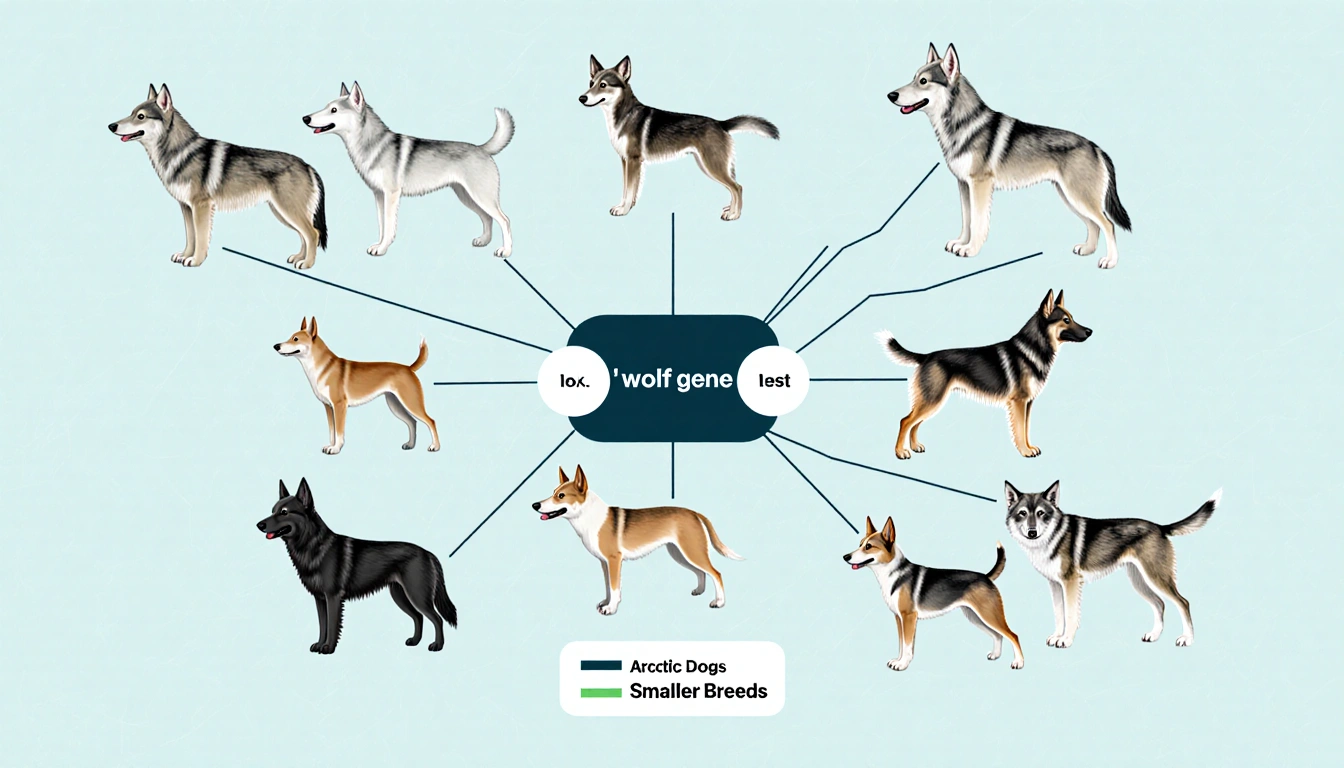
Wolf genes are linked to several dog characteristics, especially body size. Larger dogs and certain working breeds-Arctic sled dogs, wild-dog breeds, hunting dogs-carry more wolf ancestry, while terriers, bird dogs, and scent hounds carry the least.
| Breed | Wolf ancestry | Notes |
|---|---|---|
| Sarabi Dog, Central Asian Shepherd Dog, Anatolian Shepherd Dog | 0.5-1.2% | livestock guard dogs |
| Neapolitan Mastiff, Bull Mastiff, St. Bernard | <0.5% | almost no trace |
| Chihuahua | 0.2% | smallest breed |
Even the Chihuahua shows a small wolf contribution of about 0.2%, highlighting how ancestry varies across breeds.
Behavioral Implications
The study compared breed-specific personalities with wolf ancestry levels. Breeds with fewer wolf genes were more often described as friendly, obedient, easy to train, and affectionate. Those with stronger wolf ancestry tended to be suspicious of strangers, independent, wary, and territorial.
Survival Advantage
Gene ontology analysis of wolf-enriched regions in village dogs identified the olfactory transduction pathway as the only significant functional category. A heightened sense of smell likely improves stray dogs’ ability to locate food waste in urban environments.
| Survival rate of stray dogs at five months | |
|---|---|
| General stray dogs | <37% |
| Some reports | 16% |
With survival rates below 37%-and as low as 16% in some studies-an enhanced olfactory system may be crucial for survival.
Key Takeaways
- Wolf ancestry shapes dog size, temperament, and scent-tracking.
- Larger and working breeds carry more wolf genes; even tiny breeds have traces.
- A stronger sense of smell, inherited from wolves, helps stray dogs survive.
These insights illuminate the genetic legacy of wolves in domestic dogs and explain why certain breeds thrive in human-dominated or wild settings.