EU leaders are set to decide whether to tap tens of billions of euros in frozen Russian Central Bank assets to support Ukraine’s war effort. The core issue is whether the plan is legally sound, a question that has already drawn sharp objections from Belgium.
The EU’s Proposed Asset-Based Loan
The 27-nation bloc is considering using frozen Russian assets to underwrite a loan that would fund Ukraine’s military and financial needs for the next two years. Most of the frozen assets are held in Belgium-based Euroclear, a financial clearinghouse that has become a focal point of the dispute. Belgium has demanded “ironclad guarantees” that it will be protected from retaliation-legal, financial or otherwise-before it will allow the plan to proceed.
Russia’s Legal Counter-Move
Last week, Russia’s Central Bank filed a complaint at Moscow’s Arbitration Court against Euroclear, seeking the return of assets that have been frozen since the full-scale invasion began on Feb. 24, 2022. The bank said the lawsuit was over the “illegal blocking and use of its assets, in the amount of the illegally withheld assets and lost profits.” Even if the central bank were to win a judgment, collecting on it would be difficult because the EU has banned enforcement of Russian court judgments that involve the frozen assets.
Belgium has raised concerns about its liability under a 1989 treaty that encourages economic ties between the two countries. Prime Minister Bart de Wever warned that any EU plan must consider the “financial risks arising from the bilateral investment treaty.” The treaty’s arbitration mechanisms are limited and designed for Russian companies investing in Belgium, covering disputes between a private investor and the state. Lawyer Patrick Heinemann, who co-authored a legal risk analysis, told the Associated Press that the treaty’s options are narrow.
Other Possible Avenues for Russia
Russia could file a lawsuit in any domestic court where its assets are held, but that would require waiving its state immunity, exposing it to other legal challenges. Belgium or any other country holding Russian assets would also need to waive its own immunity for a lawsuit to move forward. Moscow could challenge Euroclear-a private company-in a Belgian court, but that would open it to a countersuit by Euroclear and likely render any outcome unenforceable in Belgium.
Although Russia is not an EU member, it could bring a complaint to the Court of Justice of the European Union in Luxembourg. Such cases are rare, but they have occurred, including Moscow’s earlier challenge to EU sanctions packages. That complaint was found inadmissible. Venezuela has also unsuccessfully sued the EU over sanctions, with judges concluding that Brussels has wide latitude over foreign security policy.
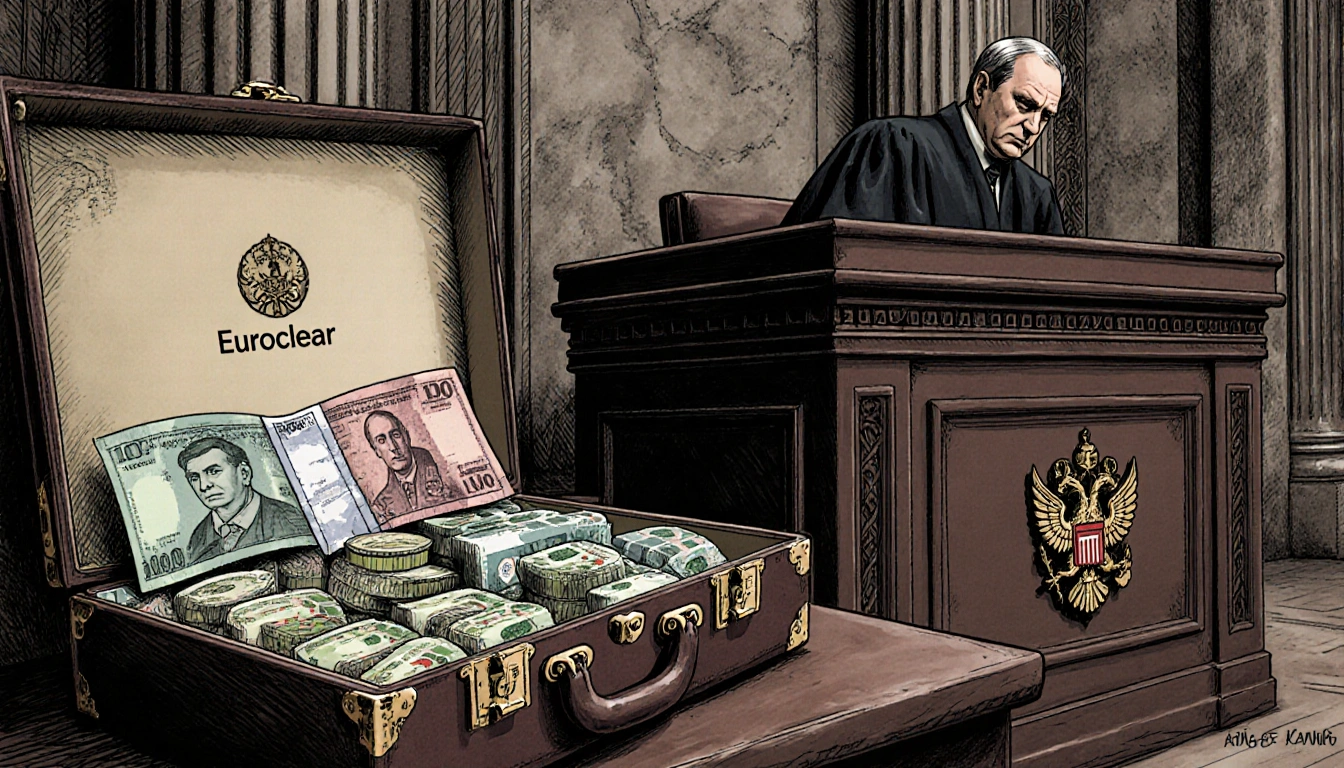
The European Court of Human Rights has closed the door to Moscow following the invasion, eliminating that option. The United Nations’ top court, the International Court of Justice in The Hague, is also an unlikely venue. Mike Becker, an expert on international human rights law at Trinity College Dublin, told the AP, “It is not clear that any treaty in force confers jurisdiction upon the Court to hear such a case.” A recent white paper by law firm Covington & Burling reached a similar conclusion, noting that “Russia does not accept the compulsory jurisdiction of the Court.”
Key Takeaways
- The EU’s plan to use frozen Russian assets faces legal hurdles, especially from Belgium.
- Russia’s Central Bank has sued Euroclear in Moscow, but enforcement of a favorable judgment is unlikely.
- Alternative legal routes for Russia are limited and involve waiving state immunity or confronting complex treaty provisions.
The debate over frozen assets highlights a broader legal impasse: while EU leaders seek a way to aid Ukraine, Russia’s options for contesting the plan in court are narrow and fraught with obstacles.