At a Glance
- U.S. flu cases surge with a 14% rise in hospitalizations.
- 9,900 people admitted with the flu nationwide.
- New Jersey and Rhode Island report the highest activity levels.
- Why it matters: More people risk severe illness; vaccination remains critical.
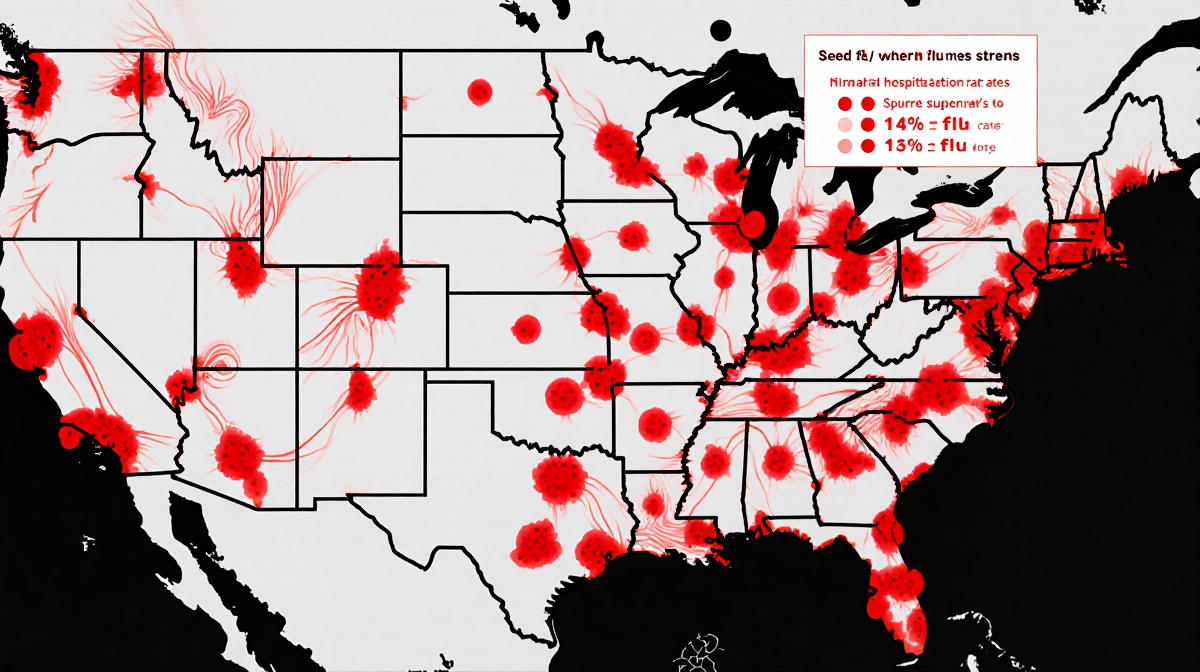
The Centers for Disease Control and Prevention released new data Friday showing a sharp uptick in flu activity across the country. Hospitalizations jumped 14.3%, totaling more than 9,900 admissions, while several states-particularly New Jersey and Rhode Island-are reporting the most intense outbreaks.
Dr. Andrew Pekosz stated:
> “Colorado, Louisiana and New York are [states] that are experiencing really fast increases in influenza.”
Dr. Andrew Pekosz said:
> “By the end of the flu season, in the next 2 to 3 months, every state will experience high amounts of influenza activity.”
Dr. Andrew Pekosz added:
> “We just don’t know exactly when each state will start and end in terms of those outbreaks.”
State-by-State Flu Activity
Dr. Andrew Pekosz, an infectious disease specialist at Johns Hopkins Bloomberg School of Public Health, highlighted that Colorado, Louisiana, and New York are seeing rapid increases. New Jersey, Rhode Island, and Louisiana also rank among the highest for the week ending Dec. 13, with additional high-activity states including New Mexico, Idaho, Michigan, North Carolina, South Carolina, Georgia, Washington D.C., Connecticut, Maryland, and Massachusetts.
- Colorado
- Louisiana
- New York
- New Jersey
- Rhode Island
- New Mexico
- Idaho
- Michigan
- North Carolina
- South Carolina
- Georgia
- Washington D.C.
- Connecticut
- Maryland
- Massachusetts
The CDC’s map reflects healthcare visits for influenza-like illness and may not capture all geographic spread.
The “Super Flu” Strain
Lab tests indicate that 89.8% of 216 influenza A viruses collected since Sept. 28 belong to subclade K, the so-called “super flu” strain that historically causes the most deaths in older adults. This strain is not covered by the current season’s vaccine, raising concerns about a potentially severe flu season.
| Metric | Value |
|---|---|
| Hospitalization rate increase | 14.3% |
| Admissions | 9,900 |
| Subclade K prevalence | 89.8% |
Flu seasons typically peak in February, so the full impact of the subclade K mismatch may not become clear until the next month or two.
Key Takeaways
- Flu hospitalizations rose 14% nationwide.
- 9,900 people were admitted with the flu this season.
- The “super flu” subclade K dominates circulating strains.

Health officials urge anyone six months or older to get vaccinated, noting that 42% of adults and 41% of children have already received shots this season.
By Julia N. Fairmont for News Of Austin