
Ford’s announcement stunned the auto industry, as the company said it will discontinue the electric F‑150 Lightning pickup truck and instead focus on an extended‑range version that blends a gasoline engine with an electric drivetrain.
The decision follows a $13 billion loss on electric vehicle investments since 2023 and reflects a broader shift toward more profitable gasoline‑powered and hybrid models. CEO Jim Farley said the change is “This is a customer‑driven shift to create a stronger, more resilient and more profitable Ford.” He added that “The operating reality has changed, and we are redeploying capital into higher‑return growth opportunities: Ford Pro, our market‑leading trucks and vans, hybrids and high‑margin opportunities like our new battery energy storage business.”
Ford’s manufacturing footprint is also being reshaped. The Tennessee Electric Vehicle Center, once the heart of Ford’s electrification strategy, will be renamed the Tennessee Truck Plant and will produce new affordable gas‑powered trucks. The Ohio Assembly Plant will shift to building a gas‑and‑hybrid van. These changes aim to optimize plant utilization and reduce upfront costs.
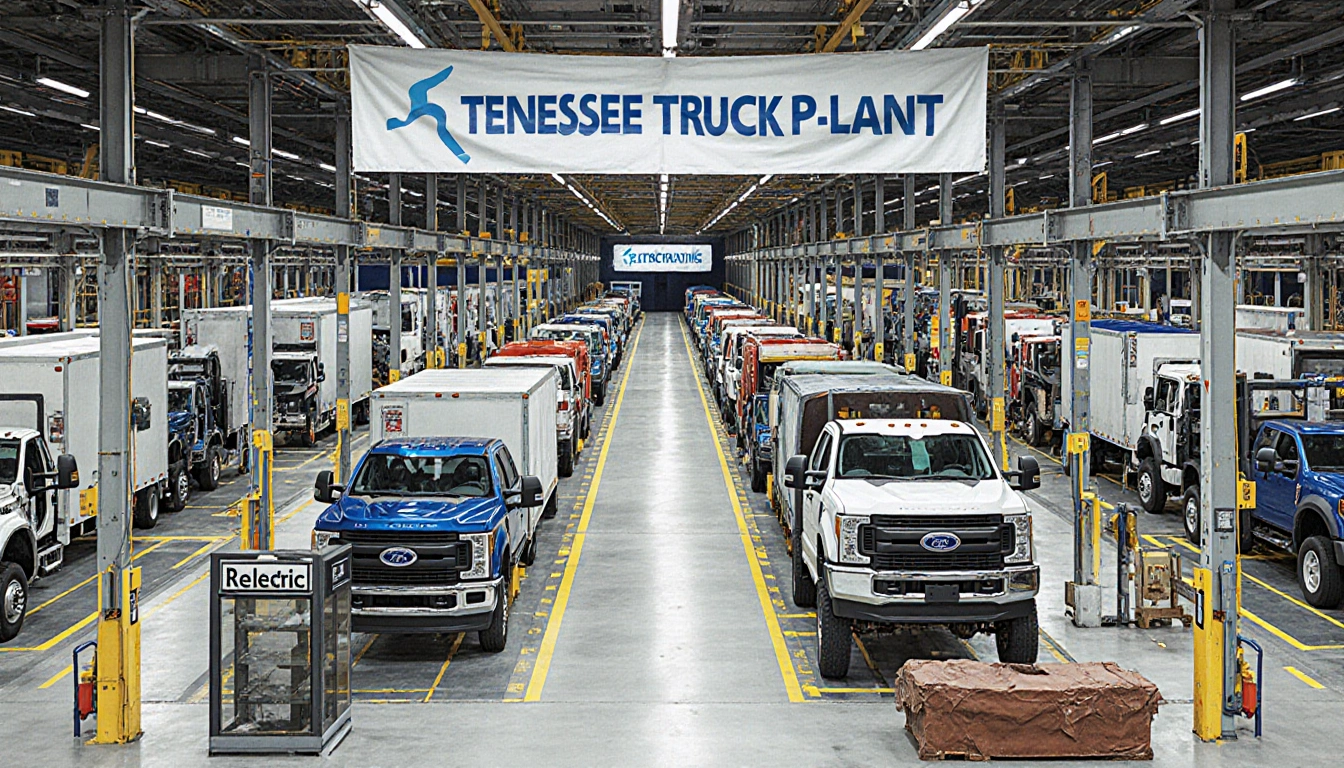
Financially, Ford expects a $19.5 billion hit, largely in the fourth quarter, due to the EV business. The company’s operating reality has changed, prompting a redeployment of capital into higher‑return growth opportunities.
Looking ahead, Ford now projects that half of its global volume will be hybrids, extended‑range EVs, and full EVs by 2030, up from 17 % this year. The new focus on hybrids and extended‑range models aims to bridge the gap between traditional gasoline vehicles and full electrification, reflecting a more conservative approach to market demand.
The shift comes as several other automakers have also adjusted their electrified product plans as U.S. consumer demand has fallen short of expectations. Last year, EVs accounted for about 8 % of new vehicle sales in the U.S. The average transaction price for a new EV was $58,638, compared with $49,814 for a new vehicle overall, according to Kelley Blue Book.
Since taking office for a second time, President Donald Trump has shifted U.S. policy away from EVs, labeling the Biden‑era incentives a “mandate.” The Trump administration has slashed the 2030 electric vehicle sales target, eliminated EV tax credits, and proposed weakening emissions and fuel‑mileage rules. These policy changes have contributed to the slower adoption of EVs.
AutoForecast Solutions vice president Sam Fiorani said, “Ford’s elimination of the electric F‑150 Lightning is not much of a surprise after the truck failed to come close to filling the plant’s capacity. Ford’s choice to convert an existing gas‑powered truck to accept the electric drivetrain helped reduce their upfront costs which, in hindsight, was the right move.” He added, “For months, the future of Blue Oval City has been in question and this announcement locks in the direction of this large plant. Adding an affordable vehicle to the Ford lineup fills a glaring gap in the market.”
Key Takeaways
- Ford stops production of the electric F‑150 Lightning and will focus on extended‑range models.
- The Tennessee Electric Vehicle Center becomes the Tennessee Truck Plant, producing gas‑powered trucks.
- Ford expects a $19.5 billion hit in the fourth quarter, citing $13 billion EV losses.
- The company projects hybrids and extended‑range EVs to make up 50 % of global volume by 2030.
- U.S. EV sales are still below expectations, with only 8 % of new vehicle sales last year.
Ford’s announcement signals a cautious approach to electrification, prioritizing immediate profitability over rapid EV adoption. As the company realigns its manufacturing and product strategy, the broader industry will watch to see if a similar shift occurs elsewhere. The move underscores the complex interplay between consumer demand, production costs, and policy incentives in shaping the future of automotive technology.