
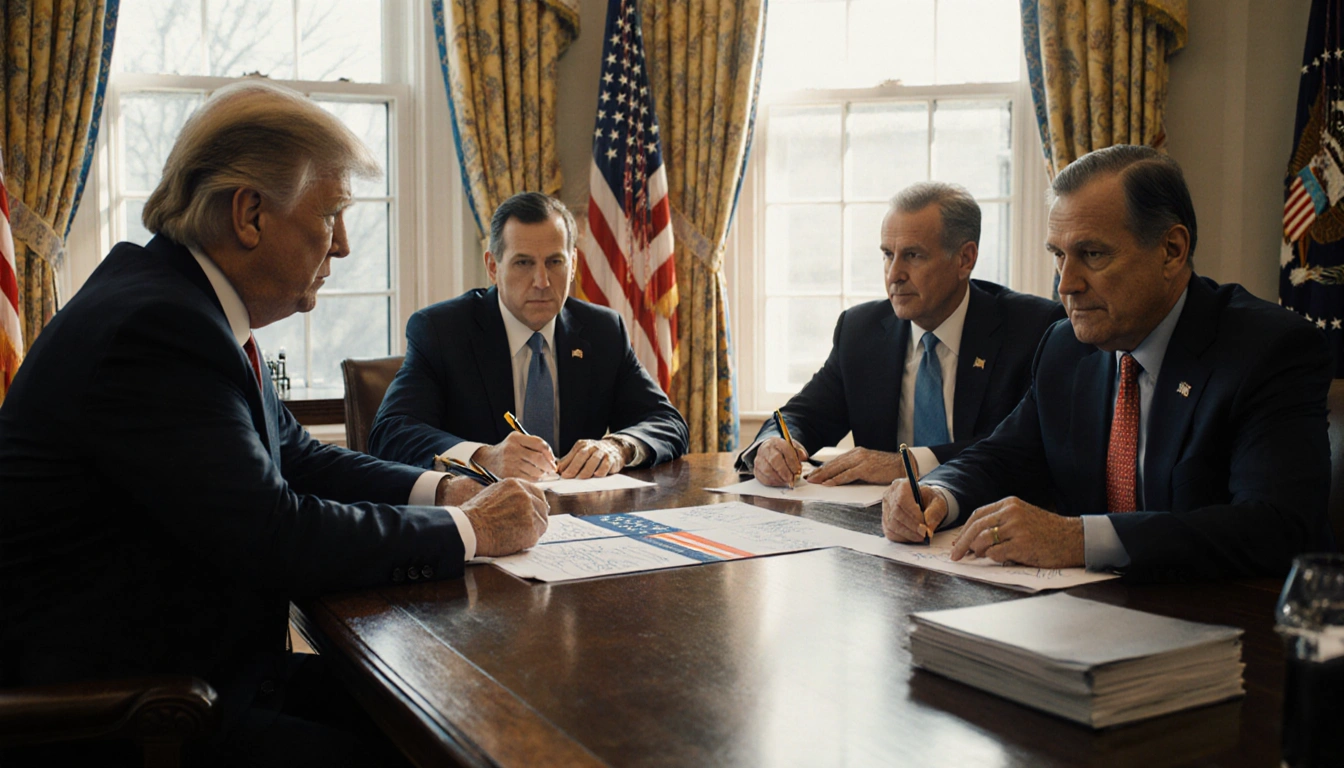
Four moderate House Republicans from swing districts defied Speaker Mike Johnson’s leadership by signing Democrats’ petition to force a vote on extending Affordable Care Act subsidies that expire at the end of this year.
Defying Party Lines
The decision followed a GOP health-care bill that omitted any provision to curb soaring monthly premiums. The bill was passed by House Republican leaders without addressing the rising cost burden on Americans. Democrats, meanwhile, pushed a measure to force a vote on subsidy extensions. The four Republicans chose to side with the Democratic effort.
Speaker Mike Johnson acknowledged the situation as unprecedented. He said, “These are not normal times,” Johnson said. Johnson noted that the party’s razor-thin majority lets a few GOP members wield outsized influence in the chamber’s mechanics. He urged unity while recognizing the impact of the small group’s actions.
The four lawmakers come from districts that Democrats view as high-value targets for next year’s midterms. Their districts are considered battlegrounds in Pennsylvania and New York. The Republicans’ stance signals a willingness to break ranks on a key health-policy issue. It also underscores the fragility of the House’s narrow GOP majority.
Representative Brian Fitzpatrick of Pennsylvania is the first of the four to make his position public. Fitzpatrick has been involved in several bipartisan initiatives this year, including a discharge petition for ACA subsidy extension. Earlier in the year, he joined a coalition that spanned the political spectrum to support a bill banning Congress members and families from owning and trading individual stocks. Fitzpatrick said, “It’s not every day you see this cast of characters up here,” Fitzpatrick said. “You’re all smirking out there. That’s a good thing. It speaks to the power of this cause.”
Representative Ryan Mackenzie, also from Pennsylvania, added his voice to the coalition. Mackenzie had voted for the House budget bill just 48 hours before announcing his opposition to the GOP health-care bill. He joined a bipartisan group seeking an eleventh-hour compromise over ACA subsidies. Mackenzie told The Associated Press earlier this month that lawmakers needed to understand that, “even if you have a broken system, that doesn’t mean that you shouldn’t provide or offer relief to individuals who are dealing with those high costs right now.”
Representative Robert Bresnahan, a freshman from Pennsylvania, joined the group alongside Mackenzie. Bresnahan and Mackenzie both won their seats in November by some of the smallest margins in Congress. Bresnahan’s district has drawn significant attention from Democratic strategists. President Donald Trump visited the district last week for an official White House event that resembled a campaign rally ahead of the next midterms.
Representative Mike Lawler of New York is the final member of the quartet. Lawler’s district is regarded as a crucial swing seat, and Democrats plan to devote substantial resources to flipping it next year. Lawler, a moderate, secured a second term last year and has publicly expressed interest in running for governor but ultimately decided to defend his district. Earlier this year, while many House Republicans avoided town halls, Lawler held one to engage voters directly.
Lawler’s town hall drew a mix of questions and boos from constituents. He faced a chaotic chorus of boos after addressing the crowd. The event highlighted the tension between Republican leaders and local voters in battleground districts. Lawler’s willingness to confront constituents head-on contrasts with the broader GOP strategy.
The bipartisan coalition that signed the petition reflects a growing concern among some Republicans about the ACA subsidies. The coalition argues that subsidies are essential to keep health-care affordable for Americans. They also contend that the current GOP health-care bill fails to address the immediate needs of constituents. The coalition’s signature on the petition signals a willingness to prioritize policy over party loyalty.
The Democratic-led measure to force a vote on subsidy extensions is a direct challenge to the GOP’s health-care agenda. It seeks to bring the debate back to the House floor, where the narrow majority could be decisive. The measure would require a majority vote to pass, meaning the party’s small group of dissenters could sway the outcome. The move underscores the strategic importance of ACA subsidies in the upcoming election cycle.
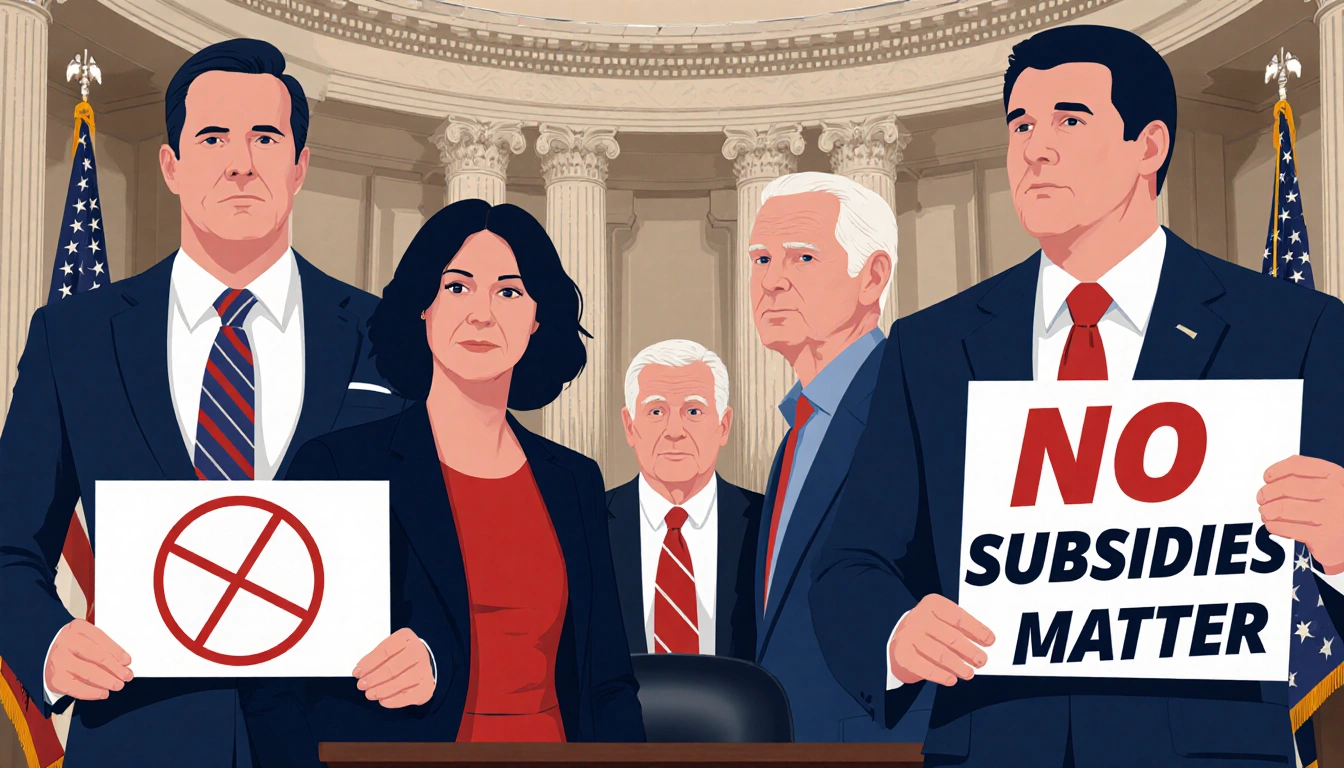
Speaker Johnson’s comments about the razor-thin majority highlight the delicate balance in the House. He noted that a few GOP members can have an outsized influence on procedural matters. Johnson’s remarks suggest that the party leadership is aware of the potential for internal dissent. The leadership’s response to the four Republicans’ actions remains to be seen.
The four Republicans’ decision to sign the petition has already sparked reactions within the House. Some GOP colleagues have expressed disappointment, while others see it as a pragmatic response to constituent pressure. The action may influence how future health-policy debates unfold. It also illustrates the growing polarization within the party.
The coalition’s involvement in the stock-ownership ban bill demonstrates their broader policy agenda. They see the ban as a way to reduce conflicts of interest in Congress. The bill was part of a bipartisan effort earlier in the year. Fitzpatrick’s role in that effort shows his commitment to cross-party collaboration.
Bresnahan’s district, having received a visit from President Trump, is a focal point for Democratic strategists. The district’s small margin of victory makes it a key battleground. Trump’s presence indicates the district’s importance in the 2024 election. The district’s attention may shape how the four Republicans approach future legislation.
Lawler’s town hall experience underscores the challenges of representing a swing district. Voters expressed frustration with the GOP’s national agenda. Lawler’s engagement with constituents reflects a willingness to address local concerns. The backlash he faced highlights the volatility of swing districts.
The coalition’s push for an eleventh-hour compromise over ACA subsidies shows their urgency. They argue that even a broken system should still provide relief to those facing high costs. Mackenzie’s quote captures this sentiment. The coalition’s stance may influence the broader debate on health-care affordability.
The four Republicans’ actions may have implications for the GOP’s legislative strategy. They may signal a shift toward more bipartisan approaches on health-care. The leadership will need to decide how to manage dissent within the party. The outcome could affect the GOP’s standing in upcoming elections.
The Democratic-led measure is part of a broader strategy to keep ACA subsidies in place. It reflects concerns about the future of health-care for millions of Americans. The measure’s success will depend on the narrow GOP majority. The coalition’s support could be decisive.
The four Republicans’ willingness to break ranks is notable. Their districts are critical to the party’s electoral prospects. Their actions highlight the tension between party loyalty and constituent advocacy. The situation remains fluid as the House moves toward a vote.
The House’s procedural rules will determine how the petition is handled. If the petition passes, a vote on ACA subsidies will be forced onto the floor. The GOP majority’s razor-thin margin means that every vote counts. The leadership will need to navigate this complex dynamic.
The coalition’s support for the petition underscores the importance of ACA subsidies to many voters. It also shows that some Republicans are willing to challenge their party’s agenda. The decision may influence future policy negotiations. It could also affect the party’s messaging in the next election cycle.
The four Republicans’ actions demonstrate a willingness to prioritize policy over party alignment. They have chosen to sign a petition that could alter the House’s agenda. Their move may set a precedent for other lawmakers in similar districts. The broader impact remains to be seen.
The situation highlights the fragility of the GOP’s majority in the House. The party’s narrow margin allows a small number of members to sway outcomes. The leadership’s response to the dissenters will be closely watched. The stakes are high as the House prepares for upcoming votes.
The coalition’s engagement with the ACA subsidy debate reflects a broader concern about health-care affordability. They argue that subsidies are essential to keep health-care accessible. Their support for the petition may shape the future of health-care policy. It also underscores the importance of bipartisan collaboration.
In the days ahead, the House will decide how to handle the petition and whether a vote on ACA subsidies will proceed. The four Republicans’ decision to sign the petition signals a willingness to break with party leadership on a key issue. The outcome will have implications for the GOP majority, the upcoming midterms, and the future of health-care policy in the United States.