
At a Glance
- France will replace Microsoft Teams and Zoom with the domestic platform Visio.
- The switch aims to secure public communications and reinforce digital sovereignty.
- The transition is set to begin in 2027 as part of the EU’s broader tech-safety strategy.
- The move reflects rising tensions between the European Union and the United States over digital regulation.
France’s decision to abandon American video-conferencing giants and adopt Visio marks a significant step in the continent’s push for digital sovereignty. The change comes as the EU grapples with U.S. trade pressures and a growing debate over the regulation of technology.
France Moves to a Domestic Video Platform
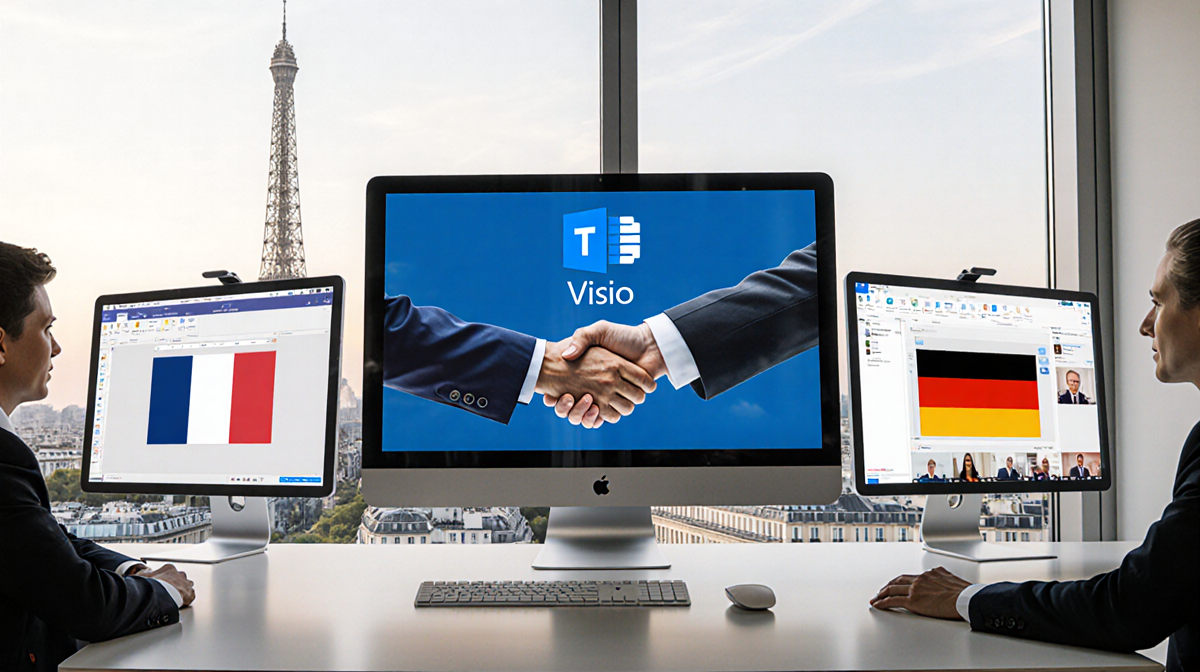
In a statement released this week, France’s delegated minister for the civil service and state reform, David Amiel, announced that the government will stop using Microsoft Teams and Zoom. The French administration will instead rely on Visio, a sovereign platform developed in partnership with the Netherlands and Germany. Visio is part of the Suite Numérique, a set of open-source applications designed for public servants.
Amiel said, “The aim is to end the use of non-European solutions and guarantee the security and confidentiality of public electronic communications by relying on a powerful and sovereign tool.” He added that the strategy highlights France’s commitment to digital sovereignty amid rising geopolitical tensions and fears of foreign surveillance or service disruptions.
The government plans to start using Visio in 2027, replacing the current reliance on U.S. platforms. Visio defines itself as “the sovereign workspace” and offers tools similar to those in Microsoft Teams and Google Drive.
EU-US Digital Tension
The move by France reflects a broader conflict between the European Union and the United States over technology regulation. The U.S. has long viewed EU attempts to regulate digital platforms as “overseas extortion” and has used tariffs to pressure the bloc to drop certain restrictions.
The Digital Services Act, a landmark piece of legislation, is one example of the EU’s effort to regulate tech companies on its own terms. The Trump administration has criticized such measures and has sought to undermine them through trade actions.
These tensions have intensified over recent years, especially after the U.S. threatened to take over Greenland. The controversy over Greenland has prompted some European countries to consider retaliatory measures.
Digital Sovereignty and the Anti-Coercion Instrument
European Commission President Ursula von der Leyen underscored the continent’s commitment to tech sovereignty in her State of the Union address last year. She said, “And I want to be crystal clear on one point: Whether on environmental or digital regulation. We set our own standards. We set our own regulations. Europe will always decide for itself.”
The EU has also explored the anti-coercion instrument, a tool that would allow the bloc to impose restrictions on services, including digital services provided by American tech giants such as Apple, Google, and Meta. While traditional retaliatory tariffs target physical goods, the anti-coercion instrument would target digital services.
French President Emmanuel Macron has urged the European Commission to keep the anti-coercion instrument in consideration. He has called for a strong stance against U.S. pressure, especially as the U.S. continues to dominate the tech industry.
Potential EU-Level Action
While it is not yet clear whether the EU will issue a formal anti-coercion measure, the bloc is reportedly preparing to take action. A recent report from the Wall Street Journal indicated that the EU’s executive arm is working on new tech-sovereignty legislation.
The proposed legislation would strengthen the EU’s ability to regulate digital platforms and reduce reliance on non-European services. It would also provide a framework for enforcing digital sovereignty across member states.
The development of these measures comes at a time when the EU is increasingly concerned about the security and stability of its digital infrastructure. The move to adopt Visio is a tangible step toward achieving that goal.
Key Takeaways
- France will replace U.S. video-conferencing tools with Visio in 2027.
- The change reflects deeper EU-U.S. tensions over digital regulation and trade.
- The EU is considering the anti-coercion instrument to target digital services.
- New tech-sovereignty legislation is reportedly in development.
France’s switch to a domestic platform is part of a larger effort to safeguard public communications and assert control over digital services amid escalating geopolitical friction with the United States.