

Did you know that the earliest followers of Jesus never celebrated his birth? And that the modern image of Santa Claus is based on a 4th-century bishop? These facts set the stage for a holiday that has transformed from a purely religious observance into a worldwide cultural celebration.
Origins and Early History of Christmas
The first Christians focused on Easter, commemorating Jesus’ resurrection rather than his birth. The story of Jesus’ birth appears only in the Gospels of Matthew and Luke, both saying he was born in Bethlehem. The exact day, month, and year are unknown. “It’s hard to overemphasize how important the fourth century is for constructing Christianity as we experience it in our world today,” said Christine Shepardson, a professor at the University of Tennessee. The tradition of celebrating on December 25 emerged in the fourth century, when Emperor Constantine encouraged Christians to gather in churches. Some scholars link the date to pagan winter solstice festivals such as the Roman Sol Invictus.
Most Christians celebrate on December 25, but some Eastern Orthodox traditions observe the holiday on January 7, following the Julian calendar.
Rowdy Medieval Celebrations and the Shift to Domestic Festivities
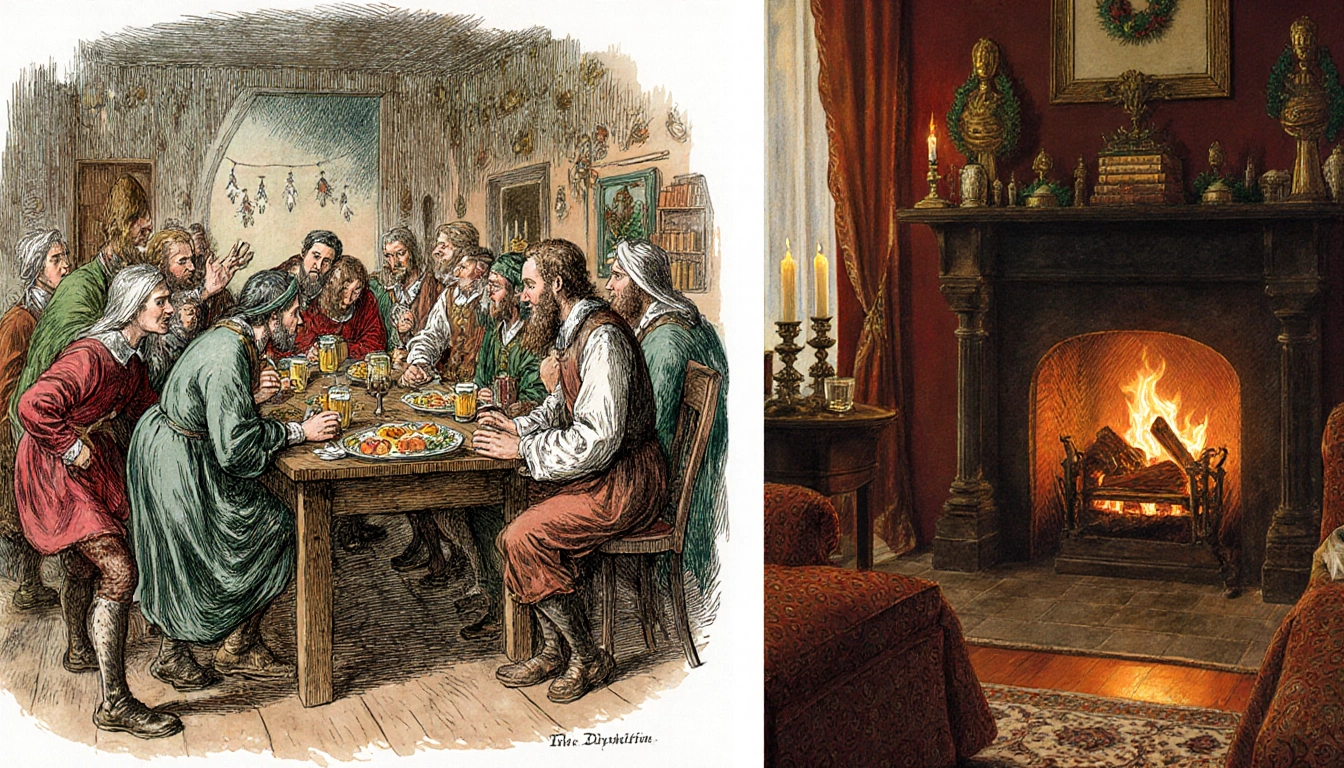
For centuries, especially in the Middle Ages, Christmas was marked by rowdy street feasting and drinking. “Puritans,” said Thomas Ruys Smith, a professor of American literature and culture at the University of East Anglia, “were not fond of Christmas.” In the 19th century, Smith noted, Christmas became respectable with the domestic celebration we understand today-centered around home, family, children, and gift-giving.
The roots of the modern Christmas tree and gift-giving trace back to Germany. By the late 19th century, accounts of Christmas trees and presents spread to Britain and America, revitalizing the holiday across the Atlantic. The publication of Charles Dickens’ A Christmas Carol in 1843 and Washington Irving’s writings further popularized the celebration in the United States.
The first Rockefeller Center Christmas tree was erected by workers in 1931 to lift spirits during the Great Depression. The tradition continued with the first tree-lighting ceremony in 1933, becoming one of New York City’s most beloved holiday attractions.
Santa Claus: From St. Nicholas to a Secular Icon
St. Nicholas, a fourth-century Christian bishop from Myra in modern-day Turkey, inspired the secular Santa Claus legend. Known for acts of generosity-interceding for wrongly condemned prisoners and saving sailors from storms-he became the patron saint of sailors, children, Greece, Russia, and New York. His legend spread across Europe during the Middle Ages, and he was celebrated annually on December 6.
After the Protestant Reformation, devotion to St. Nicholas faded in most regions except the Netherlands, where the Sinterklaas tradition survived. Dutch Protestants who settled in New York brought Sinterklaas with them in the 17th century, eventually evolving into the Santa Claus known worldwide.
Other Gift-Givers Around the World
In the United Kingdom, Father Christmas delivers presents. Greece and Cyprus celebrate with St. Basil on New Year’s Eve. Some Italian regions honor St. Lucy earlier in December, while others welcome Befana, a witch-like figure who brings gifts on the Epiphany (January 6). Icelandic children await the Yule Lads-thirteen mischievous troll brothers-who descend from a mountain cave 13 days before Christmas.
Christian Traditions and Cultural Symbols
A long-standing tradition is bringing greenery-holly, ivy, or evergreen trees-into homes. Maria Kennedy, a Rutgers University professor, notes that the evergreen custom began in Germany in the 16th century and later spread to England and America. Mistletoe, an evergreen shrub used in ancient Druid celebrations, symbolizes immortality.
Other customs include Christmas services, Nativity scenes at homes and churches, and caroling. Kennedy explains that caroling originated in Europe, where people would visit neighbors during the darkest time of year to renew community ties and wish for good fortune.
In the United States, public Nativity displays have sparked legal debates over church-state separation.
Kentucky Fried Chicken for Christmas in Japan
In 1974, KFC launched a Christmas campaign in Japan, selling fried chicken with a bottle of wine for holiday parties. According to KFC, the idea came from an employee who overheard a foreign customer remarking that, unable to find turkey in Japan, he would celebrate Christmas with Kentucky Fried Chicken. “That really stuck,” said Smith. Today, Japanese consumers must order KFC months in advance to secure a Christmas-day meal.
Key Takeaways
- Christmas began as a celebration of Jesus’ resurrection, not his birth, with the December 25 observance emerging in the fourth century.
- The modern Santa Claus derives from St. Nicholas, a 4th-century bishop known for generosity.
- Global variations include Father Christmas, St. Basil, Befana, and the Yule Lads, each adding unique cultural flavor.
- Japanese Christmas traditions feature Kentucky Fried Chicken, a practice started in 1974 that still requires advance orders.
Christmas has evolved from a modest religious observance into a complex, multicultural celebration that blends ancient customs, literary influences, and commercial innovations worldwide.