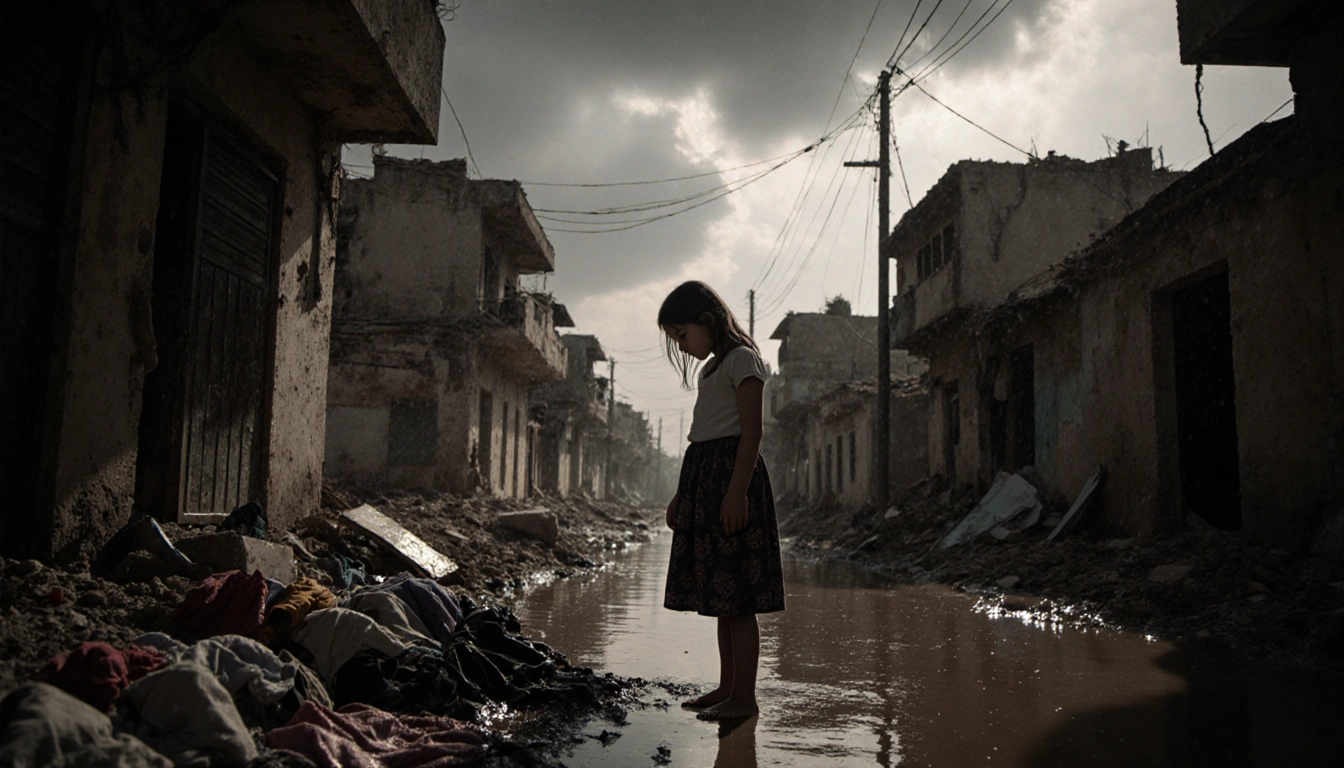
At least 12 people have died in Gaza after a week of torrential rains that turned dirt lanes into mud and collapsed buildings already weakened by two-year conflict.
The Human Toll
The Gaza Health Ministry, part of the Hamas-run government, confirmed that a two-week-old baby died of hypothermia after being transferred to intensive care a few days ago. The infant was brought to the hospital on Monday but succumbed to the cold on Tuesday.
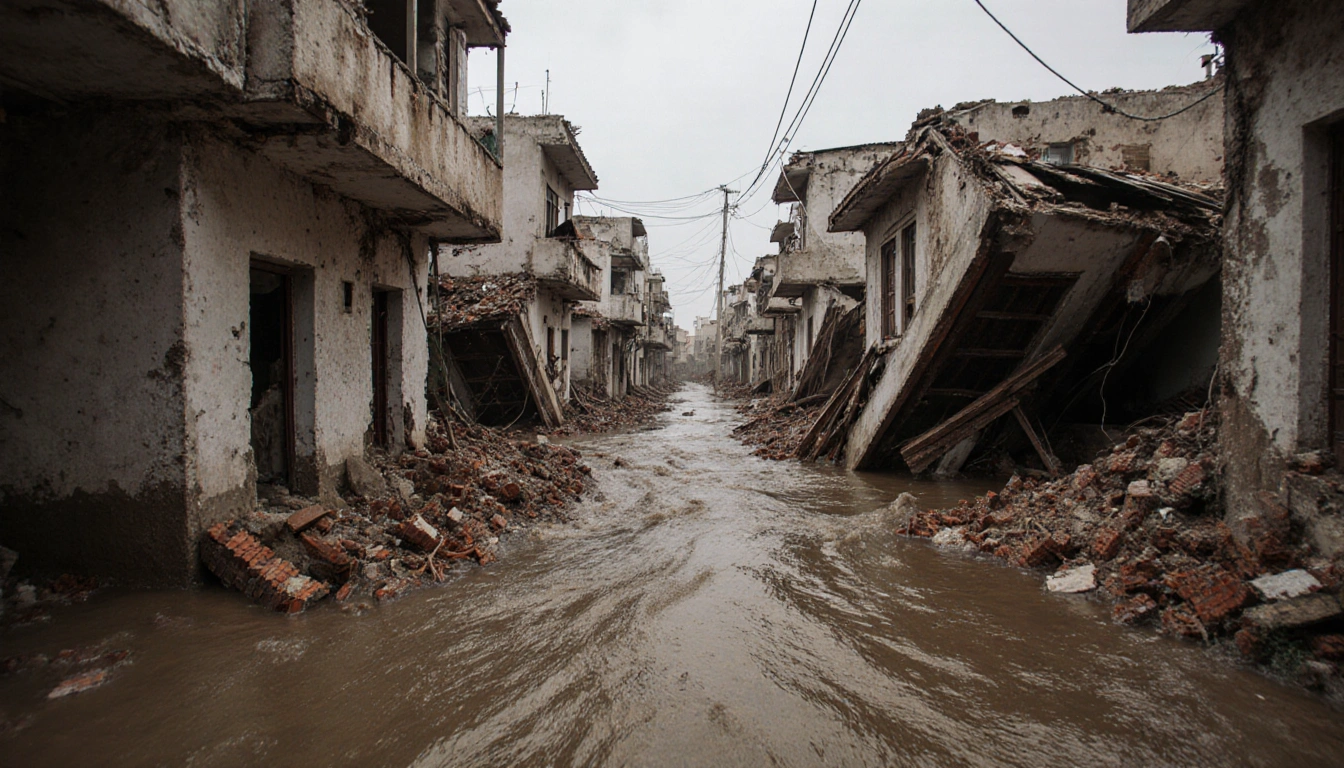
In Gaza City, a man died when a home that had been damaged during Israeli strikes collapsed under the weight of the rain. Shifa Hospital said the structure gave way, killing a worker who had come to repair walls. The al-Hosari family reported that 30 people lived in the building, but only nine were present when it collapsed; five others were injured.
The Health Ministry added that 10 people were killed last week from buildings that collapsed because of the rain and heavy winds.
The Scale of Damage
The downpour, which dumped more than 150 milliliters (9 inches) of rain on some parts of Gaza over the past week, turned dirt lanes to mud and flooded tents in displacement camps. In July, the United Nations Satellite Center estimated that almost 80% of Gaza’s buildings have been destroyed or damaged.
Emergency workers warned that damaged structures could collapse at any moment, but the scarcity of safe shelters leaves many people with few options.
Aid and Shelter Shortfalls
Despite two months of a ceasefire, aid groups say insufficient shelter material has reached Gaza to help residents cope with winter. Israeli military figures released recently suggest that the ceasefire stipulation of allowing 600 trucks of aid into Gaza a day has not been met, though Israel disputes that finding.
The Israeli military body in charge of coordinating aid, COGAT, reported that close to 270,000 tents and tarps have entered Gaza over the past few months, along with winter items, shelter equipment, and sanitation supplies. However, some aid groups dispute those figures and insist that more supplies-especially winter items-are desperately needed.
The Shelter Cluster, an international coalition led by the Norwegian Refugee Council, last week tracked only 68,000 tents that have entered Gaza via the U.N., non-governmental organizations, and various countries. Many of the tents are not properly insulated for winter.
During a U.N. Security Council meeting on Tuesday, officials said the U.N. is distributing tents, blankets, and other winter supplies but warned that the risk of hypothermia is increasing with the onset of winter weather.
Voices from the Ground
Mohammed Gharableh, a father displaced from the southern city of Rafah, said, “When we hear the news that there is a storm, our whole lives change, we start thinking about where to stay, to go, where to put our mattresses and blankets, and where to keep our children safe and warm.” He added, “During every storm like this, water penetrates our tents, and our mattresses and blankets get soaked.”
The Broader Context
In Israel, areas near Gaza received between 60 mm to 160 mm (2 to 6 inches) of rain in the past week, according to the Israel Meteorological Service-more than twice the average amount for this time of year.
The vast majority of Gaza’s 2 million people have been displaced. Most live in tent camps along the coast or in the shells of damaged buildings. Those structures lack adequate flood-control infrastructure, and people often use cesspits dug near tents as toilets.
Separate Incident: Soldier Investigation Closed
In a separate development, the Israeli military announced that it had closed an investigation into a soldier who allowed an Israeli archaeologist, a civilian, to accompany troops into southern Lebanon to a historic fortress in November last year. The visit occurred before the U.S. and France-brokered ceasefire in the war between Israel and Hezbollah. The archaeologist, Zeev Erlich, 70, was killed in a Hezbollah ambush along with an Israeli soldier. Erlich was not on active or reserve duty but had entered Lebanon with Israeli troops while armed and wearing a military uniform.
The military had initially recommended charging the infantry commander, Yoav Yarom, with reckless homicide. However, the military attorney general announced that the investigation would be closed without criminal charges, though internal action within the military would be recommended.
Key Takeaways
- 12 people, including a two-week-old baby, have died in Gaza after a week of heavy rain.
- Over 80% of Gaza’s buildings have been destroyed or damaged, and many residents live in unsafe tents or ruined structures.
- Aid shipments of tents and winter supplies are insufficient, with only 68,000 insulated tents reported by Shelter Cluster.
- Israeli military investigation into a soldier’s conduct in Lebanon has been closed without charges.
The relentless rain, combined with widespread destruction and inadequate shelter supplies, underscores the urgent need for international assistance to protect Gaza’s displaced population from the escalating risk of hypothermia and structural collapse.