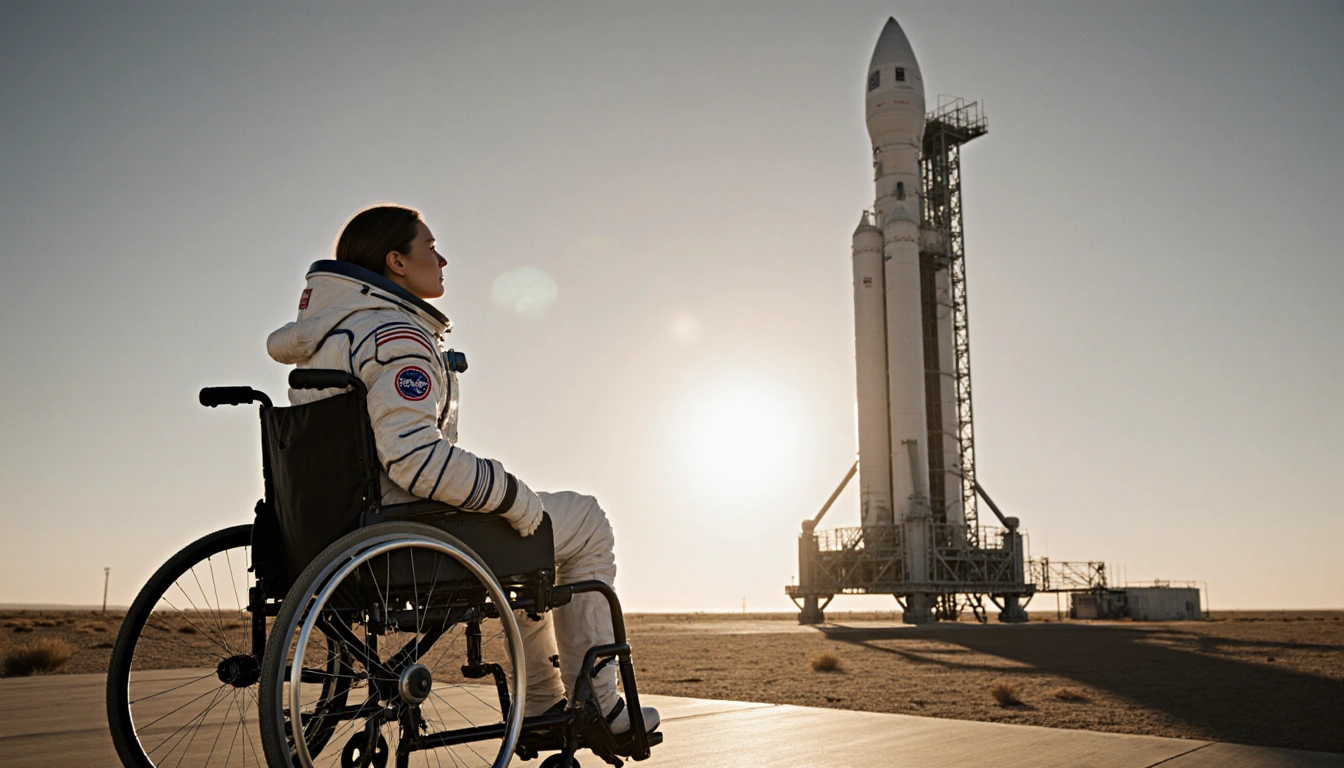
On a clear Saturday in West Texas, a German engineer left her wheelchair behind and stepped into the cosmos aboard Blue Origin’s New Shepard, becoming the first person in a wheelchair to experience spaceflight.
A New Milestone in Space Tourism
Michaela Benthaus, 33, launched from the West Texas launch site with Jeff Bezos’ company Blue Origin. She was accompanied by retired SpaceX executive Hans Koenigsmann, also born in Germany, who helped organize and sponsor the trip. Ticket prices were not disclosed.
The Flight and Accessibility Enhancements
The 10-minute space-skimming flight carried the capsule more than 65 miles (105 kilometers) above the Earth. Benthaus laughed all the way up and even tried to turn upside down once in zero-gravity. Blue Origin’s engineer Jake Mills said the autonomous New Shepard capsule was “designed with accessibility in mind, making it more accessible to a wider range of people than traditional spaceflight.”
Minor adjustments were made for Benthaus: a patient transfer board let her scoot between the hatch and her seat, and a carpet was unrolled on the desert floor after touchdown to give immediate access to her wheelchair, which she left behind at liftoff. An elevator already existed at the launch pad to carry her up the seven stories to the rocket’s top.
Behind the Journey: The People and Preparations
Benthaus had been severely injured in a mountain-bike accident seven years ago, leaving her with a spinal-cord injury that prevents her from walking. She had previously experienced snippets of weightlessness during a parabolic airplane flight out of Houston in 2022 and a two-week simulated space mission in Poland less than two years later. Koenigsmann approached her last year about flying on Blue Origin and experiencing more than three minutes of weightlessness on a space hop. Benthaus signed on immediately, thinking there was no misunderstanding.
The flight was a private mission; the European Space Agency had no involvement. This year the ESA cleared reserve astronaut John McFall, an amputee, for a future flight to the International Space Station. McFall lost his right leg in a motorcycle accident as a teenager and uses a prosthetic leg. Benthaus, in contrast, cannot walk and relies on an emergency helper.
Personal Story and Future Vision
During the flight, Benthaus laughed, then told reporters that “I never really thought that going on a spaceflight would be a real option for me because even as like a super healthy person, it’s like so competitive, right?” She added, “There is like no history of people with disabilities flying to space.”
After landing, she said, “It was the coolest experience.” She urged, “You should never give up on your dreams, right?” She was adamant about doing as much as she could by herself, hoping to make space accessible to the disabled and improve accessibility on Earth.
She also noted that “outsiders aren’t always as inclusive” and said, “I really hope it’s opening up for people like me, like I hope I’m only the start.”
Broader Implications for Disabled Space Travelers
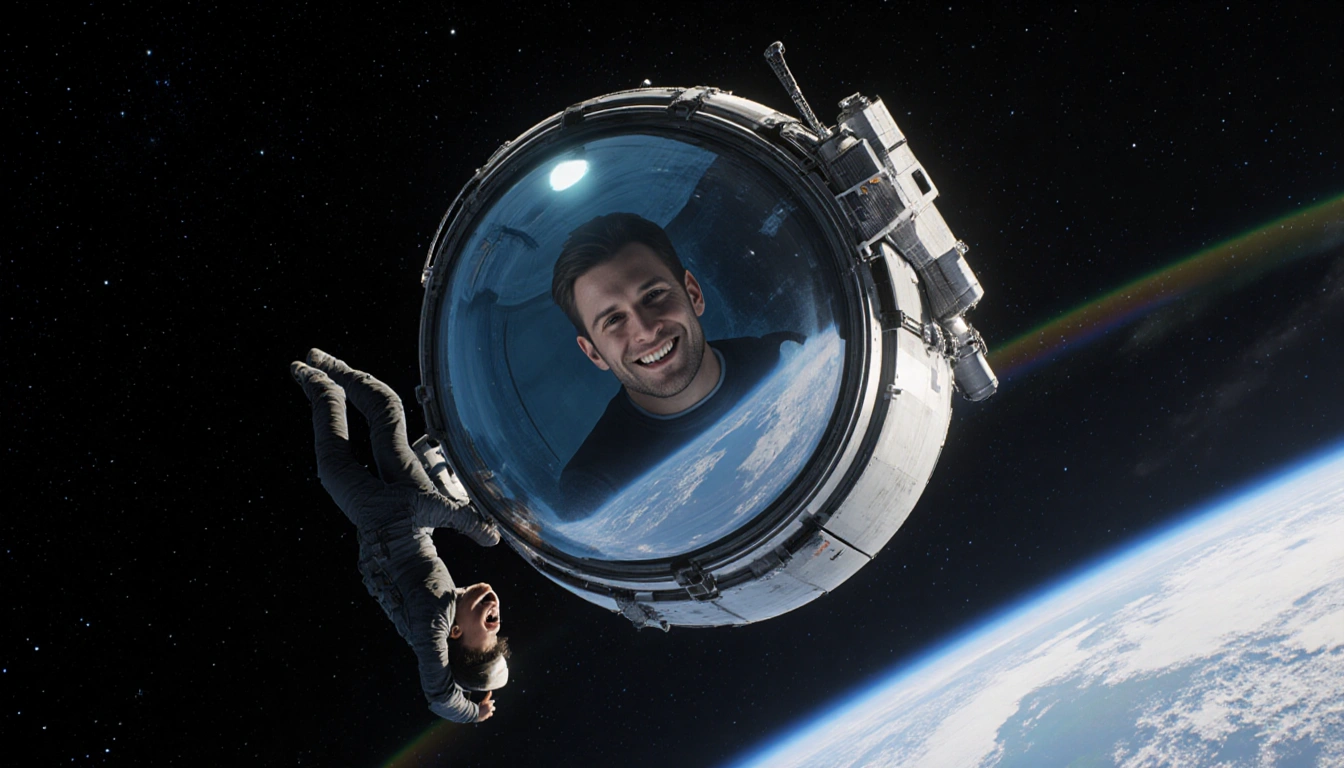
Blue Origin’s New Shepard has carried other space tourists with limited mobility, impaired sight or hearing, and a pair of 90-year-olds. The company’s commitment to accessibility is evident in the modifications for Benthaus and the inclusion of an emergency helper, Hans Koenigsmann, who lifted her out of the capsule with Jake Mills after the flight’s end.
The mission added the 86th traveler to Blue Origin’s list, which includes business executives, investors, and a computer scientist. Blue Origin, founded by Jeff Bezos in 2000, launched its first passenger spaceflight in 2021 and has since delivered spacecraft to orbit from Cape Canaveral, Florida, using the New Glenn rocket and is working to send landers to the moon.
Key Takeaways
- Michaela Benthaus becomes the first wheelchair user in space aboard Blue Origin’s New Shepard.
- The 10-minute flight reached more than 65 miles (105 km) and required only minor accessibility adjustments.
- Benthaus’s journey highlights the growing inclusivity of commercial spaceflight and the potential for future disabled travelers.
The historic launch underscores that space is no longer a frontier reserved for a select few; it is becoming a realm where determination, innovation, and accessibility converge to open new horizons for all.