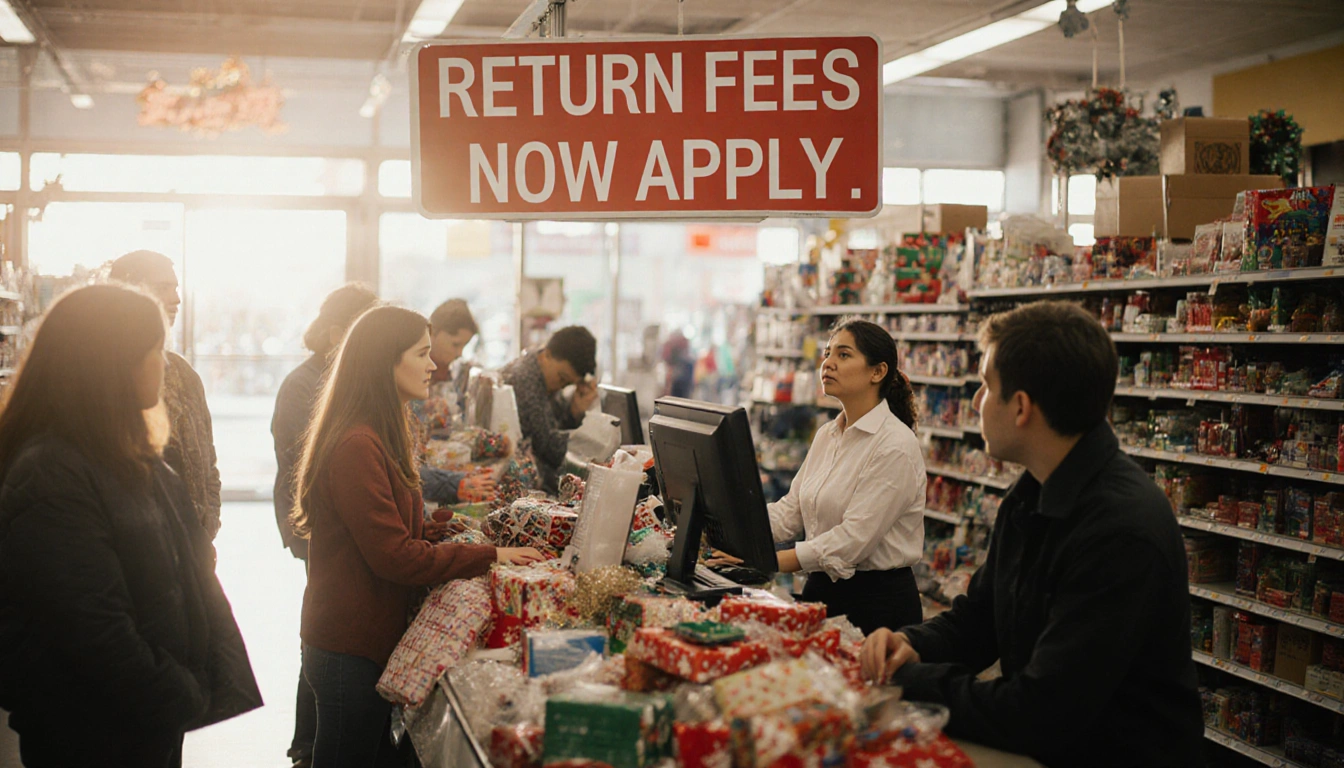
After the holiday rush, shoppers who return gifts may face a new cost that could dent their holiday budget.
Return Fees Are on the Rise
A 2025 survey by the National Retail Federation found that 72% of merchants charged a return fee for at least one item in the past year, up from 66% in 2024. The trend signals a shift in how retailers handle returns, especially for online purchases.
How Much Are Customers Paying?
Retailers have set a range of fees. Marshall’s and T.J. Maxx will deduct $11.99 per package from refunds, while JCPenney and J. Crew charge roughly $8 for each return. Some stores add a “restocking” fee to discourage returns that would otherwise be sent back to warehouses.
When Must Items Be Returned?
Return windows are tightening. Major players such as Amazon, Walmart, Target, and Best Buy expect customers to return holiday purchases by mid- or late January. Shoppers who miss these deadlines may lose the chance for a refund.
Why Retailers Charge
The primary reasons cited by retailers are higher shipping costs and fraud mitigation. Shipping for returns has become more expensive, and retailers want to reduce the risk of customers exploiting return policies.
The Consumer Response
While some customers may be deterred, many have grown tolerant of these fees. Retailers report that shoppers are increasingly willing to absorb a small cost to keep their holiday shopping experience smooth.
What the National Retail Federation Says
The National Retail Federation’s report notes, “Returns are increasingly a factor in customers’ shopping decisions,” and adds, “Free returns, immediate refunds, and no-hassle drop-off options dominate consumer preferences, with many even willing to adjust their shopping choices based on a retailer’s policy.”
In-Person Returns May Be Free
Retailers often waive return fees when items are returned in person. This approach saves on shipping costs and can drive foot traffic, potentially leading to additional purchases.
Impact on Online Shopping
Online shoppers face the highest risk of encountering return fees. Because shipped merchandise requires a return shipment, the cost is passed on to the customer.
How Retailers Communicate Fees
Most retailers disclose return fees in the fine print of their return policies. Shoppers are advised to read these sections carefully before completing a purchase.
The Role of Shipping Costs
Shipping expenses have risen sharply in recent months. Retailers argue that the increased cost of sending items back to stores justifies a return fee.
Fraud Mitigation Measures
Some retailers use return fees to deter fraudulent returns, such as returning items that were never purchased or returning them for a refund after reselling.
The Effect on Customer Loyalty
Customers who encounter unexpected fees may reconsider their loyalty to a brand. However, retailers believe that offering free returns in person can counterbalance this effect.
The Legal Landscape
No federal law currently prohibits return fees, but some states have regulations governing return policies. Retailers must ensure compliance with state-level consumer protection laws.
Seasonal Variations
Return fees tend to spike during the holiday season when return volumes are highest. Retailers often adjust their policies to manage the increased workload.
The Cost of Restocking
Restocking fees cover the cost of inspecting, refurbishing, and reselling returned items. This fee helps retailers recoup some of the expenses associated with handling returns.
Customer Tolerance Levels
Survey data indicates that a growing percentage of shoppers accept return fees as a trade-off for convenience. Retailers use this insight to shape their return strategies.
Potential for Policy Changes
Retailers monitor customer feedback closely. If a fee structure leads to a noticeable drop in sales, companies may revise their policies.
The Role of Return Windows
Shorter return windows can reduce the number of returns, but may also frustrate customers who need more time to decide.
The Importance of Clear Communication
Clear, upfront communication about fees helps manage expectations. Retailers that are transparent tend to maintain higher customer satisfaction.
Strategies for Shoppers
Shoppers can avoid return fees by choosing in-store returns whenever possible. They can also keep receipts and confirm return policies before making a purchase.
The Impact on Small Businesses
Small retailers may feel the impact of return fees more acutely. They often have limited resources to absorb the costs of handling returns.
The Role of Online Marketplaces
Online marketplaces like Amazon set their own return policies, which can differ significantly from individual merchants.
The Influence of Consumer Preferences
Consumer preferences for free returns and instant refunds are shaping the competitive landscape. Retailers must balance cost recovery with customer expectations.
Future Outlook
While the article does not predict future trends, it highlights that return fees are a current and growing concern for both retailers and shoppers.
Key Takeaways
- 72% of merchants charged a return fee in 2025, up from 66% in 2024.
- Major retailers have set fees ranging from $8 to $11.99 per return.
- Return windows often end by mid- or late January for holiday items.
The rise in return fees underscores the need for shoppers to read return policies carefully and consider in-store returns to avoid extra costs.