At a Glance
- 2,000 people attended the Humanoids Summit in Mountain View.
- China has led a $100M+ push with 50 companies raising capital.
- Disney’s Olaf robot will roam Hong Kong and Paris Disneyland parks next year.
Why it matters: The event shows a surge in investment and real-world testing of humanoid robots, hinting at a future where robots could join workplaces and homes.
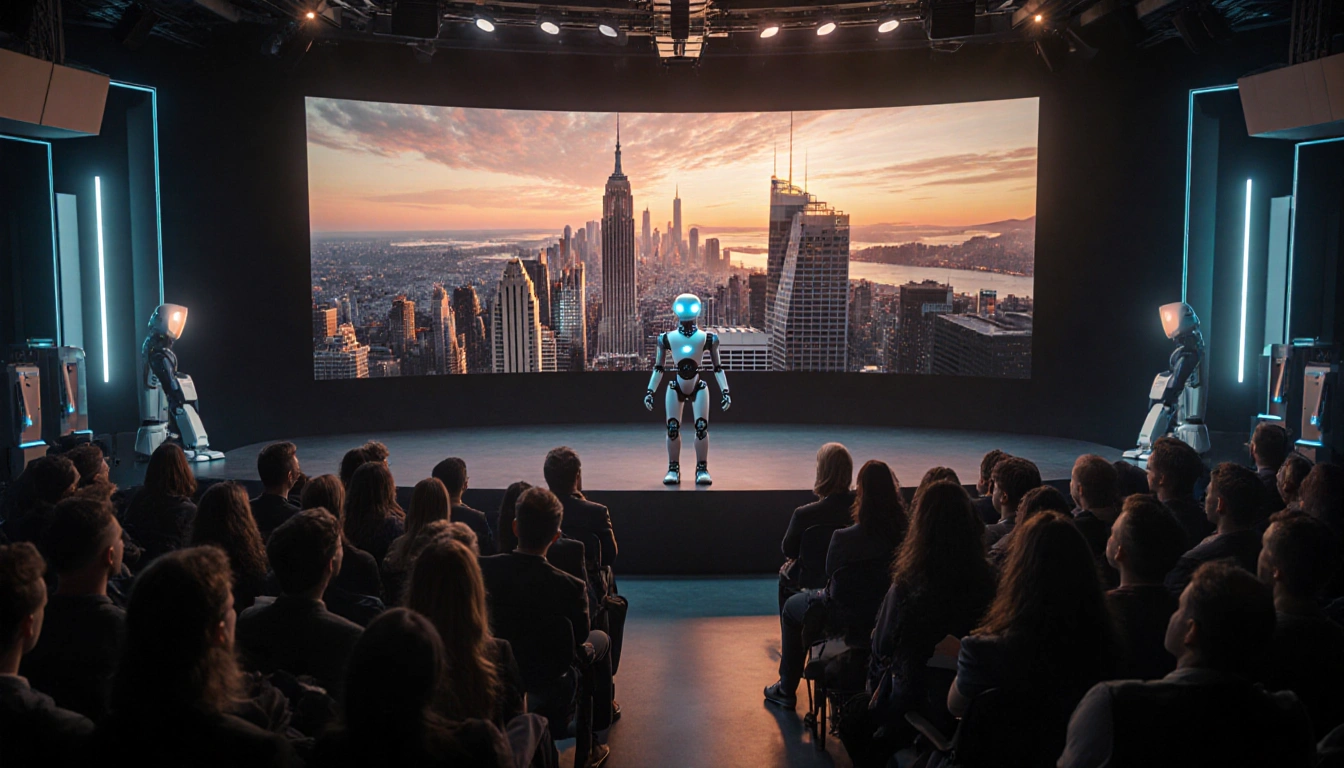
The Humanoids Summit in Mountain View, California, drew more than 2,000 attendees, bringing together engineers from Disney, Google, and dozens of startups. The gathering highlighted the growing interest in humanoid robots-machines that move and act like humans-amid a booming AI market.
Humanoid Robots Take Center Stage at Silicon Valley Summit
Founder Modar Alaoui of the Humanoids Summit said many researchers now believe humanoids or other physical embodiments of AI are “going to become the norm.” He added that the key question is simply how long it will take.

The conference, held Thursday and Friday at the Computer History Museum, showcased a wide range of humanoid prototypes, from Disney’s walking Olaf to Unitree’s cost-effective models that U.S. researchers use to test software.
- Disney
- Numerous startups
China Leads the Charge
McKinsey & Company identified about 50 companies worldwide that have raised at least $100 million for humanoid development, with 20 in China and 15 in North America.
| Metric | China | North America | Rest |
|---|---|---|---|
| Companies | 20 | 15 | 15 |
Tech Giants and Startups Push Boundaries
The rise of generative AI chatbots like OpenAI’s ChatGPT and Google’s Gemini has injected excitement into robotics, with investors pouring money into hardware that can give AI a physical presence. The same language models help robots learn tasks through visual-language training.
Rodney Brooks wrote in September that:
> “today’s humanoid robots will not learn how to be dexterous despite the hundreds of millions, or perhaps many billions of dollars, being donated by VCs and major tech companies to pay for their training.”
- Visual-language models
- Computer vision integration
Real-World Deployments and Future Outlook
Disney’s Olaf robot will begin roaming Disneyland parks in Hong Kong and Paris early next year, while Agility Robotics’ Digit robot is heading to a Texas distribution facility run by Mercado Libre. Industrial robots already dominate manufacturing, but humanoids still lag in speed and precision.
Jeff Burnstein said:
> “We have a lot of strong technology, we have the AI expertise here in the U.S.,” he said after touring the expo. “So I think it remains to be seen who is the ultimate leader in this. But right now, China has certainly a lot more momentum on humanoids.”
The summit’s organizer, Alaoui, sees parallels between humanoid robots and the early years of self-driving cars, noting a Google exhibit of a 2014 self-driving car prototype near the venue.
Key Takeaways
- Humanoid robots are attracting $100M+ investments, with China leading.
- Disney’s Olaf and Agility Robotics’ Digit are moving toward real-world deployment.
- Skeptics like Rodney Brooks warn that true dexterity is still far off.
While the hype around humanoid robots grows, the summit underscored that significant technical hurdles remain, and only time will reveal whether these machines become everyday partners.