At a Glance
- CATL’s new plant near Debrecen could be Europe’s largest EV battery factory
- Local residents protest hazardous chemicals and water use
- Hungary’s push for Chinese investment totals $17 billion in 18 projects
- Why it matters: The factory could reshape Europe’s clean-energy supply but risks public health and environmental safety.
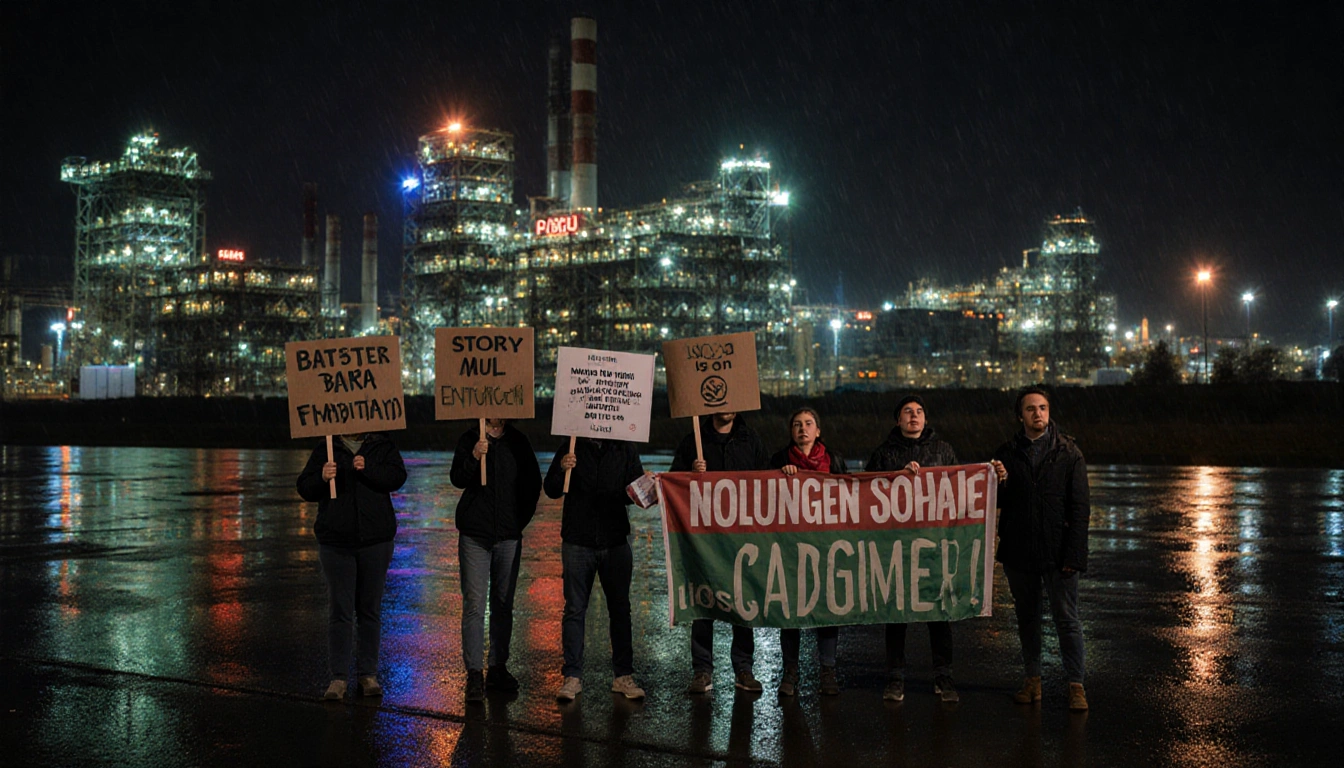
The announcement of a new CATL battery plant outside Debrecen has ignited fierce opposition from nearby residents, who fear hazardous chemicals and massive water consumption.
Hungary’s Battery Boom
Hungary’s prime minister, Viktor Orbán, has sought to make the country a hub for battery manufacturing, largely through Chinese investment. The government has attracted 18 EV and battery-related projects and $17 billion in pledged capital, according to data from the Net Zero Industrial Policy Lab at Johns Hopkins University.
Community Voices
Residents gathered in a local community center to question the plant’s safety. Éva Kozma, a local activist, urged the audience to “stand up for yourselves,” while a woman tearfully warned that the smokestacks were a mile from her daughter’s kindergarten.
Éva Kozma stated:
> “Everyone will get their fair share of this stew.”
Gergely Simon, a toxics expert with Greenpeace Hungary, warned:
> “It shouldn’t be in the wastewater at all.”
Environmental Concerns
The plant’s latest permit calls for an average of 523,000 gallons per day of water, two-thirds of which would be drinking water. In summer, peak use could triple, mostly from processed wastewater.
| Metric | Average | Peak (Summer) |
|---|---|---|
| Water use | 523,000 gallons/day | 1.5 million gallons/day |
| Hazardous chemical | N-methyl-2-pyrrolidone (NMP) | High levels in wastewater |
Noémi Sidló, CATL’s PR manager, said the factory uses adiabatic cooling to reduce water use and that it will contribute to Europe’s green transition.
Balázs Szilágyi, a public affairs manager for CATL, explained:
> “The plant would have little to zero emissions of NMP.”
Regulatory Landscape
Hungary eliminated its environment ministry in 2010 and has fast-tracked permitting. Local authorities have sanctioned a Chinese-owned separator film plant, SEMCORP, for exceeding air-emission limits, with a fine of 1.5 million forints (about $4,500).
Liu Pengyu, spokesperson for China’s U.S. embassy, rejected claims that Chinese investments violate human rights:
> “The founding purpose of the BRI is to advance China’s cooperation with partner countries following the principle of mutual respect, equality, and mutual benefit…”

Global Context
Since 2022, Chinese firms have pledged $200 billion in clean-energy manufacturing overseas, spanning 387 projects worldwide. Hungary has attracted more investment than any country except Indonesia and Morocco.
Key Takeaways
- CATL’s plant could become Europe’s largest EV battery factory.
- Residents protest hazardous chemicals and high water use.
- Hungary’s Chinese-investment push totals $17 billion in 18 projects.
The debate highlights the tension between rapid industrial growth and community safety, underscoring the need for stricter environmental oversight.