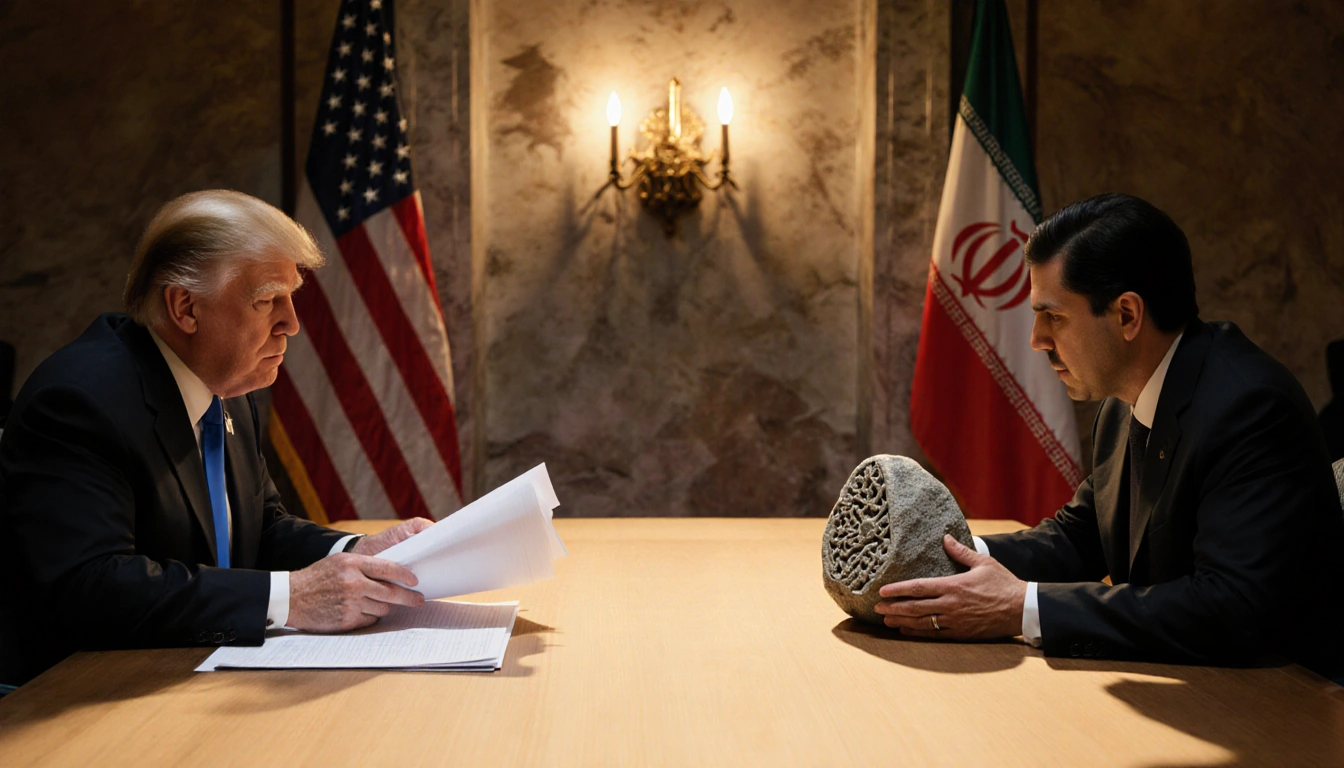
At a tense U.N. Security Council meeting on Tuesday, Iran and the United States reiterated their commitment to diplomacy, yet the gulf between the two nations over a nuclear deal remains vast.
Diplomatic Reaffirmation
During the session, Iran’s U.N. Ambassador Amir Saeid Iravani reminded the council that “Iran remains fully committed to principled diplomacy and genuine negotiations.” He added that the responsibility now lies with France, Britain and the U.S. to “reverse course and take concrete, credible steps to restore trust and confidence.” The ambassador also reiterated Iran’s dedication to the core principles of the 2015 nuclear deal, in which Tehran agreed to limit its nuclear program in exchange for the lifting of sanctions.
History of the Negotiations
The sixth round of talks between Washington and Tehran had been slated for shortly after Israel’s 12-day war with Iran in June, during which the United States joined Israel in bombing Iranian nuclear sites. The discussions were called off, and in September Iran’s supreme leader, Ayatollah Ali Khamenei, rejected any direct nuclear negotiations with the United States. President Donald Trump had withdrawn the U.S. from the agreement in 2018, ending the joint accord between Iran and the five permanent members of the Security Council plus Germany.
Iran’s Position
Iravani warned that the U.S. insistence on zero enrichment contradicts Iran’s rights under the 2015 deal and signals a lack of fair negotiation. He stated that if France and Britain continue to side with the U.S., “diplomacy will be effectively destroyed.” He concluded, “Iran will not bow down to any pressure and intimidation.”
U.S. Response
U.S. Mission counselor Morgan Ortagus, a Trump ally and former State Department spokesperson, said, “The United States remains available for formal talks with Iran but only if Tehran is prepared for direct and meaningful dialogue.” She further urged Iran to “step away from the fire, sir, and take President Trump’s hand of diplomacy. It’s extended to you.” Ortagus emphasized that the Trump administration has made it clear that no enrichment of nuclear material inside Iran is acceptable, a key sticking point in the talks.
Sanctions Snapback
In September, Britain, France and Germany activated a “snapback” mechanism to reinstate sanctions that had been lifted, citing Iran’s failure to meet the conditions of the deal. France’s deputy U.N. ambassador Jay Dharmadhikari defended the action, arguing that since 2019 Iran has been in “increasingly flagrant violation” of all limitations designed to keep its nuclear program peaceful. He added that the reimposition of sanctions does not end efforts to find a diplomatic solution.
Rising Uranium Enrichment
Amid growing tensions, Iran has accelerated its production of uranium to near weapons-grade levels. The Vienna-based International Atomic Energy Agency reported that Iran possesses over 440 kilograms of uranium enriched up to 60 %-a technical step only 30 % away from the 90 % enrichment required for weapons. This development has heightened concerns among the international community.
Russian Critique
Russia’s U.N. Ambassador Vassily Nebenzia rebuked the French envoy, stating, “You failed miserably in your so-called diplomatic efforts to strike a deal on the nuclear issue with Iran, and you know it.” The remark underscored the broader international disagreement over how to address Iran’s nuclear program.
Key Takeaways
- Iran and the United States reaffirmed a commitment to diplomacy at the U.N. Security Council, but the nuclear deal gap remains wide.
- Iran insists on its rights under the 2015 agreement, while the U.S. maintains a zero-enrichment stance.
- France, Britain, and Germany have reinstated sanctions through a snapback mechanism amid accusations of non-compliance.
- Iran’s uranium enrichment has climbed to 60 %, approaching weapons-grade levels.
- Russia criticized France’s diplomatic efforts, highlighting the divided international response.
The Security Council session underscored the persistent divide over Iran’s nuclear program, with diplomatic language exchanged but substantive progress stalled. The international community watches closely as the U.S., Iran, and their European partners navigate a path that could either restore trust or deepen mistrust.