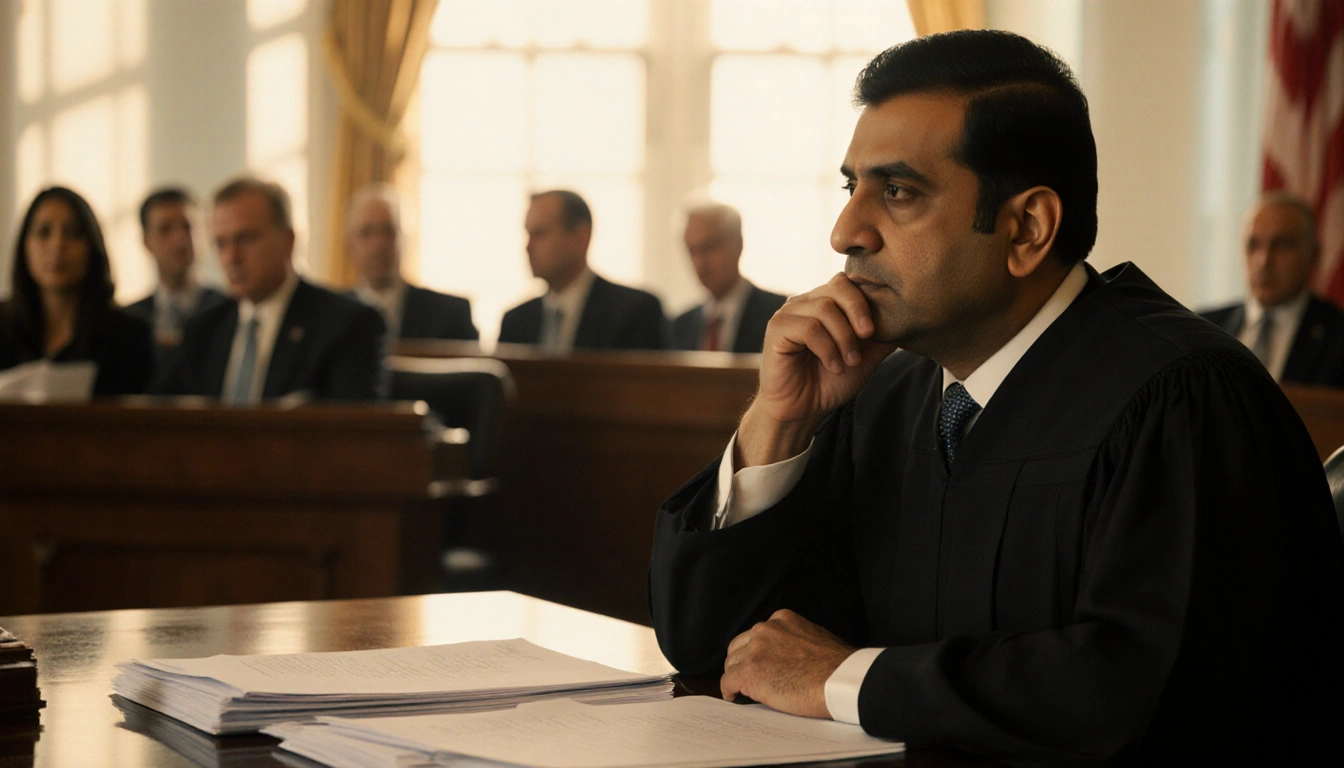
In a courtroom that has become a flashpoint for the nation’s political future, Judge Amit Mehta has yet to decide whether former President Donald Trump can claim presidential immunity for his role in the Jan. 6 attack on the U.S. Capitol.
The federal judge listened to arguments from both sides but left the case unresolved, telling the attorneys that he would issue a ruling “as soon as we can” after hearing a “lot to think about.”
Trump’s legal team argues that his conduct leading up to the riot and during the attack was performed in his official capacity as commander-in-chief, and therefore should be shielded from civil liability.
“The entire point of immunity is to give the president clarity to speak in the moment as the commander-in-chief,” said attorney Joshua Halpern to the judge.
Opposing counsel, representing a coalition of Democratic members of Congress, counters that Trump cannot prove he was acting solely in an official capacity rather than as a private individual seeking office.
“President Trump has the burden of proof here,” said plaintiffs’ attorney Joseph Sellers. “We submit that he hasn’t come anywhere close to satisfying that burden.”
Sellers also pointed to a Supreme Court precedent that excludes office-seeking conduct from the scope of presidential immunity.
Judge Mehta’s comments suggest the decision will not be quick, but the legal battle is already shaping the narrative around accountability for the Capitol assault.
The lawsuit, originally filed by Representative Bennie Thompson of Mississippi, names Trump, his personal attorney Rudolph Giuliani, and members of the Proud Boys and Oath Keepers extremist groups as defendants.
Since the filing, other Democratic members of Congress have joined the litigation, expanding the scope of the civil claims.
Trump’s sweeping act of clemency on the first day of his second term, which pardoned, commuted prison sentences, and ordered the dismissal of all more than 1,500 criminal cases stemming from the Capitol siege, did not extinguish the civil lawsuits.
Over 100 police officers were injured while defending the Capitol from the rioters, a fact that underscores the physical toll of the attack.
Trump’s own rhetoric at the “Stop the Steal” rally near the White House, where he urged supporters to “stop the theft,” directly preceded the mob’s disruption of Congress’s joint session to certify President Joe Biden’s electoral victory.
The case remains a pivotal point of contention between the former president’s claim of immunity and the congressional members’ insistence on accountability.
## Key Takeaways
– Judge Amit Mehta has postponed a decision on Trump’s immunity claim, citing the need to “think about it” before ruling.
– Trump’s attorneys invoke presidential immunity, citing official-capacity conduct; plaintiffs argue the conduct was office-seeking and thus outside immunity.
– The civil lawsuit, filed by Rep. Bennie Thompson and joined by other Democrats, names Trump, Giuliani, and extremist group members, and survived Trump’s clemency.
The outcome of this case will reverberate beyond the courtroom, influencing how the nation interprets the limits of presidential power and the accountability of those who incite violence against democratic institutions.