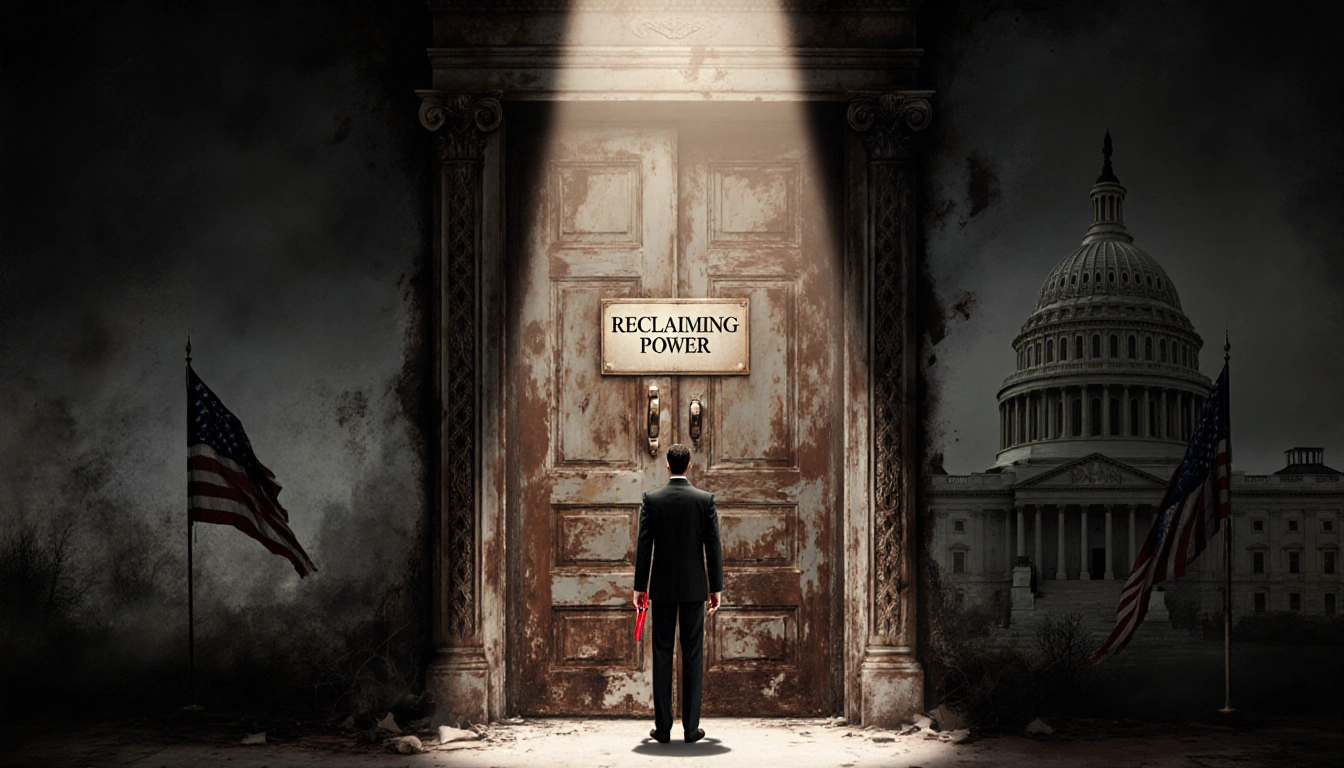
Frustrated lawmakers are looking to 2026 in the hopes that they can reclaim some of the power many fear they’ve ceded to the White House under President Trump.
Over the course of 2025, the Trump administration unilaterally shuttered or drastically weakened federal agencies, implemented widespread tariffs, canceled congressionally approved spending, and conducted military operations in the Caribbean.
2025: Trump’s Unilateral Moves
Democrats repeatedly cried foul, and even some Republicans aired concerns about the White House brushing aside Congress.
Scores of lawmakers opted for retirement before the calendar even turned to January.
Now many are wondering whether anything will be different next year, especially with the added political pressure of the approaching midterm elections.
Congressional Response and Retirements
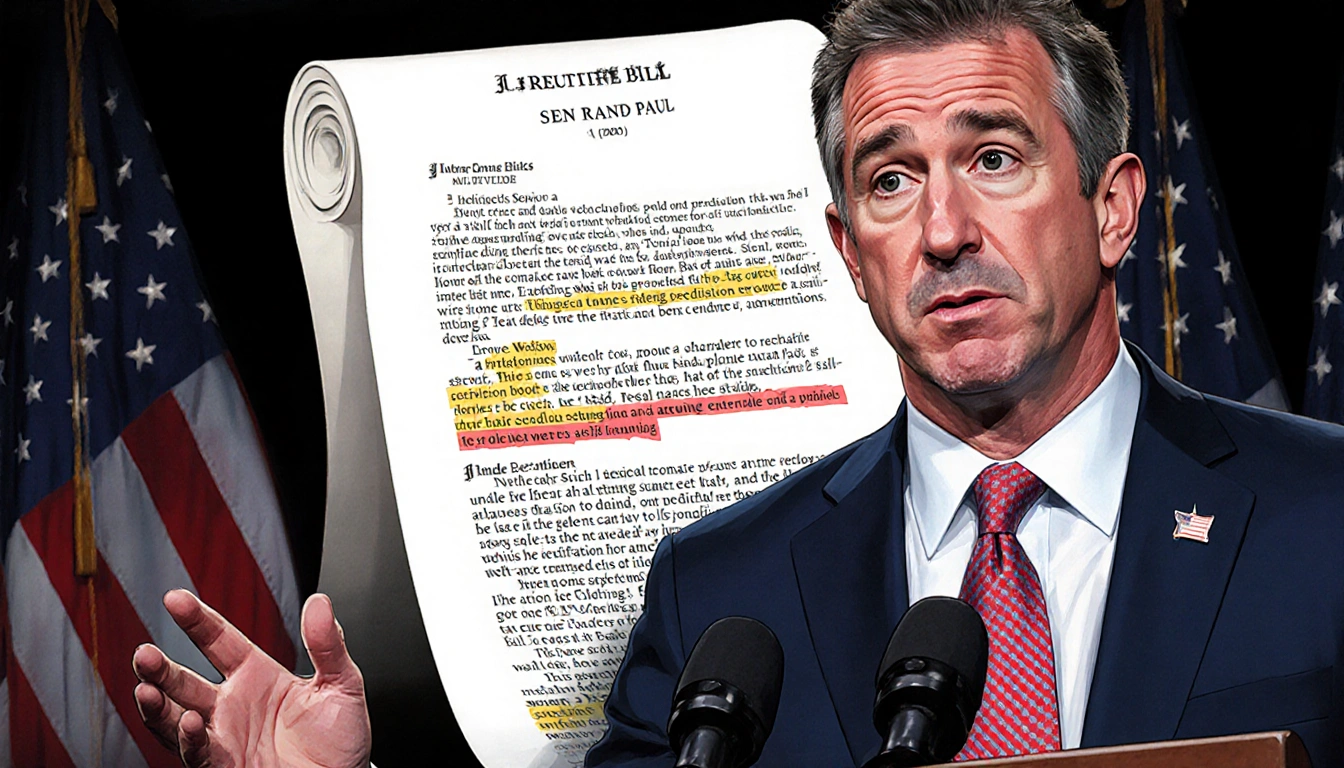
Sen. Rand Paul (R-Ky.) said, “Yeah, I’ve been concerned for ten years about that,” when asked about clawing back Congress’ relevance.
He added, “I don’t know that it’s getting any better. Seems to be getting worse.”
The GOP’s signature legislative achievement this year was the “One Big Beautiful Bill,” which passed using a process that bypassed the Democratic filibuster in the Senate.
It extended and added tax cuts, boosted defense and immigration enforcement, and cut spending on Medicaid and food assistance.
The “One Big Beautiful Bill”
The sprawling bill was widely seen as one of the GOP’s only shots at enacting its legislative priorities this year.
While some Republicans are pitching a second reconciliation bill, there is an acknowledgement that Republicans won’t pass any other legislation that’s as substantial.
A tiny, ideologically diverse Republican majority in the House and a Democratic caucus that is dedicated to opposing the GOP have combined to make it exceedingly difficult to pass meaningful bills through the House.
Near impossible to pass bills that can overcome a Democratic filibuster in the Senate.
House Gridlock and Leadership
A conference that has Andy Harris, Chip Roy, Brian Fitzpatrick, and Don Bacon are never going to produce meaningful legislation on things like that … on things that can pass with all Republican support. It’s never gonna happen,” said one GOP operative.
“It’s part of why all the serious people are going to f-ing leave,” the operative added.
Speaker Johnson’s Shutdown Decision
Adding to the problems on the House side was Speaker Mike Johnson’s (R-La.) decision to keep members home during the 43-day government shutdown-leaving them entirely on the sidelines of the negotiations and falling behind on other legislative work.
Rep. Thomas Massie (R-Ky.) said, “I’ve never been in a shutdown where we shut down Congress too, like voluntarily, because we think it’s good messaging.”
The 53-seat Senate Republican majority has largely inoculated them from issues with Cabinet and other high-level confirmation fights.
Democrats have been pushing back with votes targeting Trump’s emergency actions, with Sen. Tim Kaine (D-Va.) being key in those efforts.
Senate Dynamics and Tim Kaine’s Actions
The Virginia Democrat was a part of 11 votes to overturn emergency power measures or targeting war powers actions, including on tariffs and the strikes on suspected drug boats in the Caribbean.
Kaine said, “I think there’s been such a long history of allowing executives to act … and this president is pushing it farther than most.” He added, “Well, I’m just going to keep forcing people to confront [the question], ‘Do you agree with this or not?'”
Republican Concerns Over Funding
Some Republicans, meanwhile, expressed unease when Trump moved to rescind funding that had passed on a bipartisan basis, first using a maneuver that allowed Republicans to claw it back on a party-line vote, then acting unilaterally to cancel additional spending.
Sen. Lisa Murkowski (R-Alaska) said, “Congress alone bears the constitutional responsibility for funding our government, and any effort to claw back resources outside of the appropriations process undermines that responsibility.”
To be sure, lawmakers have managed to push back in some instances.
But the highest-profile examples have involved a small group of Republicans banding together with the minority to bypass leadership.
Lawmakers’ Pushback: Discharge Petitions
Most notably, four Republicans signed a discharge petition in the House to force a vote on a bill to have the administration release files about Jeffrey Epstein, despite the administration’s long-standing and vehement opposition.
That led Trump and top Republicans to reverse their position and support the bill, which passed both chambers almost unanimously.
Another handful of moderate Republicans ended the year by joining with Democrats on another discharge petition to force a vote on extending expiring Obamacare subsidies that were at the center of the shutdown fight.
But while the move will force Johnson to hold a vote on the matter, there is little chance of that bill getting through the Senate and onto Trump’s desk.
Kevin Kiley’s Frustration
Rep. Kevin Kiley (R-Calif.) said, “I think this is why people are so frustrated with Congress and what Congress has, what, a 15% approval rating? I think it’s gonna go down if we don’t get something done here.”
The high number of members of Congress eyeing the exits is another indication of members feeling disillusioned with the job.
Appropriations as a Light at the End of the Tunnel
Some see appropriations as the light at the end of the tunnel, with the two parties pushing to fund the government by the Jan. 30 deadline.
The Senate was unable to kick off floor action on the five-bill “minibus” before the holiday break, because of funding for the National Center for Atmospheric Research (NCAR) that was nixed months ago by the Office of Management and Budget.
Sens. Michael Bennet (D-Colo.) and John Hickenlooper (D-Colo.) refused to allow speedy passage of the spending bills without newly appropriated funding for the center, which is located in Boulder, Colo.
John Hoeven on the Power of the Purse
Sen. John Hoeven (R-N.D.), an appropriator, said, “It’s really important. It’s about the power of the purse. It’s about us determining what gets funded and what doesn’t get funded. It’s setting priorities.” “January’s going to be a big month.”
Sen. Thom Tillis (R-N.C.) said, “This administration was a lot of change. A lot of it good change, okay?”
He added, “But it has really caused people to back into their political corners. Frankly, I’m not optimistic about a lot of bipartisan work [getting done] in any of the politically thorny areas.”
Tillis concluded, “I think people are going to move off into their corners.”
Closing
With the election around the corner, some lawmakers still view action on key topics as a big ask.
But many are hopeful that appropriations will restore congressional relevance.
The coming year will test whether lawmakers can regain the power many fear they have ceded to the White House.