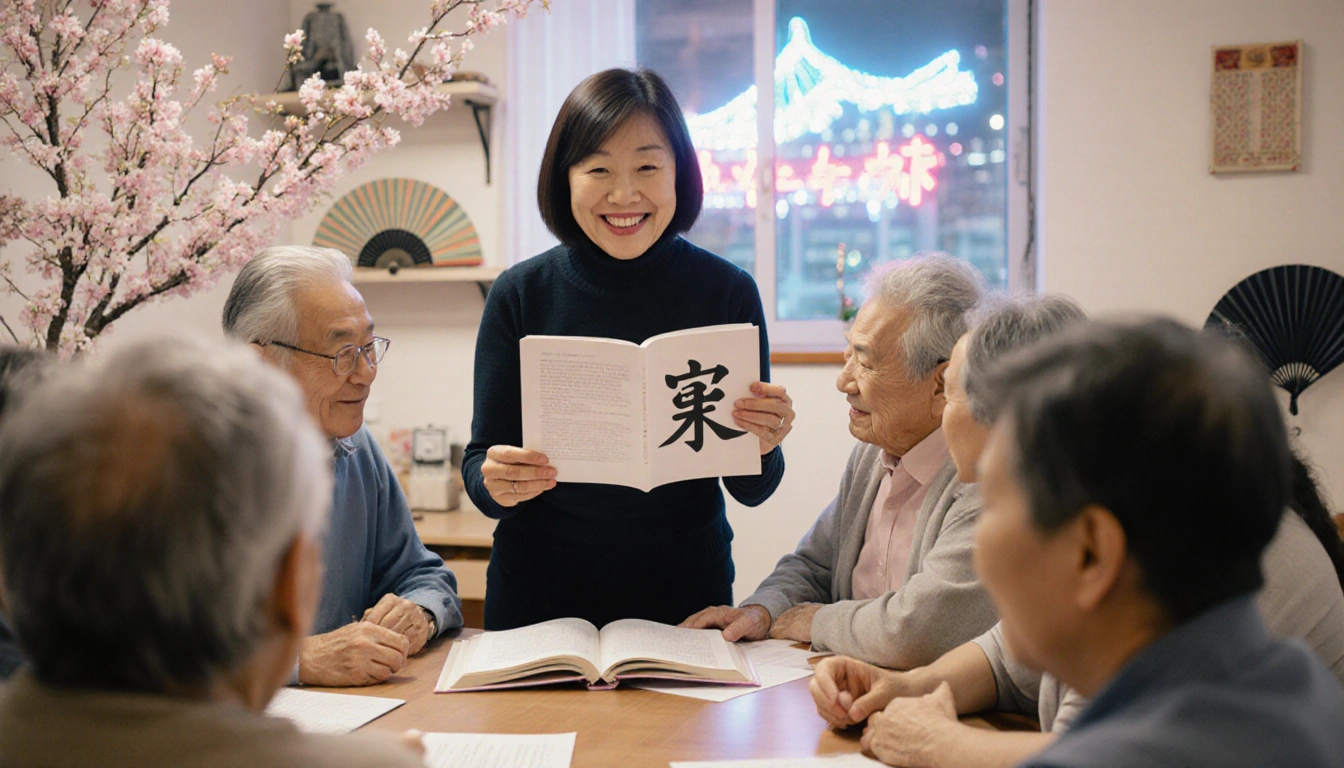
After seven years of weekly classes, I still can’t grasp Japanese. My teacher, Ayaka Ono, has taught about 600 students over 15 years, most between 20 and 50, while I am more than a decade older than her eldest. She says, “I find older students take tiny, tiny steps and then they fall back,” adding that they can’t focus as long. I hear this echo of the broader research on language learning in older adults.
The Teacher’s Perspective
Ayaka Ono, my current Japanese teacher, estimates she’s tutored roughly 600 students over the past 15 years. Her students are mostly between 20 and 50, and I am more than a decade beyond her eldest. Ono-san – “san” is an honorific in Japanese to show respect – tells me, “I find older students take tiny, tiny steps and then they fall back. They can’t focus as long. I teach something one minute and they forget the next.”
Scientific Background
It is well established that children have an easier time learning second languages. In recent years, scientists have studied whether being bilingual may help ward off the memory lapses and reduced mental sharpness that come with an aging brain. Much of the research on the potential benefit involved people who spoke two or more languages for most of their lives, not older adult learners.
Ellen Bialystok, a distinguished research professor emeritus at York University in Toronto, is credited with advancing the idea of a possible “bilingual advantage” in the late 1980s. She says, “The science shows that managing two languages in your brain – over a lifetime – makes your brain more efficient, more resilient and more protected against cognitive decline.”
Bialystok recommends studying a new language at any age, comparing the challenge to word puzzles and brain-training games that are promoted to slow the onset of dementia. She told The Associated Press, “Trying to learn a language late in life is a great idea, but understand it won’t make you bilingual and is probably too late to provide the protective effects of cognitive aging that come from early bilingualism. However, learning a new language is a stimulating and engaging activity that uses all of your brain, so it is like a whole-body exercise.”
Latest Research Findings
A large study published by the science journal Nature Aging in November suggests that speaking multiple languages protects against more rapid brain aging, and that the effect increases with the number of languages. The study involved 87,149 healthy people ages 51 to 90 and was based on participants from 27 European countries with diverse linguistic and sociopolitical contexts. The authors wrote that the findings underscore the key role of multilingualism in fostering healthier aging trajectories.
Bialystok was not involved in the project but has researched second-language acquisition in children and adults, including whether being bilingual delays the progression of Alzheimer’s disease or aids in multitasking and problem-solving. She said the new study “ties all the pieces together.” She added, “Over the lifespan, people who have managed and used two languages end up with brains that are in better shape and more resilient.”
Judith Kroll, a cognitive psychologist who heads the Bilingualism, Mind and Brain Lab at the University of California, Irvine, described the brain’s juggling act with the phrases “mental athletics” and “mental somersaults.” She told The AP, “I would say there are probably not enough studies to date to be absolutely definitive about this, but the evidence we have is very promising, suggesting both that older adults are certainly able to learn new languages and benefit from that learning.”
Kroll added that more studies are needed to determine whether language lessons help people in midlife and beyond maintain some cognitive abilities. She compared the state of the field to the late 20th century, when the dominant thinking was that exposing infants and young children to two or more languages put them at an educational disadvantage. She concluded, “What we know now is the opposite.”
The Personal Journey
I visited Spain’s Mediterranean coast in the 1990s while working in Madrid. I was shocked by how many non-Spaniards had lived in the country for years and could say only a few words in Spanish. Now I get it. When I attempt Japanese, the reaction is often an incredulous, “And you’ve been here how long?”
I have workarounds to navigate my hostile linguistic environment. One is saying “itsumono.” It means “the same as always” or “the usual.” It’s enough to order morning coffee at a neighborhood cafe or lunch at several regular stops.
Japanese is one of the most difficult languages for English speakers to master, along with Arabic, Cantonese, Korean and Mandarin. Romance languages such as French, Italian or Spanish are easier.
My once-a-week class is grueling, and one hour is my limit. I use this analogy: my brain is a closet without enough empty hangers, and Japanese doesn’t go with anything in my wardrobe. The writing system is intimidating for an English speaker, the word order is flipped, and politeness is valued more than clarity.
During the 4 1/2 years I spent reporting from Rio de Janeiro, I got by with Portuñol – an improvised blend of Spanish and Portuguese – and the patience of Brazilians. There is no such halfway house for Japanese. You either speak it or you don’t.
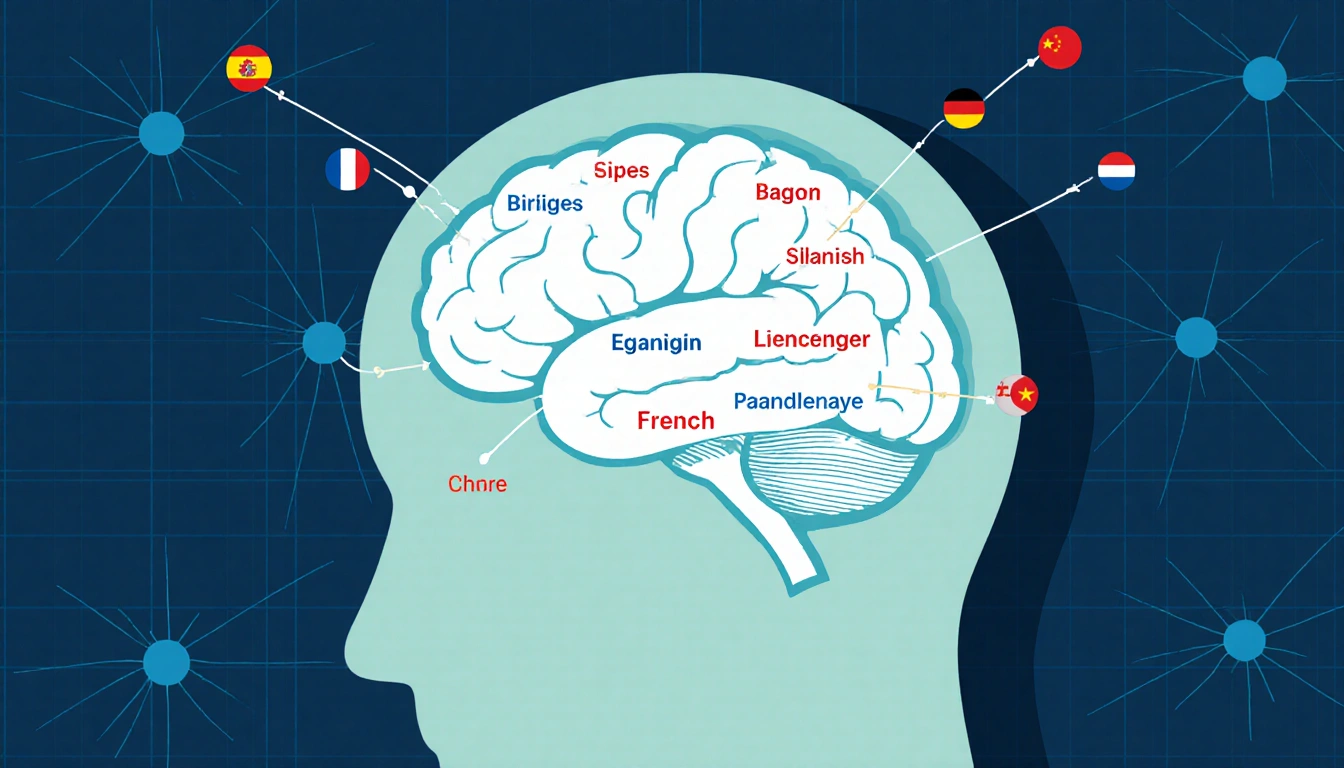
I’ll never progress beyond preschool level in Japanese, but overloading my brain with lessons might work in the same way that my regular weight-training sessions help maintain physical strength.
Technology and Practice
Ono-san, my Japanese teacher, calls language-learning apps “better than nothing.” Bialystok said technology can be a useful learning tool, “but progress of course requires using the language in real situations with other people.”
She added, “If old folks try to learn a new language, you are not going to be very successful. You are not going to become bilingual. But the experience of trying to learn the language is good for your brain. So what I say is this. What’s hard for your brain is good for your brain. And learning a language, especially in later life, is hard but good for your brain.”
Key Takeaways
- Even after seven years of study, mastering Japanese remains a challenge for older learners.
- Recent science shows that speaking multiple languages can protect against rapid brain aging, with benefits growing as more languages are added.
- Late-life language learning is stimulating, engaging, and can act as a whole-body exercise for the brain, though it may not provide the same protective effects as early bilingualism.
The story illustrates that while the road to fluency may be steep, the journey itself offers cognitive rewards and a deeper appreciation for the complexities of language and aging.