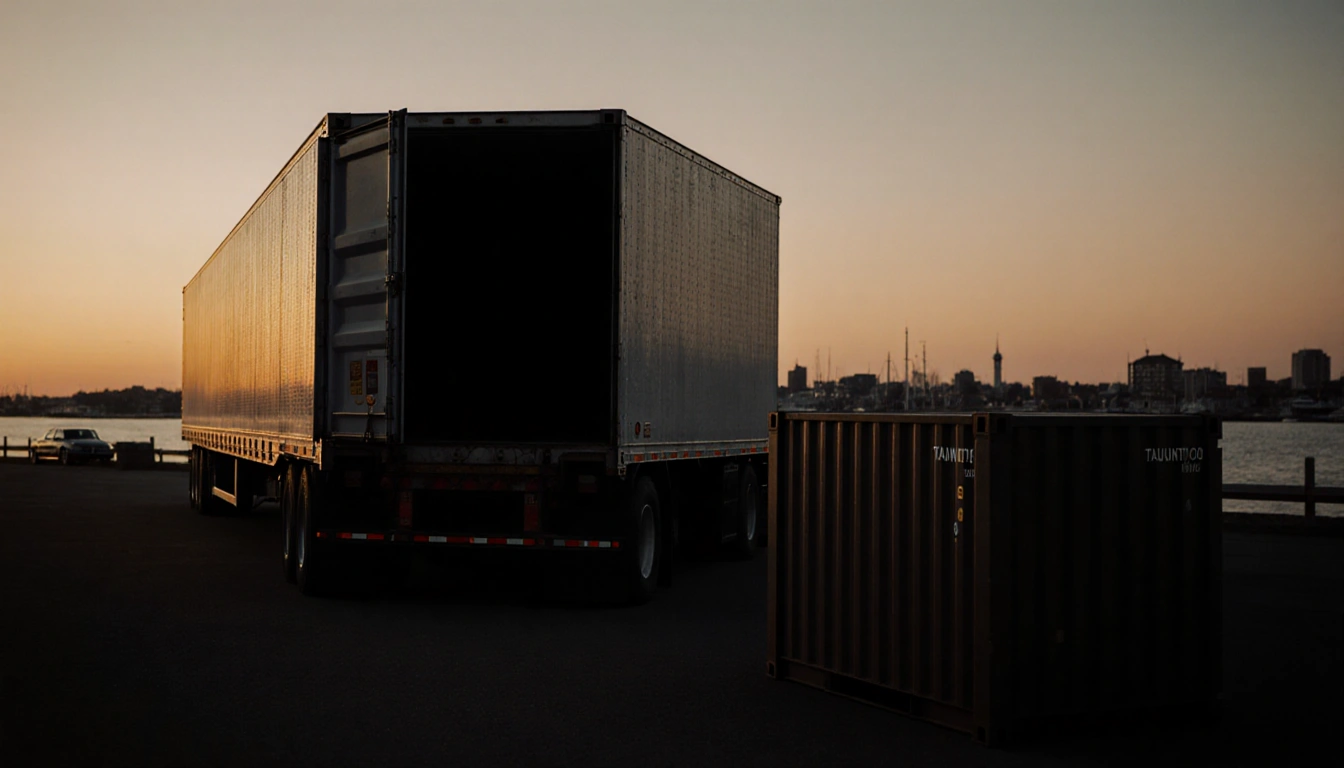
A truck carrying $400,000 worth of live lobsters, destined for Costco locations in Illinois and Minnesota, vanished after leaving Taunton, Massachusetts, sparking a police investigation into a possible heist.
The shipment was loaded onto a refrigerated trailer and scheduled to arrive in Chicago and Minneapolis within 48 hours.
No cargo manifest was found at the distribution hub, raising immediate concerns about the missing seafood.
The incident has drawn national attention to the vulnerabilities in the seafood supply chain.
Police are probing the disappearance, looking for evidence that the lobsters were taken from the truck or the distribution hub.
Investigators are reviewing GPS data from the trailer’s tracking system.
They are also examining surveillance footage from the loading dock in Taunton.
The goal is to determine whether the theft occurred during transit or at the facility.
Dylan Rexing, CEO of Rexing Companies, weighed in on the incident during an interview on ChicagoLIVE, Fox32 reported.
“This is a huge issue across the country,” Rexing said.
“It directly impacts businesses and contributes to higher prices for consumers,” he added.
His comments emphasize the broader economic ripple effects of cargo theft.
Rexing’s remarks highlight how a single theft can ripple through supply chains, driving up costs for retailers and ultimately for shoppers.
The loss of live lobsters means that Costco must source replacements, potentially at a higher price.
This substitution can increase operating expenses for the retailer.
Those costs may be passed on to consumers through higher shelf prices.
The current incident follows a similar theft earlier this month, when items were stolen from the same Massachusetts facility that handled the lobsters.
That earlier theft involved a different shipment of perishable goods.
Both incidents suggest a pattern of vulnerability at the facility.
The repeated thefts have prompted calls for stronger security measures.

The Department of Transportation (DOT) has flagged the issue to law-enforcement agencies and freight carriers nationwide, urging them to share information and tighten security.
The DOT’s alert is part of a broader effort to combat cargo theft across the country.
Agencies are encouraged to report incidents promptly.
The goal is to create a comprehensive national database of thefts.
In a memo to authorities, the DOT described cargo theft as a growing concern that costs the U.S. economy billions annually.
The memo outlines two primary categories of theft.
The first involves opportunistic “straight thefts” of trailers, containers, and loads at truck stops or multimodal distribution hubs.
The second involves highly coordinated operations conducted by organized criminal networks.
Both categories of theft generate significant economic losses, disrupt supply chains, and, in some cases, fund broader illicit activities such as narcotics trafficking, counterfeiting, and human smuggling.
These crimes create indirect costs that affect insurers, carriers, and shippers alike.
The economic impact extends beyond the immediate loss of goods.
It also erodes confidence in the freight system.
The memo also requested data on cargo theft from various authorities, aiming to quantify the scale of the problem and identify hotspots.
The data collection effort is intended to inform policy decisions.
It will help carriers implement risk-based security protocols.
The information will also guide law-enforcement priorities.
Law-enforcement officials are now combing through surveillance footage, GPS logs, and shipping manifests in an effort to pinpoint the thieves and recover the lobsters.
They are collaborating with local police departments in Massachusetts and Illinois.
The investigation also involves federal agencies that oversee interstate commerce.
The objective is to apprehend the perpetrators and prevent future incidents.
The incident underscores the vulnerability of perishable goods, which can lose value rapidly if delayed or stolen.
Live lobsters require continuous refrigeration to maintain quality.
Any interruption in the cold chain can render the product unsellable.
This adds another layer of urgency to securing shipments.
Retailers like Costco are already adjusting their logistics strategies, adding extra checkpoints and insurance coverage to mitigate future losses.
They are reviewing their routing plans to avoid high-risk areas.
They are also exploring technology solutions such as tamper-evident seals.
These measures aim to deter theft and protect revenue.
Consumers may see higher prices on seafood products as companies absorb the cost of theft and increased security measures.
The price impact may be subtle but noticeable over time.
Shoppers could experience a shift in product offerings as retailers seek more resilient supply sources.
The overall market may adjust to new risk premiums.
The broader cargo theft crisis, highlighted by the DOT memo, threatens to erode confidence in the national freight network and could spur stricter regulations.
Companies are calling for clearer guidelines on security standards.
The industry is monitoring regulatory developments closely.
The potential for new legislation looms large.
Industry stakeholders are convening to discuss best practices for securing high-value perishable shipments.
They are sharing case studies on successful deterrence strategies.
Training programs for drivers and warehouse staff are being expanded.
The goal is to create a culture of vigilance across the supply chain.
The DOT memo also calls for increased collaboration between federal, state, and private entities to track theft patterns.
Data analytics are being leveraged to identify hotspots.
Companies are investing in real-time monitoring systems.
These initiatives aim to reduce the incidence of cargo theft nationwide.
Key Takeaways
- $400,000 of live lobsters stolen from a truck bound for Costco in Illinois and Minnesota.
- DOT warns that cargo theft costs billions and fuels other crimes.
- Police are investigating, while retailers adjust logistics to prevent future losses.
As the investigation unfolds, stakeholders across the seafood supply chain are bracing for the impact of this theft.
The DOT’s alert serves as a stark reminder of the growing threat posed by cargo theft to the U.S. economy.
Companies are ramping up security protocols to protect their assets.