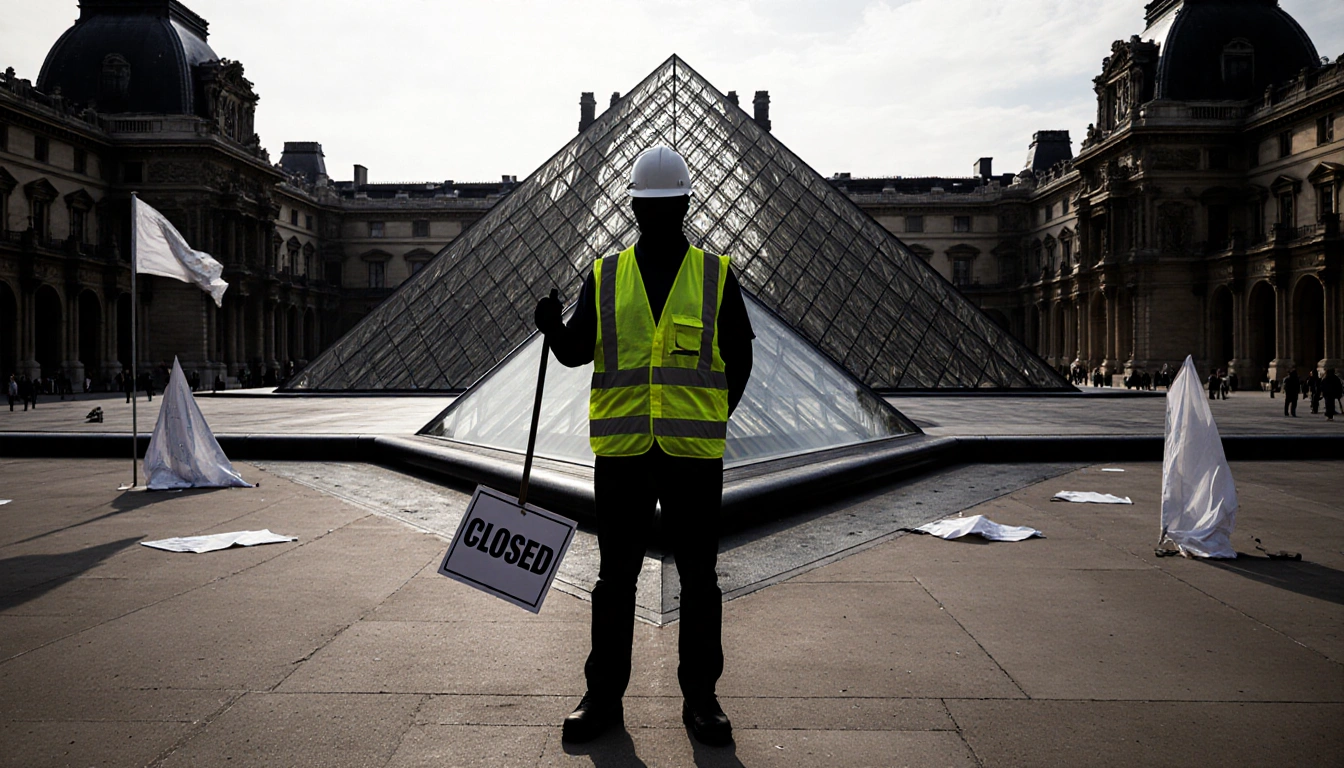
On Monday morning, 400 workers at the Louvre Museum voted to strike, shutting the iconic glass pyramid entrance and forcing the world’s most‑visited museum to close for the day.
Strike Day at the Louvre
The CFDT union reported that the vote was taken at a meeting of 400 workers on Monday morning. The workers, armed with flags, banners and placards, blocked the museum’s glass pyramid entrance. As a result, the Louvre did not open as scheduled and turned visitors away. An updated notice on the Louvre’s website said it was “exceptionally” closed for the day and that ticket holders would be reimbursed.
Visitor Disappointment
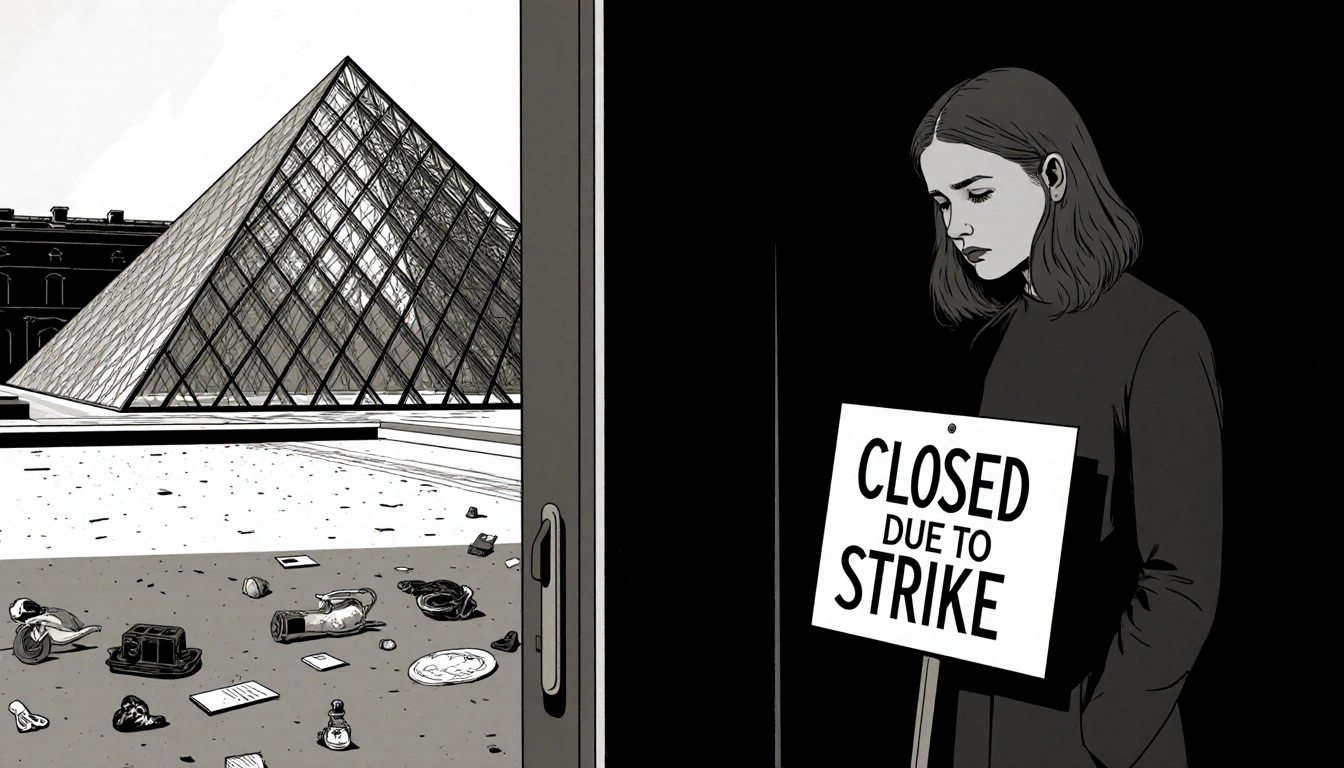
Lindsey Hall, a would‑be visitor from Sacramento, California, expressed her frustration. “It’s really sad, because I was really looking forward to this,” she said. She had planned to enjoy the museum’s huge collection of art and artifacts with a friend, describing it as “one of those life experiences you crave.” “This is just an epic collection of art and something that every human should see,” she added. “I can see the other side of it, like if you are the person that works in the museum and how that can be, like day after day after day.”
Jewel Heist and Security Failures
The strike vote followed an embarrassing jewelry heist in October. Police arrests snared the entire four‑man team alleged to have made off with $102 million worth of jewels. The gang used a basket lift to reach the Louvre’s façade, forced a window, smashed display cases and fled with pieces of the French crown jewels. A Senate inquiry released last week said the thieves escaped with barely 30 seconds to spare and pointed fingers of blame at broken cameras, outdated equipment, understaffed control rooms and poor coordination that initially sent police to the wrong location.
Union Demands
In a statement, the CFDT said employees want more staffing for security and to welcome visitors, improved working conditions, stable long‑term budgets for the Louvre and leadership that “truly listens to staff.” The CGT union’s Yvan Navarro complained that staff numbers have continually decreased while visitor numbers have increased. “People come to Paris to visit the museums. So the visitor numbers go up, the tariffs and the prices go up, because everything is becoming more expensive but the salaries and the numbers of staffers don’t go up so obviously you reach a point like today, a day of anger,” he said. Labor leaders also said the talks with government officials, including Culture Minister Rachida Dati, had not alleviated their concerns about staffing and financing for the museum that welcomes millions of visitors each year.
Government and Reorganization Efforts
The strike vote was unanimous, but it was not immediately clear whether the work stoppage will last longer than one day. The Louvre is closed on Tuesdays, and employees could meet again on Wednesday to decide whether to stay out or return to work. In their notice of open‑ended strike action to Dati last week, the CFDT, CGT and Sud unions said the Louvre was in “crisis,” with insufficient resources and “increasingly deteriorated working conditions.” The Culture Ministry said Sunday that it has tasked Philippe Jost, who oversaw reconstruction of Notre Dame Cathedral after its 2019 fire, with a mission to propose a deep reorganization of the Louvre following the findings of an administrative inquiry. It said Jost will offer recommendations by the end of February and will work with Louvre director Laurence des Cars, who previously described the heist as a “terrible failure.”
Key Takeaways
- The Louvre closed for a day after workers voted to strike over staffing, security and working conditions.
- A $102 million jewel heist in October exposed serious security shortcomings.
- Unions demand more staff, better conditions, stable budgets and leadership that listens.
Conclusion
The strike, the heist and the government’s planned reorganization highlight the urgent need to address the Louvre’s staffing and security challenges. The outcome of the upcoming meetings and the recommendations from Philippe Jost will shape the future of the world’s most‑visited museum.