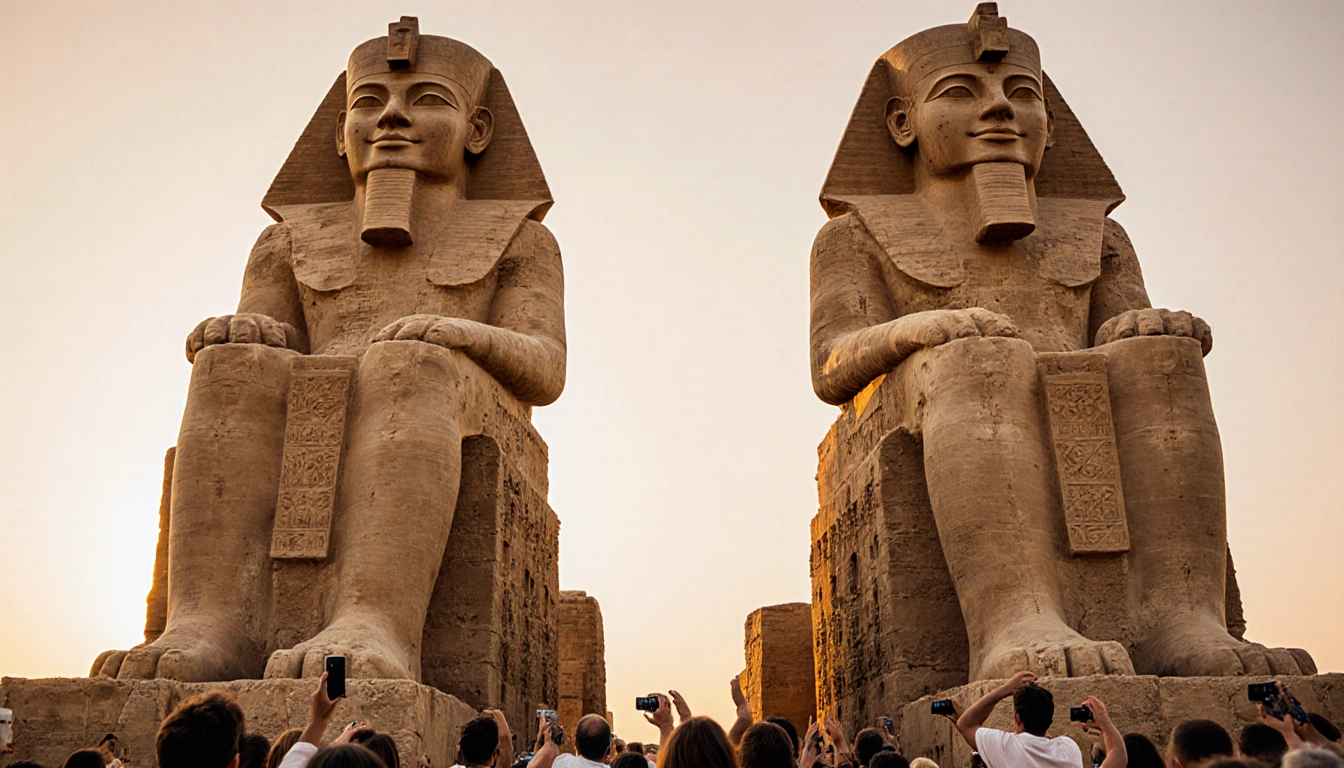
In a ceremony that drew crowds and cameras alike, Egypt unveiled the newly reassembled Colossi of Memnon in Luxor on Dec. 14, 2025. The two massive alabaster statues, each standing nearly 15 meters tall, were finally finished after a twenty‑year renovation that began in the late 1990s.
The Grand Unveiling
During the event, Mohamed Ismail, secretary‑general of the Supreme Council of Antiquities, announced, “Today we are celebrating, actually, the finishing and the erecting of these two colossal statues,” as the statues were lifted onto their pedestals. The ceremony marked a milestone in Egypt’s effort to boost tourism by restoring key monuments.
The Colossi and Their Story
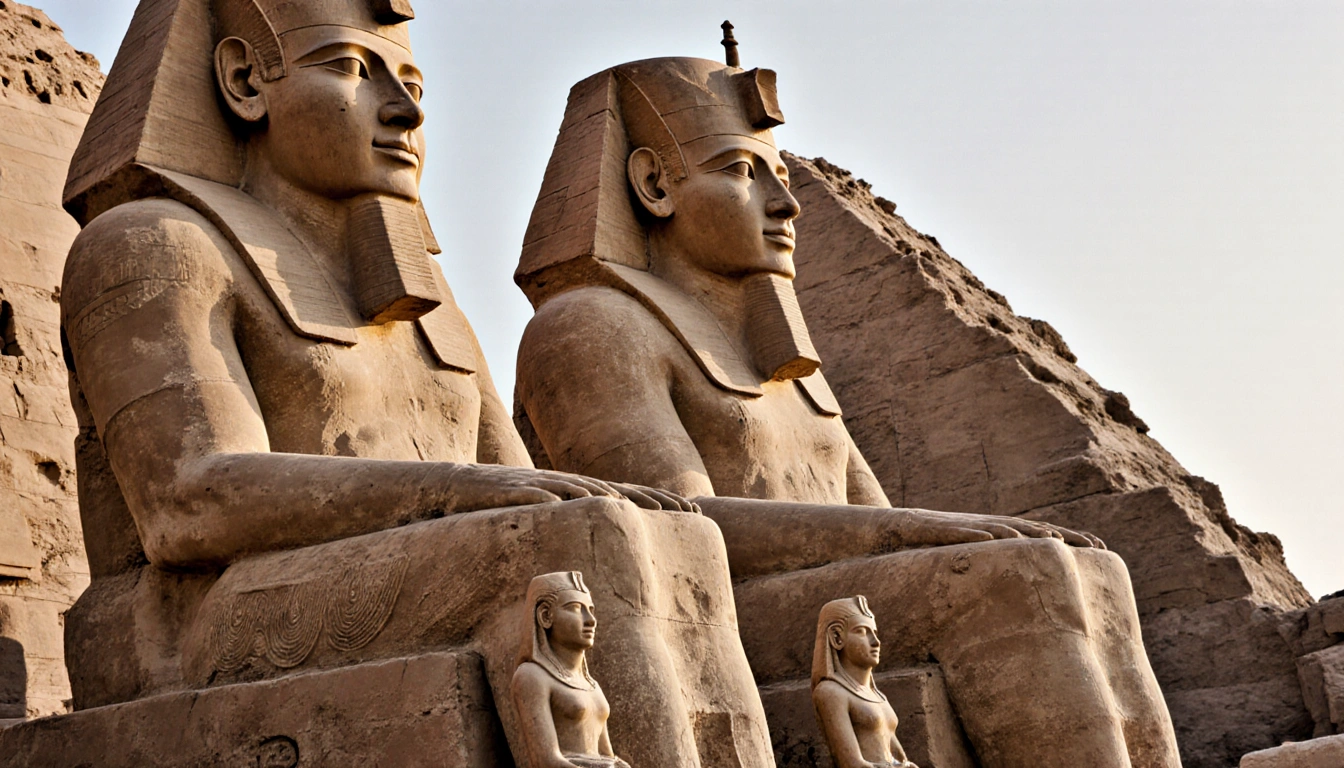
The Colossi of Memnon depict Amenhotep III, who reigned from 1390 to 1353 BC, a ruler whose mortuary temple on the western bank of the Nile once stood as a symbol of New Kingdom prosperity. Each statue shows the pharaoh seated, hands resting on his thighs, faces turned east toward the Nile and the rising sun. They wear the nemes headdress topped with the double crown and a pleated royal kilt, and two small statues on his feet represent his wife, Tiye. The statues stand 14.5 meters (48 feet) and 13.6 meters (45 feet) tall.
Restoring a Temple
The colossi were toppled by a powerful earthquake around 1200 BC, which also destroyed Amenhotep III’s funerary temple. The fragments were scattered and some blocks were reused in the Karnak temple. Archaeologists, guided by the Antiquities Ministry, rebuilt the statues using pieces sculpted separately and fixed them into a monolithic alabaster core. The statues were carved from alabaster quarried at Hatnub in Middle Egypt and placed on pedestals that bear inscriptions naming the temple and quarry.
In the late 1990s, an Egyptian‑German mission led by German Egyptologist Hourig Sourouzian began work in the temple area. She explained, “This project has in mind … to save the last remains of a once‑prestigious temple,” highlighting the goal of preserving the temple’s legacy.
Tourism and the Future
The unveiling followed the inauguration of the Grand Egyptian Museum, a flagship project aimed at revitalizing Egypt’s tourism industry. The museum, located near the Giza Pyramids and the Sphinx, is part of a broader strategy to attract visitors. Tourism, which relies heavily on pharaonic heritage, had suffered during political unrest after 2011 but has been recovering since the COVID‑19 pandemic and amid the war in Ukraine, both major tourist sources.
Tourism and Antiquities Minister Sherif Fathy attended the ceremony and said, “This site is going to be a point of interest for years to come,” and added, “There are always new things happening in Luxor.” Official figures show that 15.7 million tourists visited Egypt in 2024, contributing about 8 % of the country’s GDP. Fathy projects 18 million visitors this year and aims for 30 million annually by 2032.
Key Takeaways
- The Colossi of Memnon were reassembled after a 20‑year restoration, culminating in a Dec. 14, 2025 ceremony.
- The statues represent Amenhotep III, seated with hands on thighs, faces east toward the Nile, and include small figures of his wife Tiye.
- The restoration was led by an Egyptian‑German mission under Hourig Sourouzian, emphasizing the preservation of the temple’s remains.
The re‑unveiling of the Colossi signals Egypt’s commitment to preserving its ancient heritage while bolstering the tourism sector that remains vital to the national economy.