At a Glance
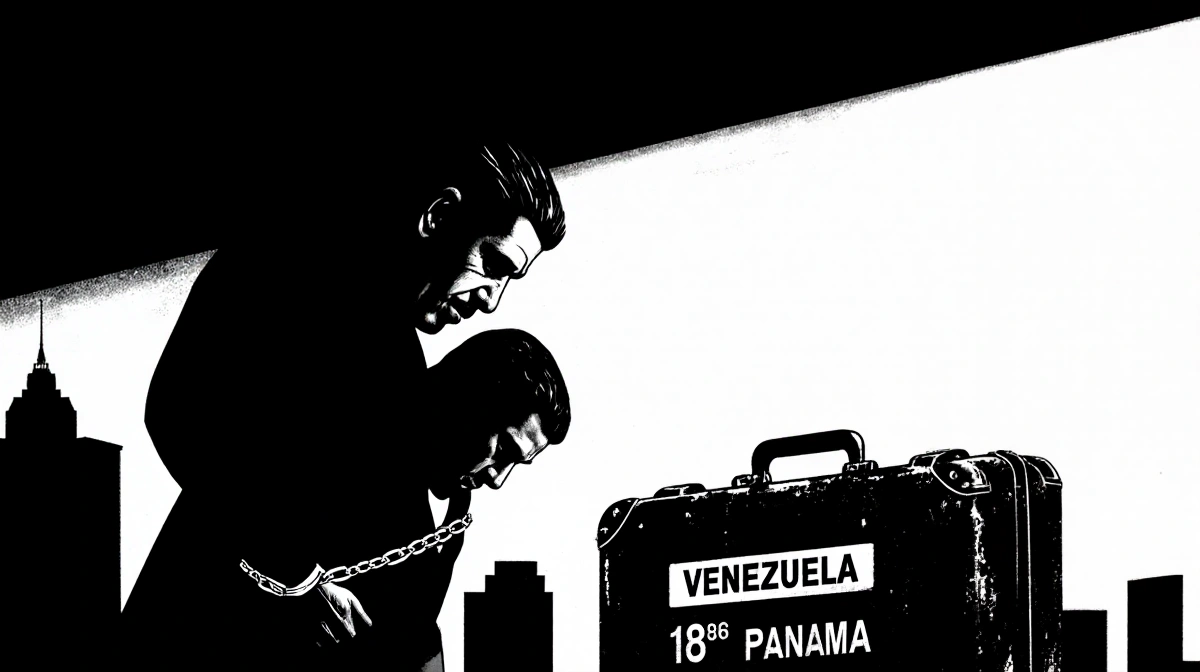
- Former Venezuelan leader Nicolás Maduro was captured Saturday, 36 years after Panama’s Manuel Noriega was removed by U.S. forces.
- U.S. courts are likely to prosecute him despite a sovereign-immunity defense.
- U.S. courts likely to prosecute him despite a sovereign-immunity defense.
- Why it matters: The case could set a precedent for prosecuting foreign leaders on drug-trafficking charges.
When former Venezuelan president Nicolás Maduro appeared before a New York judge Monday, he followed a path laid out by Panama’s ex-strongman Manuel Noriega. Both men were seized by U.S. forces and now face drug-trafficking charges, but the legal battle over sovereign immunity could shape future prosecutions of foreign leaders.
Sovereign Immunity: A Losing Argument
Maduro’s lawyers will argue that, as a former head of state, he is immune from U.S. prosecution. That defense, however, has little chance of success, a fact that was already settled in Noriega’s trial. U.S. courts rely on the State Department’s opinion, not congressional approval.
Supreme Court rulings uphold jurisdiction over foreigners.
Dick Gregorie stated:
> “There’s no claim to sovereign immunity if we don’t recognize him as head of state.”
Legal Foundations and Precedents
The Justice Department’s 1989 opinion by former Assistant Attorney General Bill Barr allowed “forcible abductions” abroad to enforce domestic laws. Barr’s statement that regime change was the object of the operation was also used to justify Noriega’s removal.
Bill Barr said:
> “Going after them and dismantling them inherently involves regime change. The object here is not just to get Maduro. We indicted a whole slew of his lieutenants. It’s to clean that place out of this criminal organization.”
Differences Between Noriega and Maduro
Unlike Noriega, who never held the presidential title, Maduro claims to have won a popular mandate in three elections, though the 2024 results are disputed. This gives him a stronger sovereign-immunity defense, but U.S. courts still see him as a fugitive.
| Feature | Noriega | Maduro |
|---|---|---|
| Title held | None | President (claimed) |
| Recognition | Not recognized | Not recognized |
| Legal status | De facto ruler | Fugitive |
| Immunity claim | Weak | Stronger |
Practical Hurdles for Maduro’s Defense
U.S. sanctions make it illegal for American attorneys to accept money from Maduro or his wife. The Venezuelan government, led by Vice-President Delcy Rodríguez, is also barred from doing business in the U.S., limiting its ability to fund the defense.
The State Department regards Maduro as a fugitive and has offered a $50 million reward for his arrest.
Juan Orlando Hernández was convicted in 2024 for drug trafficking and weapons charges and sentenced to 45 years in prison.
Indictment Allegations
The indictment accuses Maduro of enabling the shipment of thousands of tons of cocaine into the United States, providing law-enforcement cover, logistical support, and partnering with major drug traffickers. The government will argue that running a large narco-trafficking operation does not constitute an official act.
Key Takeaways
- Maduro faces U.S. drug charges after a 36-year-old capture similar to Noriega’s.
- U.S. courts likely to prosecute him despite a sovereign-immunity defense.
- Sanctions and legal precedents create significant obstacles for his defense team.
The case underscores the U.S. commitment to prosecuting foreign leaders for drug trafficking, even when diplomatic recognition is absent.