At a Glance
- Netflix executives told Matt Damon they want plots repeated 3-4 times in dialogue
- Viewers on phones need constant reminders to follow along
- 94% of viewers used phones while watching TV even before the pandemic
- Why it matters: Your distraction is reshaping how stories are written
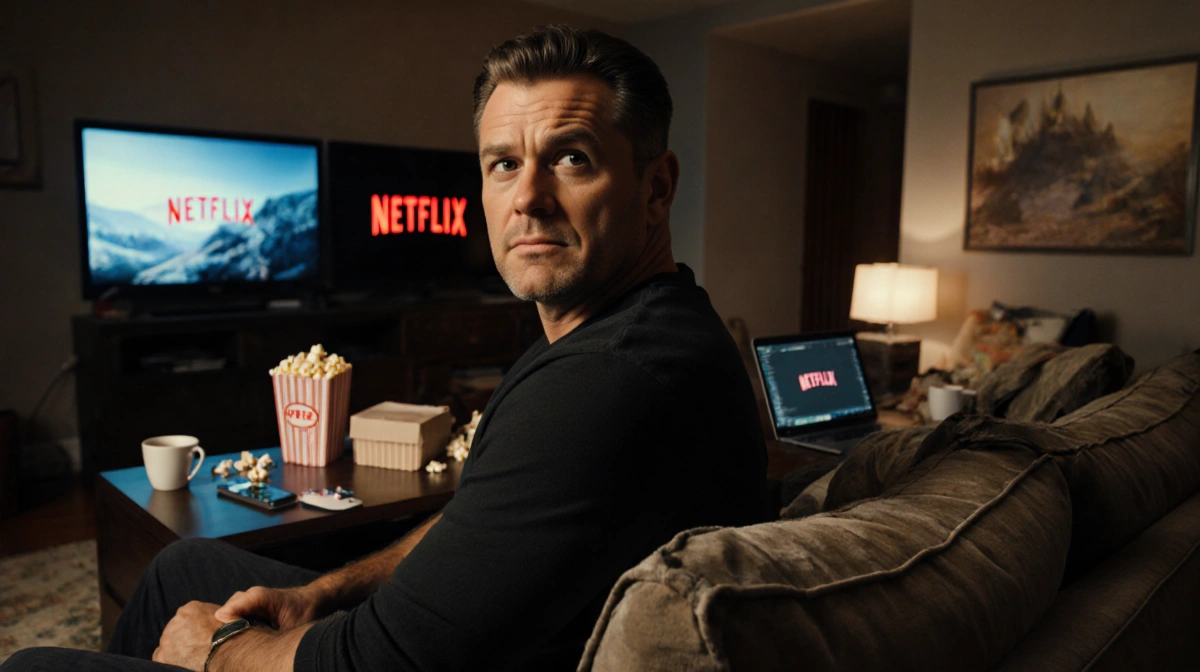
Matt Damon’s new Netflix thriller The Rip isn’t just another streaming release-it’s the latest example of how our phone addiction is rewriting the rules of cinema. During a joint interview with Ben Affleck on The Joe Rogan Experience, Damon revealed that Netflix executives openly asked him to repeat plot points multiple times throughout the movie.
Netflix’s Phone-Friendly Script Demands
The actor described conversations with Netflix brass who said it “wouldn’t be terrible if you reiterated the plot three or four times in the dialogue, because people are on their phones while they’re watching.” This isn’t speculation-it’s straight from Damon’s mouth during the promotional tour for The Rip.
This revelation aligns with what writer Will Tavlin documented in N+1 last year. Screenwriters told Tavlin Netflix specifically requests lines where characters announce their actions so background viewers can keep up. The result? Dialogue that sounds like it was written for toddlers.
Examples from Lindsay Lohan’s Irish Wish:
- “I admit it was a beautiful day filled with dramatic vistas and romantic rain, but that doesn’t give you the right to question my life choices. Tomorrow I’m marrying Paul Kennedy.”
- “That will be the last you see of me because after this job is over I’m off to Bolivia to photograph an endangered tree lizard.”
These clunky exposition dumps let viewers jump in mid-movie and instantly understand every relationship and motivation.
The Pre-Pandemic Numbers Were Already Bad
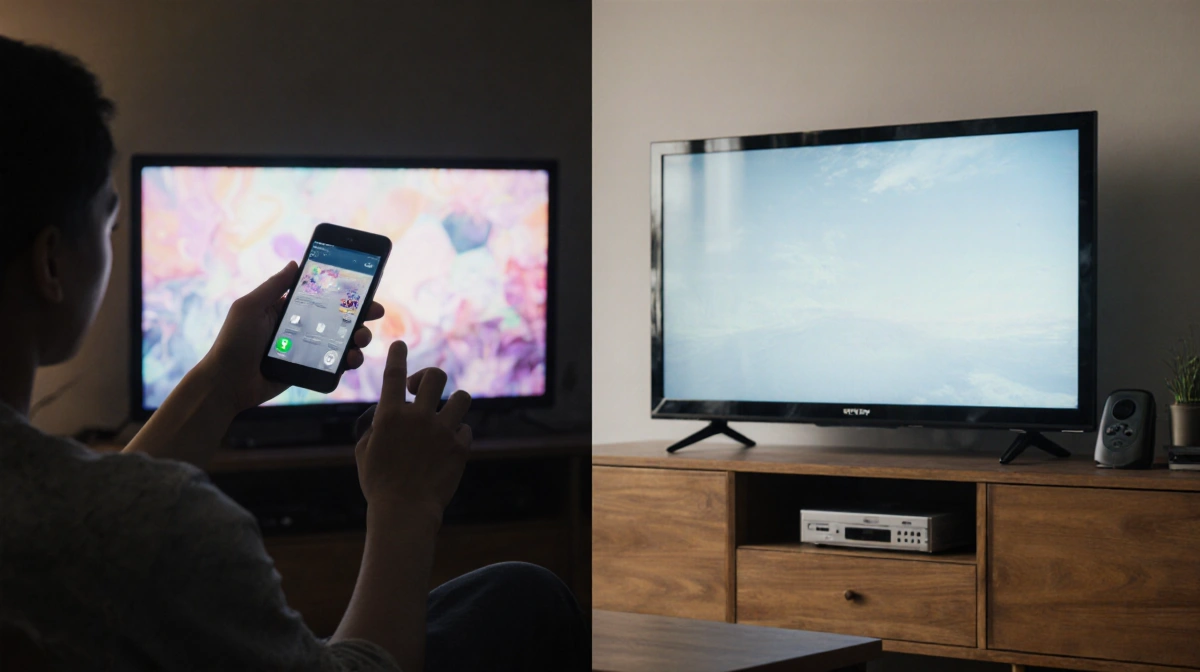
A 2019 study found 94% of people used their phones while watching TV. That was before COVID trapped everyone at home with nothing but screens for entertainment. The pandemic didn’t just normalize dual-screen viewing-it made it the default setting for entertainment consumption.
Netflix knows this behavioral shift is permanent. They’re not fighting it; they’re engineering their content around it. Every script gets filtered through the question: “Will someone scrolling Instagram still understand what’s happening?”
The Theater vs. The Living Room
Damon contrasts this with theatrical viewing, calling movies “more like going to church.” His reasoning is simple: “You show up at an appointed time. It doesn’t wait for you.”
The home viewing experience gets no such respect. Damon describes it as watching “in a room, the lights are on, other shit’s going on, the kids are running around, the dogs are running around, whatever it is.”
Affleck jumped in with nostalgia for a time when “Every American went to the movies every week, basically. But it was because it was that or watch the cows walk by.” He mocked his own tendency to romanticize the past, slipping into a Jimmy Stewart voice: “when I was a boy, we didn’t used to have these phones. The fuck are all these phones?”
What This Means for Storytelling
The implications stretch beyond Netflix. When the biggest streaming platform openly admits to dumbing down content for distracted viewers, it creates industry-wide pressure. Other studios see Netflix’s success and follow suit, leading to a race toward the bottom in narrative complexity.
Characters now announce their motivations like they’re reading the world’s most obvious teleprompter. Plot twists get telegraphed minutes in advance. Emotional moments require musical cues and dialogue that explains exactly what you’re supposed to feel.
The Viewer’s Dilemma
This isn’t about shaming phone use-it’s recognizing that our collective distraction has consequences. When 94% of viewers can’t focus on a single screen, content creators adapt or die. They choose adaptation, which means stories designed for partial attention.
Damon’s solution? “This weekend I’m crating my dog, hiring a sitter, and going to church. This will be the liturgy.” He’s talking about theatrical viewing as a sacred experience, one that demands-and rewards-your full attention.
The actor’s metaphor carries weight. Church requires commitment: you show up at a specific time, sit in uncomfortable seats, and give yourself over to an experience bigger than your immediate desires. Movies used to work the same way. Now they compete with notifications, texts, and the infinite scroll.
Key Takeaways
- Netflix openly engineers scripts for phone-distracted viewers
- 94% of people used phones while watching TV in 2019-pre-pandemic
- Writers must repeat plot points 3-4 times** to ensure comprehension
- Theatrical viewing offers an alternative to distracted home consumption
- This shift affects the entire entertainment industry, not just Netflix
The next time you wonder why movies feel increasingly obvious, remember: they’re not made for people watching movies. They’re made for people watching movies while watching their phones.