
Alice Robinson’s first World Cup super‑G victory on Sunday not only gave her the speed‑event title but also made her the first New Zealander to win a speed race.
A Historic Win for Robinson
Robinson, who had already topped the giant‑slalom standings for the season, crossed the finish line 0.08 seconds ahead of France’s Romane Miradoli and 0.19 seconds ahead of Italy’s Sofia Goggia. The win marked her first victory in a speed discipline and the first for a Kiwi in that category.
“Crazy. I was not expecting this today,” Robinson said, her voice echoing the disbelief that came with the result. “I always felt like I was holding back in super‑G a bit but not a part of me was scared today. I just wanted to go for it.”
The 41‑year‑old American skier Lindsey Vonn, who finished fourth, was 0.27 seconds behind Robinson. Vonn, a 41‑year‑old legend, had earlier claimed the title of oldest winner in the circuit’s history in a downhill run on Friday. She then secured second place in another downhill on Saturday.
“I’m a little bit disappointed in myself that I didn’t push hard enough,” Vonn admitted. “I was too conservative in some sections.”
Mikaela Shiffrin, holder of a record 104 World Cup victories, missed the final gate in the super‑G but did not fall. She has not entered a speed race since a crash in a downhill at Cortina d’Ampezzo, Italy, nearly two years ago. Shiffrin is also still regaining form after a giant‑slalom crash in Killington, Vermont, last season that left her with a deep puncture wound on the right side of her abdomen.
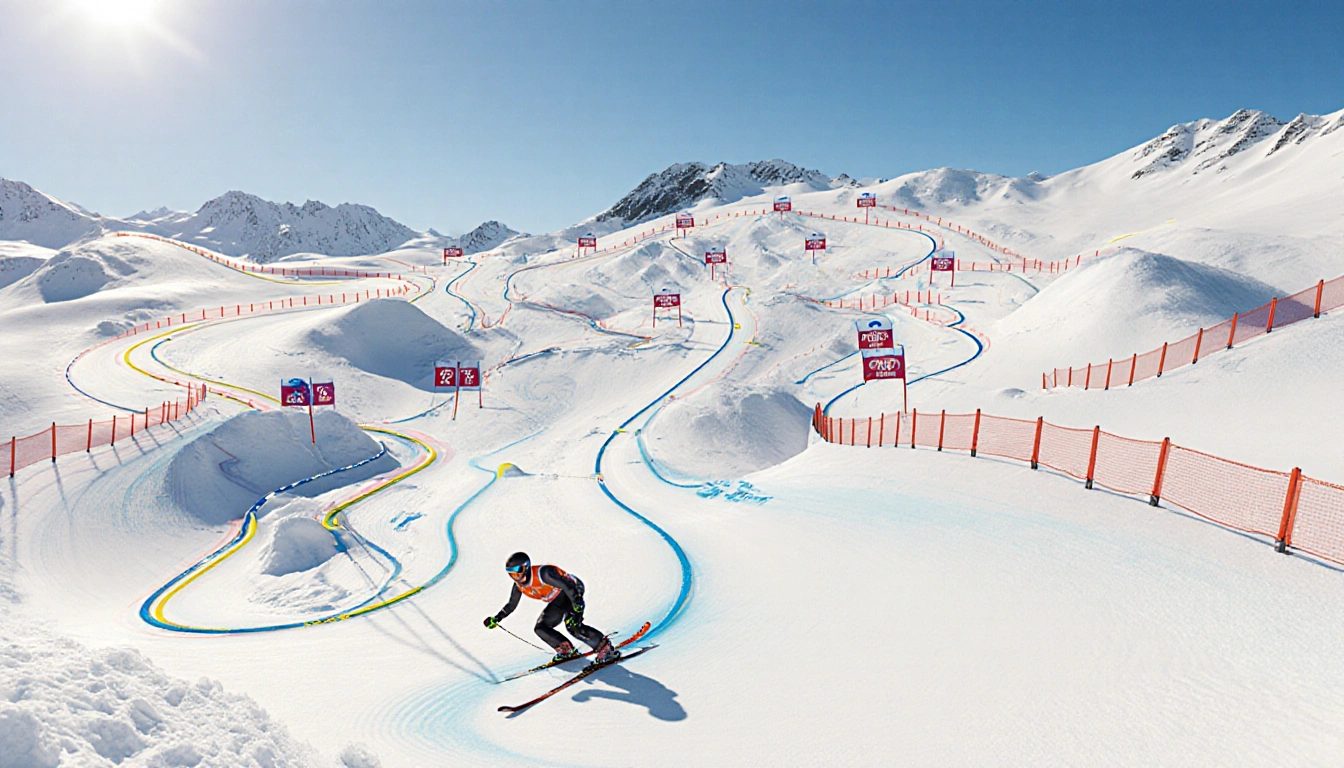
German skier Emma Aicher, who won Saturday’s downhill, lost control over a jump early in her run and fell. She got right back up and appeared uninjured, a testament to the course’s forgiving design.
Course Design and Conditions
U.S. Ski Team coach Alex Hoedlmoser set a tricky course that caught out several other racers, too. Despite clear and sunny skies providing perfect conditions, the layout demanded precision and bravery.
Robinson had won two of the four giant‑slalom races this season but had never finished better than fourth in a super‑G. Her victory now positions her as a two‑discipline threat for the Milan Cortina Olympics, where women’s alpine skiing will be held from Feb. 6‑22.
All six of Robinson’s previous World Cup victories came in giant slalom. She moved up from third to second in the overall standings and is now within 64 points of Shiffrin.
The Road Ahead
The circuit now shifts to France for a night slalom in Courchevel on Tuesday, followed by more speed racing in Val d’Isère next weekend. The shift underscores the variety of challenges that await the athletes as they prepare for the upcoming Olympic Games.
Key Takeaways
- Alice Robinson becomes the first New Zealander to win a World Cup speed event, topping the super‑G standings.
- Lindsey Vonn, at 41, remains a formidable competitor, having secured the oldest winner title in a downhill.
- Mikaela Shiffrin, despite recent crashes, continues to be a dominant force with 104 career victories.
The win not only reshapes the competitive landscape for the season but also adds a new dimension to the Olympic story, as Robinson’s versatility and confidence grow ahead of Cortina 2026.
Closing Thoughts
Robinson’s triumph in super‑G signals a shift in alpine skiing dynamics. With her giant‑slalom prowess and newfound speed‑event success, she is poised to challenge the established order in the coming races and on the Olympic slopes.