
At a Glance
- Borrowers 50-61 average $48,203.
- Over 3.8 million owe $100,000+.
- Total U.S. student loan debt $1.7 trillion.
- Why it matters: Older Americans face rising debt and potential wage garnishment as debt grows.
Student loan debt has long been viewed as a youth issue, but recent data shows that borrowers nearing retirement are carrying the heaviest balances. A federal study reveals that people aged 50-61 owe an average of $48,203, with more than half owing $20,000 or more.
Age-Related Debt Trends
The Federal Student Aid data shows that 6.4 million borrowers aged 50-61 owe more than $308 billion in federal student loans. Their average balance is more than three times that of borrowers 24 and younger, who average $14,242.
- 24 and younger: $14,242
- 25-34: $33,566
- 35-49: $45,295
- 50-61: $48,203
- 62 and older: $44,161
Older borrowers over 50 are also more likely to be seriously delinquent, with more than 90 days past due, according to the Federal Reserve Bank of New York.
Geographic Hotspots
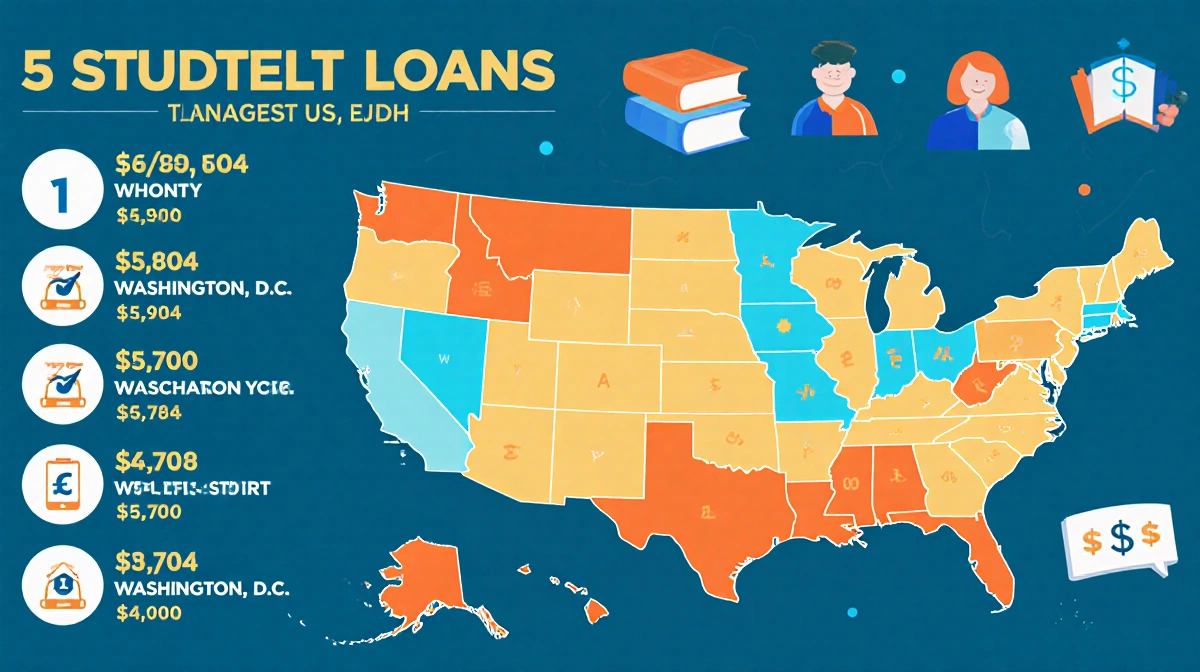
Washington, D.C. tops the nation with the highest average student loan balance at $55,794 per borrower. Nearby Maryland and Virginia also rank among the top five, with balances above $40,000.
| Location | Average Balance |
|---|---|
| Washington, D.C. | $55,794 |
| Maryland | $45,123 |
| Georgia | $43,273 |
| Virginia | $41,447 |
| Florida | $40,692 |
These figures highlight that the most educated regions also carry the most debt, while states with lower educational attainment still see high balances.
Large Balances Among Older Borrowers
Most borrowers owe less than $40,000, but a growing share carry far more. Roughly 3.8 million borrowers owe $100,000 or more-a nearly 60% increase from 2017-and about 1.2 million owe $200,000 or more.
Postgraduate degree holders are far more likely to have six-figure balances.
Key Takeaways
- Borrowers 50-61 hold the highest average debt at $48,203.
- Over 3.8 million borrowers owe $100,000+, driving total debt to $1.7 trillion.
- Washington, D.C. leads with $55,794 per borrower, and older borrowers are more likely to be delinquent.
With wage garnishment poised to resume and interest compounding over decades, the student debt crisis is expanding beyond the young, affecting retirees and near-retirees across the country.