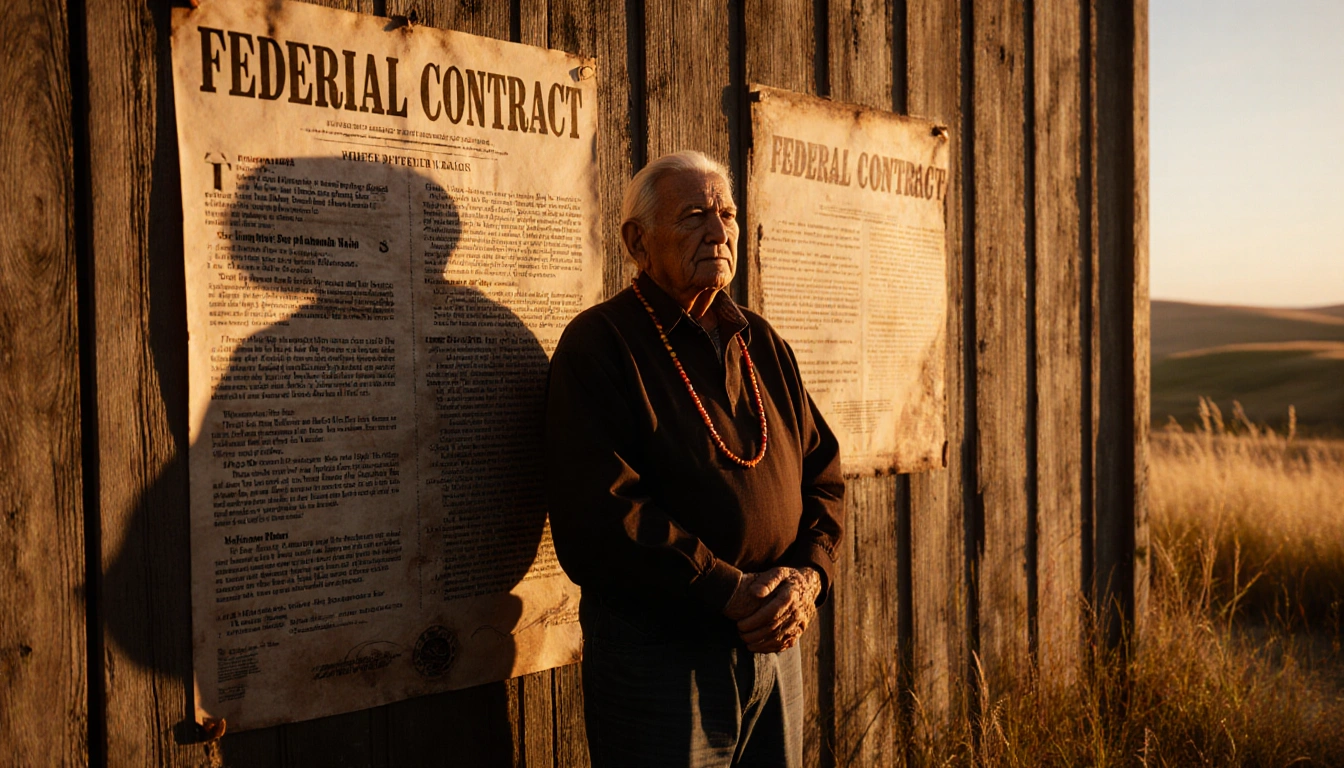
The Prairie Band Potawatomi Nation announced Wednesday night that it has walked away from a federal contract worth nearly $30 million, following a surge of online criticism. The decision came just over a week after the tribe’s economic development leaders, who had brokered the deal with U.S. Immigration and Customs Enforcement, were fired. The move has sparked debate about the role of Native American tribes in federal immigration enforcement. The tribe’s statement emphasized a commitment to align its business practices with its cultural values.
Background of the Contract
The contract was originally awarded in October for $19 million to provide “due diligence and concept designs” for processing and detention centers across the United States. A one-sentence description on the federal government’s real-time contracting database outlined the scope of the work. The contract was later modified in November, raising the maximum payout ceiling to $29.9 million. This adjustment brought the contract close to the $30 million threshold that triggers additional justification under federal contracting rules.
Online Criticism and Tribal Response
The Prairie Band Potawatomi Nation faced a wave of online condemnation after the contract was announced. Critics labeled the agreement as “disgusting” and “cruel,” citing the tribe’s historical experience with forced relocation. Many voices in Indian Country questioned how a tribe whose ancestors were uprooted from the Great Lakes and confined to a reservation south of Topeka could participate in the Trump administration’s mass deportation efforts. The criticism highlighted the tension between tribal sovereignty and federal immigration policy.
Chairman’s Video Address
Tribal Chairman Joseph “Zeke” Rupnick addressed the controversy in a video posted on Wednesday. He referenced the historical issues that surfaced the previous week, noting that reservations were “the government’s first attempts at detention centers.” Rupnick’s comments drew attention to the irony of the tribe’s involvement in detention center design. The video was part of a broader effort to explain the tribe’s decision to exit the contract.
Announcement of Exit
In an update that evening, Rupnick announced that the Nation had successfully exited all third-party related interests affiliated with ICE. He stated that the tribe was “happy to share that our Nation has successfully exited all third-party related interests affiliated with ICE.” This announcement was accompanied by a statement that the Prairie Band no longer has a stake in the contract. The tribe’s spokesperson emphasized that the exit was a deliberate move to protect the community’s values.
Tribal Business Interests
The Prairie Band Potawatomi Nation operates a diverse portfolio of businesses, including health care management staffing, general contracting, and interior design services. These enterprises provide the tribe with economic opportunities beyond the federal contract. Rupnick indicated that tribal officials plan to meet in January to discuss how to ensure “economic interests do not come into conflict with our values in the future.” The meeting will likely review the tribe’s business strategy moving forward.
KPB Services LLC
A tribal offshoot hired by ICE, KPB Services LLC, was established in April in Holton, Kansas. The company was created by Ernest C. Woodward Jr., a former naval officer who markets himself as a “go-to” adviser for tribes and affiliated companies seeking federal contracts. Woodward’s firm had previously advised the tribe on acquiring Mill Creek LLC in 2017. Mill Creek specializes in outfitting federal buildings and the military with office furniture and medical equipment.
Ernest Woodward’s Other Affiliations
Woodward is listed as the chief operating officer of the Florida branch of Prairie Band Construction Inc., a company registered in September. He also maintains a consulting firm in Virginia called Chinkapin Partners LLC. Attempts to locate Woodward were unsuccessful, and no response was received from either company. The lack of contact adds uncertainty about Woodward’s current role within the tribe’s business network.
Spokesperson Statements About Woodward
A spokesperson for KPB Services LLC confirmed that Woodward is no longer with the LLC. She declined to say whether he was terminated. The spokesperson also noted that the Prairie Band had divested from KPB, though the company still holds the contract. The spokesperson reiterated that the tribe no longer has a stake in the contract.
Tribal Divestment and Current Status
The Prairie Band Potawatomi Nation’s spokesperson clarified that the tribe divested from KPB. While the company still has the contract, “Prairie Band no longer has a stake,” the spokesperson said. She also declined to confirm whether Woodward was terminated. The spokesperson emphasized that the tribe’s exit was a deliberate action to protect its values.
Contract Description and Modification
The ICE contract was initially awarded in October for $19 million, with a description that read “due diligence and concept designs” for processing and detention centers. In November, the contract was modified to increase the payout ceiling to $29.9 million. The modification brought the contract close to the $30 million threshold that triggers additional justification under federal contracting rules. The contract’s value and scope have been scrutinized in light of these changes.
Federal Contracting Rules
Sole-source contracts above $30 million require additional justification under federal contracting rules. The Prairie Band’s contract fell just below that threshold after the modification, but the proximity raised questions about the procurement process. Federal contracting normally requires competition for work of this magnitude. The lack of competition in this case has drawn attention from oversight bodies.
Oversight and Lack of Response
Tribal leaders and the U.S. Department of Homeland Security have not responded to detailed questions about why the firm was selected for such a large contract without competition. The article notes that it is unclear what the Tribal Council knew about the contract. The spokesperson for the tribe said that “that process of internal auditing is really just beginning.” This statement underscores the ongoing investigation into the contract’s origins.
Internal Audit and Future Steps
The tribe’s spokesperson emphasized that internal auditing is in its early stages. The audit will likely examine the decision-making process that led to the contract award. The tribe plans to hold a meeting in January to discuss how to ensure economic interests do not conflict with its values. The outcome of the audit may influence future business decisions.
Key Takeaways
- The Prairie Band Potawatomi Nation exited a nearly $30 million ICE contract amid online backlash.
- The contract was originally $19 million and was increased to $29.9 million, raising concerns about federal contracting rules.
- Tribal leaders plan a January meeting to align future economic interests with cultural values.
The Prairie Band Potawatomi Nation’s decision to walk away from the ICE contract highlights the complex relationship between Native American tribes and federal immigration enforcement. By divesting from the contract and pledging to align its business practices with its values, the tribe has taken a decisive step to address the criticism it faced. The ongoing internal audit and upcoming tribal meeting will shape the Nation’s future business strategy and its role in federal contracting.